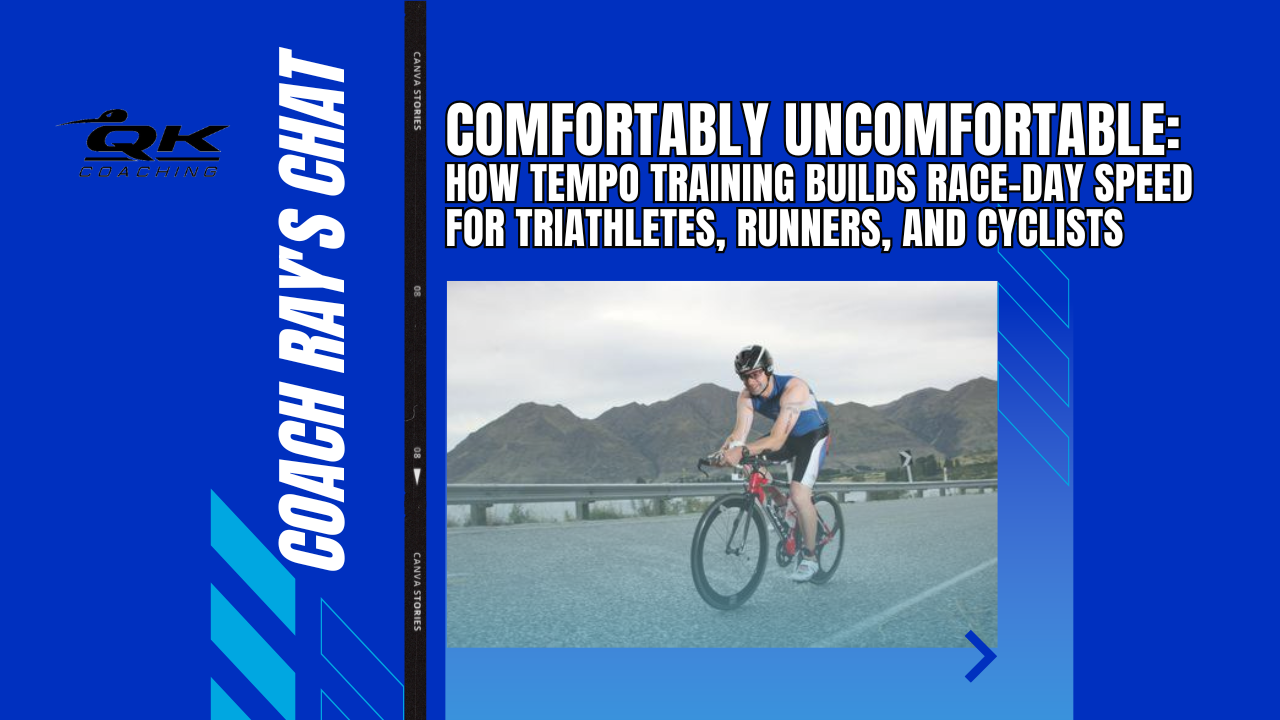
If there’s one phrase I use more than almost any other when coaching endurance athletes, it’s this:
“Comfortably uncomfortable.”
Tempo training lives here — and it’s one of the most misunderstood, misused, and under-trained intensities for triathletes, runners, and cyclists.
Too many athletes train either very easy or very hard. While both have their place, most real performance improvements happen in the middle. That middle ground is tempo training — and it’s where longer races are actually won.
What Does “Comfortably Uncomfortable” Really Mean?
Tempo training is controlled, sustainable hard work.
You’re working harder than an easy aerobic session, but you’re not red-lining. You can’t chat freely, but you’re not gasping for air. You feel focused, strong, and aware that you’re working — yet confident you can maintain the effort.
If easy training feels relaxed, and high-intensity intervals feel aggressive, tempo is the space in between.
It’s uncomfortable… but controlled.
Challenging… but repeatable.
Hard… but sustainable.
Where Tempo Fits in the Intensity Spectrum
Most endurance athletes understand:
- Easy aerobic training
- Hard intervals and speed work
Tempo sits between these and acts as the bridge between base fitness and race performance.
For many athletes:
- It’s slower than threshold
- Faster than steady aerobic
- Sustainable for long blocks of work
- Highly specific to race demands
This is why tempo is so powerful — it closely matches the effort you’ll actually race at.
Why Tempo Training Works So Well
Tempo training develops what I call aerobic strength.
It improves your ability to:
- Sustain speed for long periods
- Clear and manage lactate
- Use fuel more efficiently
- Maintain form and focus under fatigue
Unlike very hard sessions, tempo creates less recovery cost, which means you can do it more often and stack consistency over weeks and months.
Consistency, not hero workouts, is what drives long-term progress.
Tempo and Race Performance
Most endurance races are not won at maximum intensity.
They’re won by athletes who can:
- Hold a strong pace for a long time
- Stay relaxed under pressure
- Finish well instead of fading
Tempo training teaches your body exactly that.
For example:
- Olympic triathlon bike legs are often ridden at tempo
- Half marathon pace is commonly a tempo effort
- Long steady swims sit right in the tempo zone
If you want race pace to feel controlled instead of desperate, tempo training is essential.
What Tempo Looks Like in Swim, Bike, and Run
Tempo isn’t identical across disciplines — but the feeling is consistent.
Swimming
- Controlled CSS or slightly sub-CSS efforts
- Focus on rhythm, breathing, and efficiency
- Sustainable repeats with short recoveries
Cycling
- Sustained power or heart-rate blocks
- Smooth cadence and steady pressure
- Efforts you could hold for a long time if required
Running
- Strong, steady pace
- Controlled breathing
- A pace you know you can maintain without fading
Across all three, tempo should feel purposeful, not frantic.
Tempo Builds Confidence, Not Just Fitness
One of the biggest benefits of tempo training is confidence.
Athletes who regularly train at tempo:
- Know what sustainable speed feels like
- Pace races more accurately
- Make better decisions under fatigue
Instead of guessing on race day, you recognise the effort — because you’ve trained it.
Common Tempo Training Mistakes
I see these mistakes all the time:
Turning tempo into threshold
Going too hard defeats the purpose and increases fatigue.
Chasing numbers instead of feel
Tempo is best guided by effort, breathing, and control — not ego.
Not recovering properly
Tempo still creates stress and must be supported with easy training.
Good tempo sessions finish with the athlete feeling worked — not wrecked.
How Often Should You Train Tempo?
Because tempo doesn’t carry the same recovery cost as high-intensity work, it can be included regularly.
For most athletes:
- 1–2 tempo sessions per week works well
- Often combined with longer aerobic work
- Balanced with easy days and occasional harder efforts
The key is moderation and consistency.
Tempo in Training vs Tempo on Race Day
In training, tempo should feel controlled and repeatable.
On race day, adrenaline, competition, and fatigue make that same effort feel harder.
Training tempo slightly under race stress allows you to:
- Start races more conservatively
- Hold pace longer
- Finish stronger than those who went out too hard
Tempo Is Where Performance Is Built
Tempo training may not look exciting on paper, but it’s where endurance athletes quietly get better.
If you want to:
- Race faster
- Finish stronger
- Train smarter
- Stay consistent year-round
Then learning to live in the comfortably uncomfortable zone is non-negotiable.
Train there regularly, respect the effort, and let consistency do the rest.