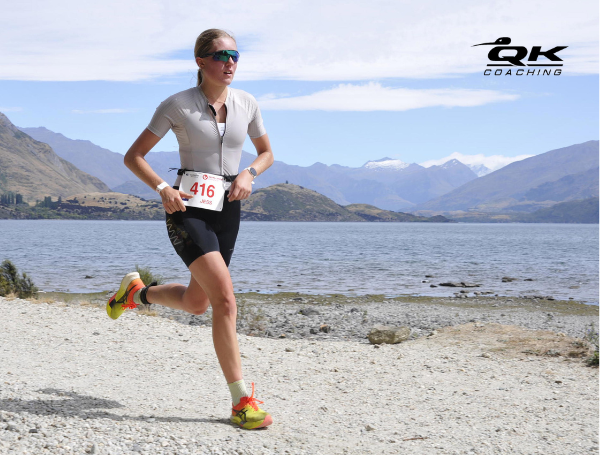
Jess Bray’s Challenge Wanaka Debrief
There’s something special about watching an athlete step into the unknown for the first time.
Jess Bray came into Challenge Wanaka having never raced a Half Ironman distance event before. She’d done plenty of short-course triathlon, came from a strong swimming background, and had developed a real love for running — but this was different. Longer. Slower in places. More tactical. More patient.
And that’s exactly what made her race so successful.
This wasn’t about chasing a finish time. It was about learning the process, experiencing the distance, and seeing how her body — and mind — responded when everything stretched beyond the familiar.
What followed was one of the most mature first-time performances I’ve seen.
The shift from racing hard to racing smart
Short-distance racing often rewards aggression. You’re on the gas from the start, holding discomfort and trying to hang on.
Half Ironman racing demands something different.
Jess summed it up perfectly afterwards — less pressure, more patience, more thinking. Instead of rushing through each discipline, she had to think about conserving energy, making decisions, and holding something back for later.
That shift in mindset is often the biggest hurdle for strong young athletes. The ones who can control their effort early are usually the ones finishing strongest.
Jess embraced that.
A calm swim sets the tone
The swim wasn’t about heroics. It was about staying relaxed, swimming straight, and coming out ready to ride.
Open water is always a learning process — cold water, bodies around you, sighting lines, the unpredictability that pools never prepare you for. But she stayed composed, avoided panic, and exited the water in a good place physically and mentally.
That matters more than a few seconds gained or lost.
The bike: restraint as a weapon
If there was one defining feature of her race, it was how she handled the bike.
Challenge Wanaka is not an easy course. Hills, exposure, and constant variation reward disciplined riding. Jess rode conservatively on purpose — keeping the effort controlled, resisting the urge to chase riders ahead, and staying within herself.
That’s not always easy, especially when people are passing you.
But the goal wasn’t to win the bike leg.
The goal was to arrive at the run ready to race.
Too many athletes burn their matchbook here and spend the half marathon surviving rather than competing. Jess did the opposite — and it paid off.
The run: finally home
Some athletes look relieved when they hit T2.
Jess looked excited.
Running is her happy place, and it showed. She moved through the field, ran strongly off the bike, and held a consistent effort right through the middle of the race.
What stood out wasn’t just the pace — it was the energy.
Every time I saw her on course, she was smiling. Genuinely enjoying the experience. That mindset isn’t just nice to see; it’s performance enhancing. Athletes who stay relaxed and positive tend to make better decisions and hold form longer.
The result was a strong finish and a half marathon that reflected patience earlier in the day.
The lessons that matter most
Post-race debriefs aren’t about numbers. They’re about learning.
Here were the big takeaways we discussed:
1. Confidence on the bike still has room to grow
Cornering, descending, and general road confidence are skills — and skills improve with deliberate practice.
2. Open water familiarity helps remove unnecessary stress
More exposure means less cognitive load on race day.
3. Fuelling worked exceptionally well
She trained with what she planned to use and trusted it during the race — one of the biggest wins of the day. Thanks to Gu.
4. Pacing maturity creates opportunity later
Finishing the bike feeling like you could have gone harder is exactly how you want to feel in a long-course race.
What impressed me most
The smile.
Not the finish time. Not the splits.
The smile.
Jess raced with curiosity and joy instead of fear. She approached the event as an experience to learn from rather than a test she had to pass. That allowed her to execute calmly and finish strong — something many experienced athletes still struggle with.
For a first mid-distance race, that’s gold.
Looking ahead
Now comes the interesting part — shifting gears again.
Moving from long, controlled racing back toward sharper running goals means adapting both physically and mentally. Speed work returns. Intensity climbs. The challenge becomes believing you can push again after months of endurance focus.
But that foundation — aerobic strength, discipline, race composure — doesn’t disappear. It carries forward.
And that’s where big improvements usually come from.
If you’re thinking about stepping up to your first Half Ironman, or you want to learn how to race smarter rather than just harder, the biggest lesson from Jess’s race is simple:
Patience early gives you power later.
And when you can finish smiling — you usually got it right.
Continue Learning & Building Your Racing Confidence
➡️ Triathlon Coaching with Coach Ray
Learn how structured coaching helps athletes race smarter, pace better, and enjoy the process more — whether you’re stepping into your first event or chasing your next breakthrough.
If you enjoyed this debrief and want to go deeper into smart endurance racing, these next reads will help:
➡️ How to Pace a Long-Course Triathlon
Why holding back early often leads to your strongest finish — and the common pacing mistakes athletes make in longer races.
➡️ Fuelling for Endurance Events
A practical guide to training your gut, building confidence with race nutrition, and avoiding late-race energy crashes.
➡️ Running Strong Off the Bike
The key training strategies that help you transition from cycling to running without feeling like your legs have disappeared.
➡️ Open Water Confidence for Triathletes
Simple strategies to feel calm, controlled, and efficient when race-day nerves hit the swim start.
👉 Ready to train with more structure and confidence? Book your free consultation here: