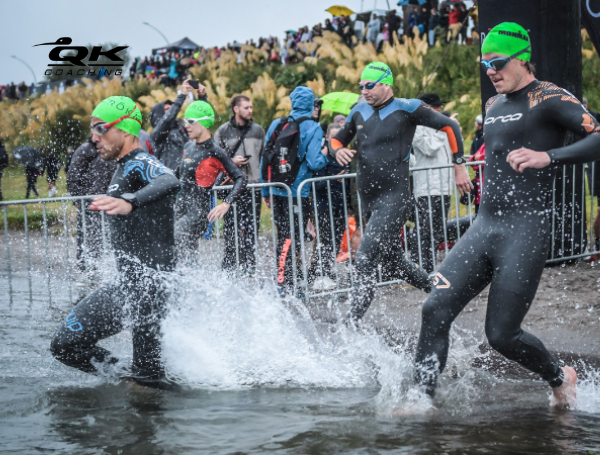
Pool swimming builds fitness.
Open water swimming tests composure.
The first time you line up on a beach with 100 other athletes, it can feel very different to pushing off a wall in a calm lane. There’s no black line to follow. No tumble turns to reset your breathing. No clear water.
For many triathletes, the swim isn’t physically the hardest part of the day.
It’s mentally the most confronting.
The good news?
Confidence in open water isn’t something you either have or don’t have.
It’s something you build.
Why open water feels harder than the pool
Even strong swimmers can feel unsettled the first few minutes of a race.
Here’s why:
- You can’t see clearly underwater
- Contact from other swimmers is common
- Water temperature can shock your breathing
- There’s no wall to give you a rhythm reset
- Navigation requires lifting your head and breaking stroke
All of that increases heart rate.
And once your breathing feels out of control, it can spiral quickly.
Open water confidence is less about swimming faster — and more about staying calm when the environment feels unpredictable.
The first five minutes matter most
Most anxiety happens at the start.
Adrenaline spikes. Everyone surges forward. Breathing shortens.
The athletes who manage this best don’t fight it — they expect it.
A simple approach:
- Start slightly easier than you think
- Focus on long, steady exhalations
- Prioritise rhythm before speed
- Accept a little chaos early
You don’t need to win the first 200 metres.
You need to settle.
Once your breathing stabilises, everything becomes easier.
Practise discomfort in training
Confidence doesn’t come from avoiding stress.
It comes from controlled exposure.
If possible, build in:
- Open water sessions before race day
- Group swim practice
- Starts that simulate race intensity
- Swimming without stopping
Even small doses help.
The goal isn’t perfection — it’s familiarity.
The more often you experience the slight chaos of open water, the less dramatic it feels on race day.
Learn to sight efficiently
One of the biggest energy leaks in open water is poor navigation.
Swimming extra distance adds up quickly.
Practice:
- Lifting your eyes just enough to see forward
- Keeping your hips high when sighting
- Returning smoothly to rhythm
Good sighting isn’t about lifting your whole head.
It’s about a quick check without breaking momentum.
Manage the cold
Cold water affects breathing before it affects strength.
If you’re racing in cooler conditions:
- Warm up thoroughly before the start
- Get your face in the water early
- Expect the first minute to feel sharp
- Keep breathing controlled and steady
Panic often comes from the initial shock — not from inability.
Once your body adjusts, it settles.
Positioning reduces stress
You don’t have to start in the middle of the chaos.
Line up where you’re comfortable:
- To the side if you prefer space
- Slightly back if you want a calmer start
- Closer to the front if you’re confident and quick
Smart positioning reduces unnecessary contact.
And less contact means less stress.
Control what you can
You can’t control:
- Other swimmers
- The weather
- The water temperature
You can control:
- Your breathing
- Your pacing
- Your mindset
When things feel messy, return to something simple:
Long stroke. Steady breath. Calm rhythm.
That becomes your anchor.
The mental reframe
Many athletes label open water nerves as weakness.
They’re not.
They’re simply unfamiliarity.
Instead of thinking:
“I’m bad at open water.”
Shift to:
“I’m learning how to manage this environment.”
That shift alone reduces pressure.
Confidence grows through repetition, not talent.
The bigger picture
The swim is the shortest part of your triathlon.
It shouldn’t drain your emotional energy for the rest of the day.
When you exit the water calm and controlled — even if slightly slower than your absolute maximum — you set up your bike and run far better.
Open water confidence isn’t about being fearless.
It’s about being steady.
And steadiness wins races.
👉 Want help building confidence across swim, bike, and run — not just fitness?
Book your free consultation here: