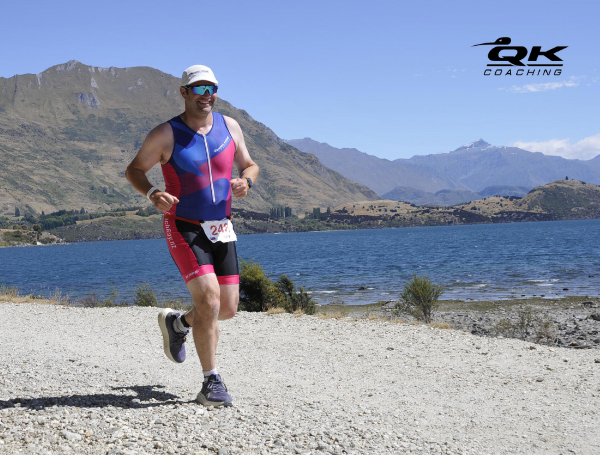
Every triathlete knows the feeling.
You swing your leg off the bike, start running… and your legs feel like they belong to someone else.
Heavy. Awkward. Slightly confused.
The run off the bike isn’t just about fitness. It’s about preparation, pacing, and understanding what your body is going through.
And the good news?
It’s trainable.
Why running off the bike feels so strange
Cycling and running use the similar muscles — but in different ways.
On the bike:
- Your hips stay relatively fixed
- The movement is circular
- There’s no impact
- Predominantly glutes and quads
When you start running:
- Hip extension increases
- Impact forces return
- Neuromuscular patterns change instantly
- Predominantly calves and hamstrings
Your body needs a few minutes to recalibrate.
That awkward feeling isn’t weakness. It’s transition shock.
The athletes who run well off the bike aren’t immune to it — they’ve simply learned how to manage it.
The biggest mistake athletes make
They treat the run like a standalone run.
It isn’t.
If you ride too hard, your run becomes damage control.
I’ve seen athletes chase speed on the bike, only to spend the run trying to survive. At that point, no amount of run fitness can save the day.
Running strong off the bike starts with riding smart.
If you want a good run, earn it on the bike.
Pacing: the quiet skill
The first kilometre off the bike lies to you.
It often feels easier than it should — especially in shorter events. Adrenaline is high. The crowd is loud. You’re excited to finally be upright again.
This is where races quietly unravel.
Smart strategy looks like this:
- Start slightly conservative
- Let your legs find rhythm
- Focus on posture and cadence
- Build effort gradually
The goal is not to feel fast immediately.
The goal is to still feel capable 20–40 minutes later.
Brick sessions: how much do you really need?
Brick sessions — riding then running — are important.
But they’re often misunderstood.
You don’t need to do a hard brick every week.
You need exposure.
That might mean:
- A short, controlled run after a steady ride
- A race-pace effort off the bike closer to competition
- Practising the transition itself
The purpose isn’t to destroy yourself.
It’s to teach your body what to expect.
Over time, that awkward first kilometre becomes less dramatic.
Strength matters more than you think
Athletes who struggle most off the bike often lack durability rather than speed.
Strong hips, glutes, and hamstrings make a huge difference when you shift from cycling to running mechanics.
Simple, consistent strength work:
- Improves posture
- Reduces late-race collapse
- Maintains stride efficiency under fatigue
It’s not glamorous — but it works.
Fuelling the run before it starts
If you wait until you’re running to think about fuelling, you’re already behind.
The bike is your opportunity to prepare for a strong run.
Arrive in T2:
- Hydrated
- Energised
- Not overloaded
If you’re under-fuelled or dehydrated coming off the bike, your run will feel harder than it should.
Running strong starts long before you rack your bike.
The mental side of the run
There’s a psychological shift that happens when you start the run.
You’re closer to the finish.
Fatigue is rising.
This is where belief matters.
Athletes who run well off the bike don’t panic when it feels uncomfortable. They expect discomfort. They know it settles. They trust their pacing.
Confidence comes from preparation.
And preparation removes doubt.
What a strong bike-to-run transition looks like
When it’s done well, it doesn’t look dramatic.
It looks controlled.
You see:
- Steady early pacing
- Smooth cadence
- Relaxed shoulders
- Consistent effort
And then, late in the race, you see something powerful:
Athletes passing people instead of being passed.
That’s not accidental. That’s earned.
The bigger picture
Running strong off the bike isn’t about being the fastest runner in the field.
It’s about being the runner who paced the day best.
It’s about discipline on the bike.
It’s about calm early pacing.
It’s about durability under fatigue.
When you combine those things, the run stops being survival.
It becomes your opportunity.
👉 Want help improving your bike-to-run performance and racing with more confidence?
Book your free consultation here: