Long-course racing isn’t won by the fittest athlete.
It’s usually won by the athlete who makes the best decisions across the day.
I’ve coached enough triathletes to know that most disappointing races don’t happen because of poor training. They happen because athletes pace emotionally instead of strategically — pushing too hard early, reacting to others, and paying for it later.
The good news?
Pacing is a skill you can learn.
And once you understand the big picture, long-course racing becomes far more predictable — and far more enjoyable.
The mindset shift: think “damage control”
The biggest mistake athletes make is trying to maximise performance early.
The smarter approach is to minimise losses later.
Long-course triathlon is a slow accumulation of fatigue. Small overreaches early — a harder swim start, surging hills on the bike, running too fast out of transition — don’t feel costly in the moment.
But they compound.
Strong races are built on restraint early and confidence later.
Your goal isn’t to feel fast in the first half of the day. Your goal is to still feel capable in the last third.
Swim pacing: calm beats aggressive
The swim sets the emotional tone for the rest of your race.
Athletes often treat it like a fight — sprinting early, fighting for position, and driving heart rate higher than necessary.
That creates stress you carry onto the bike.
A smarter swim approach:
- Start at a pace where your breathing stays controlled
- Focus on rhythm before speed
- Build effort once your body settles
- Prioritise efficiency over aggression
You don’t win your race in the water — but you can absolutely make the rest of your day harder if you get this wrong.
A calm, controlled swim sets everything up.
Bike pacing: the leg that defines your run
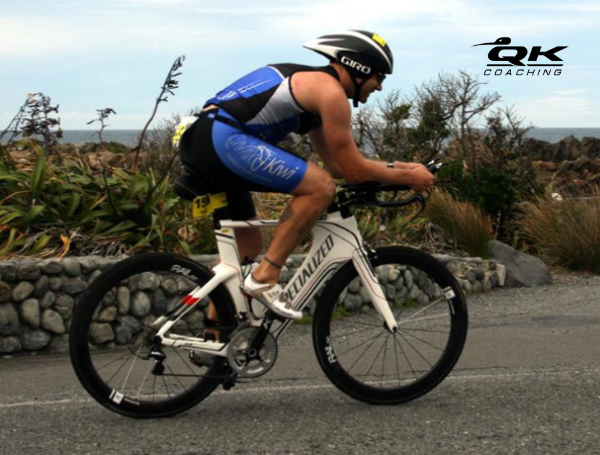
Most long-course races are decided on the bike.
Not because it’s the longest section — but because it’s where athletes quietly overreach.
Common pacing mistakes on the bike:
- Chasing average speed
- Riding emotionally when people pass you
- Pushing hills too hard
- Letting effort fluctuate instead of staying smooth
The bike should feel controlled and repeatable.
Let speed change with terrain and conditions — protect your effort instead.
A simple rule I often give athletes:
If you finish the bike feeling like you could have ridden harder, you probably paced it well.
Because the real race starts when you begin the run.
Run pacing: start slower than you think
The first few kilometres off the bike are deceptive.
Your legs feel good. Crowds are loud. Pace feels easy.
This is where most pacing mistakes happen.
The athletes who struggle late often don’t explode — they slowly fade because they ran just slightly too hard early.
Smart run strategy looks like this:
- Start conservatively
- Run by feel, not ego
- Settle into rhythm before pushing pace
- Build effort gradually as the race unfolds
If you’re passing people late, your pacing is working.
Effort over numbers
Data is useful — but only if you know how to interpret it.
Power, pace, heart rate, and splits are tools. They aren’t rules.
Long-course racing rewards athletes who understand effort:
- Wind changes effort
- Hills change effort
- Heat changes effort
- Fatigue changes effort
Your job is to keep the internal effort controlled, even when the external numbers shift.
The emotional side of pacing
This is the part most athletes don’t talk about.
Pacing requires confidence.
You’ll watch people surge past you early. You’ll feel like you’re holding back too much. You’ll wonder if you’re being too conservative.
That’s normal.
Trusting your plan takes maturity.
The athletes who race best long-term are rarely the ones making big moves early — they’re the ones who stay patient and let the race come to them.
The simplest pacing checklist
Before race day, ask yourself:
- Can I swim smoothly without fighting the water?
- Can I ride at a controlled, repeatable effort?
- Can I start the run easier than I want to?
- Can I delay my real effort until later in the race?
If the answer is yes, you’re on the right track.
What long-course pacing really gives you
Good pacing does more than improve results.
It allows you to:
- Finish strong instead of hanging on
- Make better decisions under fatigue
- Enjoy the experience more
- Build confidence for future races
Most importantly — it lets your fitness actually show.
The bigger picture
Long-course triathlon isn’t about surviving.
It’s about executing.
Training builds your engine. Pacing determines how well you use it.
Train hard — but race calm.
👉 Want help learning how to pace your next long-course race properly?
Book a free consultation here: