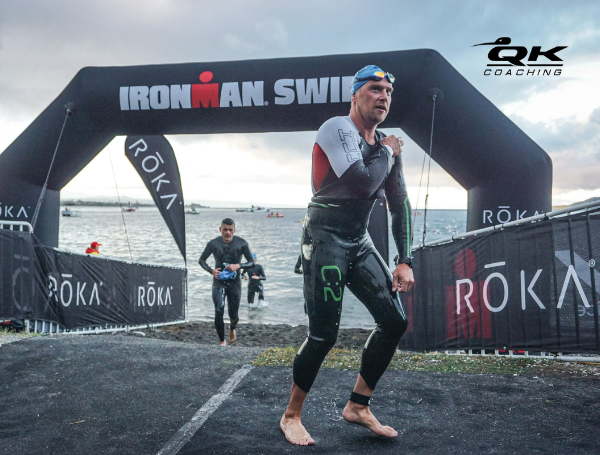
Josh Clarke’s Ironman 70.3 Taupō Debrief
There’s a big difference between thinking you can finish a 70.3… and actually doing it.
On paper, it’s simple:
- 1.9km swim.
- 90km bike.
- 21.1km run.
But once you’re in it — once you’re out there for hours, managing effort, fueling, and fatigue — it becomes something else entirely.
That’s what made Josh Clarke’s first Ironman 70.3 Taupō such a valuable race to unpack.
Because this wasn’t about chasing a perfect race.
It was about finding a way through it.
The build: doing what you can, not what’s ideal
Like a lot of first-time 70.3 athletes, Josh didn’t come into the race off a perfect training block.
There were good weeks. There were disrupted weeks. There were sessions that landed exactly as planned — and others that didn’t.
That’s normal.
The biggest mistake athletes make is assuming they need a perfect build to complete a 70.3.
You don’t.
What you do need is enough consistency over time to build the capacity to keep moving when things get hard.
That’s what Josh brought to the start line.
The first lesson: don’t rush the day
One of the key themes from Josh’s race was learning how to slow down early.
In shorter events, you can get away with pushing from the start. In a 70.3, that approach usually comes back to bite you.
The swim wasn’t about speed — it was about staying controlled.
The bike wasn’t about chasing people — it was about holding a steady effort.
That might not feel exciting in the moment.
But it’s what gives you a chance later in the race.
The bike sets up everything

Like most long-course races, the real story started on the bike.
This is where pacing decisions matter most.
Push too hard here, and the run becomes survival.
Get it right, and the run becomes an opportunity.
Josh experienced both sides of that equation.
There were moments where the effort crept up. Moments where the course — and the fatigue — started to take more out of the legs than expected.
That’s part of the learning curve.
Because the bike in a 70.3 isn’t just about fitness. It’s about restraint, discipline, and understanding how much is too much before it’s obvious.
Fueling: one of the biggest wins
One of the most positive takeaways from Josh’s race was his fueling.
He stuck to a plan. He used products he knew. He kept energy coming in consistently.
And importantly — he didn’t run into major stomach issues.
That alone puts you ahead of a lot of first-time athletes.
Fueling isn’t about being perfect. It’s about being consistent enough to avoid the big drop.
Josh did that well.
The run: where the truth shows up
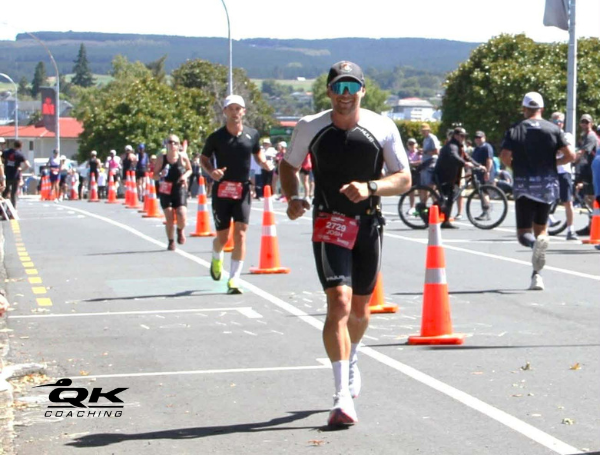
The run is where a 70.3 reveals everything.
How you paced.
How you fueled.
How well you’ve prepared.
And for most first-time athletes, it’s where expectations meet reality.
Josh went in with a plan for how he wanted to run.
But like many before him, the legs didn’t quite cooperate the way he’d hoped.
That doesn’t mean anything went wrong.
It means the race did what it’s supposed to do — it exposed where the next level of improvement sits.
The key thing was how he handled it.
He kept moving.
He adjusted.
He stayed in the race.
That’s what gets you to the finish line.
The mental side: the part no one sees
There’s always a moment in a long-course race where things get quiet.
The crowd fades. The excitement fades. You’re left with the effort.
Josh hit that point.
And like most athletes, there were negative thoughts. Doubts. That moment of “this is harder than I expected.”
What matters isn’t whether that happens.
It’s what you do next.
He reset. Refocused. Kept going.
That’s not dramatic. It’s not flashy.
But it’s exactly what finishing a 70.3 requires.
What finishing your first 70.3 really means
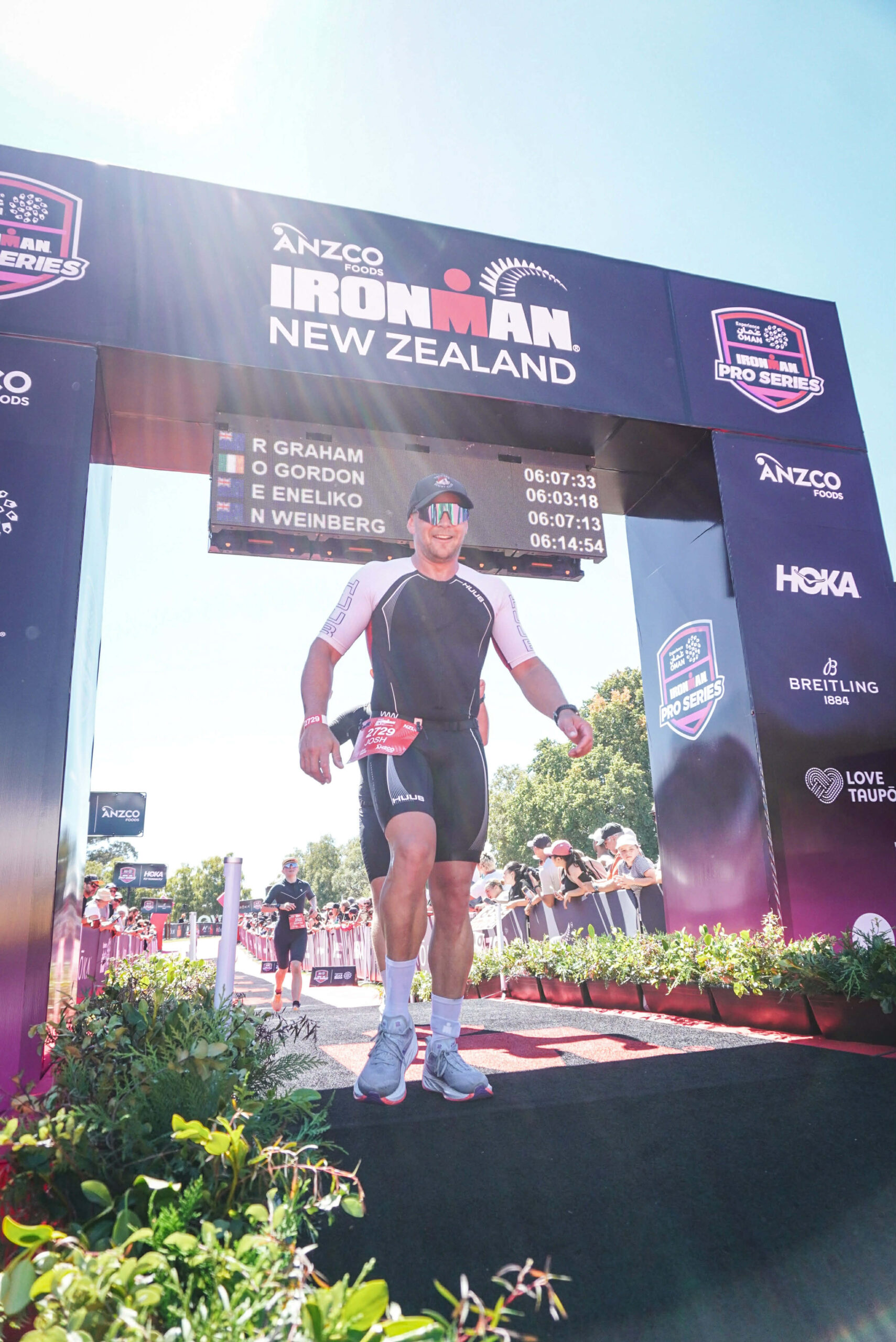
Crossing the line isn’t just about the time.
It’s about proving something to yourself.
That you can:
- Train consistently enough
- Manage the day
- Handle the low points
- Keep moving when it would be easier to stop
Josh did all of that.
And that’s what matters most in a first 70.3.
The lessons that matter going forward
The biggest gains often come after the first one.
Not because you suddenly get fitter overnight — but because you understand the event properly for the first time.
For Josh, the opportunities are clear:
- More confidence in pacing the bike
- Continued consistency in fueling
- Building durability for the run
- Gaining experience in managing effort across the whole day
None of that requires a complete overhaul.
It just requires refinement.
The bigger picture
A first 70.3 rarely feels smooth.
It’s not meant to.
It’s meant to teach you what the distance demands.
Josh’s race did exactly that.
It showed what works.
It showed what can improve.
And most importantly — it showed that he can finish.
From here, everything builds.