Running a faster half marathon is rarely about one magic workout or a lucky race day. More often, it comes from months of consistent training, smart pacing, race-day execution, and learning how to keep moving strongly when the event gets difficult.
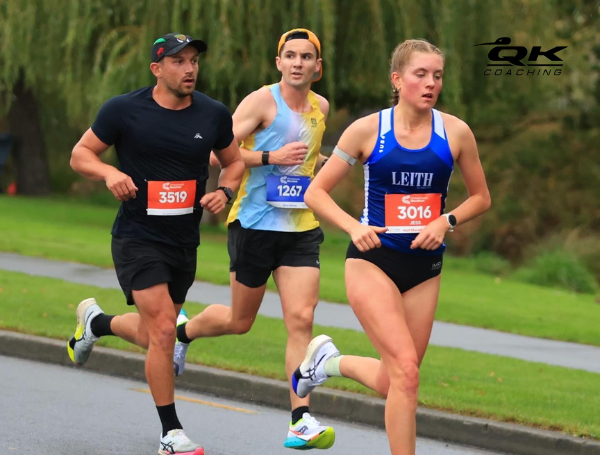
That is why Jess Bray’s recent performance at the New Zealand Half Marathon Championships offers valuable lessons for runners chasing their own breakthrough.
Jess claimed the New Zealand Under-20 Female Half Marathon title for the second year in a row. While most runners reading this article may not be racing for national medals, the same principles that helped her succeed can help you run a faster half marathon too.
Whether your goal is to break 2 hours, run sub-1:45, set a personal best, or simply finish stronger than last time, there is a lot to learn from championship racing.
1. Fast Half Marathons Start With Good Preparation
Race day is only the final exam. The real work happens in training.
Jess arrived prepared, fit, and ready to compete. That preparation included consistent mileage, structured workouts, recovery, and enough long runs to handle the demands of 21.1 kilometres.
Many runners want a faster half marathon but skip the basics:
- Inconsistent weekly running
- Missing long runs
- Running easy days too hard
- Not enough threshold work
- Poor recovery habits
The fastest path forward is often mastering the fundamentals.
If you want to improve, ask yourself:
- Have I trained consistently for 8–12 weeks?
- Have I built endurance gradually?
- Have I included race-specific sessions?
- Am I recovering well enough to improve?
2. Strong Starts Matter — But Smart Starts Matter More
Jess opened the race aggressively and positioned herself well. Competitive racing often requires confidence early.
For everyday runners, however, one of the most common mistakes is going out too fast.
The half marathon rewards patience. If you run the opening 5km above your true ability, the final 6km can become a struggle.
Instead:
- Start controlled
- Settle into rhythm
- Let others surge if needed
- Build momentum gradually
A smart first 5km often leads to your fastest overall time.
3. Threshold Fitness Wins Half Marathons
The half marathon sits in a zone where speed meets endurance. You need to be aerobically strong, but also comfortable running at a challenging pace for a long time.
That is why threshold training is so effective.
Examples include:
- 3 x 10 minutes at strong steady effort
- 2 x 5km at half marathon effort
- 20–40 minutes continuous tempo running
- Cruise intervals with short recoveries
These sessions teach you to hold quality pace without red-lining too early.
Jess’s ability to run strongly through much of the race reflects the value of this type of fitness.
4. The Final 5km Tells the Truth
Anyone can feel good early. The real race begins when fatigue arrives.
For many runners, the final 5km of a half marathon is where time is gained or lost.
This is where pacing, strength, fueling, mindset, and durability all show themselves.
To improve your finishing strength, include:
- Long runs with faster finishes
- Progression runs
- Race-pace work late in sessions
- Strength training for fatigue resistance
If you can maintain form and focus when tired, your half marathon times improve quickly.
5. Cadence and Form Matter Late in the Race
As runners tire, posture drops, stride length shortens, and cadence often slows.
Efficient runners manage this better.
Jess showed the kind of rhythm and turnover that strong athletes often maintain deep into races.
You do not need to obsess over numbers, but you should aim for:
- Relaxed shoulders
- Tall posture
- Quick light steps
- Strong arm drive late
- Staying mentally engaged
Good mechanics save energy.
6. Tough Races Build Future PBs
Even championship winners often have moments where the race hurts more than expected.
That is normal.
Some races produce personal bests. Others produce lessons.
If your last half marathon felt hard late, that does not mean failure. It means you now know what to improve.
Use it.
- Need better pacing? Adjust your opening split.
- Need more endurance? Extend long runs.
- Need strength late? Add progression efforts.
- Need confidence? Race again with smarter execution.
Every race can move you forward.
7. What Everyday Runners Can Learn From Elite Athletes
You do not need to train like a national champion to benefit from watching one race.
You simply apply the principles at your own level:
- Be consistent
- Respect the distance
- Train specifically
- Pace wisely
- Stay strong late
- Keep learning
That formula works whether you run 1:15 or 2:15.
Want to Run a Faster Half Marathon?
If you are targeting a personal best in your next half marathon, I can help you train smarter, race better, and arrive confident on the start line.
At Qwik Kiwi Coaching I work with runners of all levels preparing for half marathons, marathons, ultras, triathlon, cycling, and endurance goals.
Book a consultation and let’s map out your next breakthrough.
Final Thought
Jess Bray’s championship win is a reminder that faster half marathons come from preparation, courage, and resilience.
Do the work. Pace it well. Stay strong when it gets tough.
That is how personal bests happen.