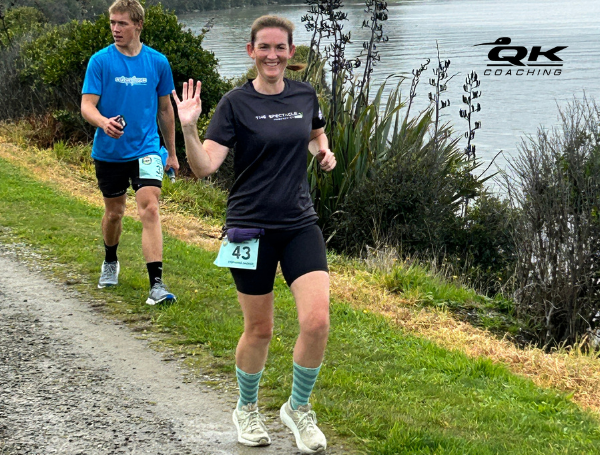
There’s a tendency in endurance sport to look for breakthroughs.
Big jumps. Breakout performances. Sudden progress.
But if you spend enough time around ultra runners, you realise something different: the athletes who go the distance—year after year—aren’t the ones chasing breakthroughs.
They’re the ones you can rely on.
Steph Barker is one of those athletes.
Her recent run of events—Tarawera T102, Paparoa Ultra, and the Wild West Backyard Ultra—aren’t outliers. They’re not a sudden step up. If anything, they’re exactly what you’d expect from her.
Consistent. Composed. Mentally tough.
And that’s the point.
Tarawera T102: Holding the Line
Tarawera is a race that asks questions.
Not all at once—but gradually, over time.
The physical side is one thing. The real challenge is how you respond when the race starts to push back.
What stood out in Steph’s run wasn’t a dramatic surge or a defining moment. It was something quieter than that.
She held the line.
When things got uncomfortable—as they always do—there was no panic. No emotional spike. Just a steady continuation of the plan.
That ability to stay level, to not overreact to a bad patch, is one of the most underrated skills in ultra running.
And it’s something Steph has shown time and time again.
Paparoa Ultra: Staying Present on Relentless Terrain
Paparoa doesn’t give you much.
It’s technical, demanding, and it has a way of wearing you down—not just physically, but mentally.
This is where resilience shows up differently.
It’s not about pushing harder. It’s about staying engaged.
What came through in the debrief was Steph’s ability to stay present in the race. Not getting ahead of herself. Not drifting mentally when the terrain got tough.
Just dealing with what was in front of her.
Step by step. Section by section.
That might sound simple, but it’s not. It’s a skill—and it’s one that experienced ultra runners develop over years.
Steph didn’t find that on the day. She brought it with her.
Wild West Backyard Ultra: One More Lap, As Always
Backyard ultras strip everything back.
There’s no hiding. No shortcuts. Just repetition, fatigue, and the question that keeps coming:
Can you do one more?
For athletes without that mental framework, it becomes overwhelming very quickly. The mind drifts too far ahead. The task feels too big.
But that’s not how Steph approaches it.
She reduces it down to what matters.
One lap. One start line. One decision.
It’s the same mindset she’s brought to other races, just applied in a different format.
And again, it’s not new.
It’s repeatable.
The Consistency Behind It
When you look across these three events, there’s a clear pattern.
Not in the results—but in the approach.
Steph doesn’t rely on things going perfectly. She doesn’t need the race to feel good to perform well.
Instead, she brings a level of mental stability that allows her to navigate whatever the day throws at her.
That’s why the performances look consistent.
Because the mindset is consistent.
What Mental Fortitude Actually Looks Like
It’s easy to talk about toughness in ultra running.
But it’s often misunderstood.
It’s not about pushing through at all costs. It’s not about ignoring how you feel.
Real mental fortitude looks more like this:
- Staying calm when things don’t go to plan
- Not attaching too much meaning to a tough patch
- Continuing to execute, even when motivation dips
- Keeping your focus where it needs to be—not drifting too far ahead
That’s what Steph does well.
And it’s why her performances hold up, across different courses, formats, and conditions.
For Your Own Running
If you’re chasing improvement in your own running, it’s worth paying attention to this.
Because mental resilience isn’t something that suddenly appears on race day.
It’s built over time.
In training. In smaller races. In the way you respond when a session doesn’t feel right.
Steph’s performances across these ultras are a reflection of that long-term development.
Nothing flashy. Nothing new.
Just a level of mental strength that shows up, again and again, when it’s needed.
Love this idea—this fits perfectly with how you’re building depth across your content.
I’ll keep the tone aligned with your triathlon version, but tailored to ultra runners and the themes from this debrief (mental resilience, pacing, execution):
Continue Learning & Building Your Ultra Marathon Confidence
➡️ Ultra Marathon Coaching with Coach Ray
Learn how structured coaching helps ultra runners stay consistent, manage fatigue, and execute with confidence—whether you’re stepping up to your first ultra or looking to perform more reliably across races.
If you enjoyed this debrief and want to go deeper into smart ultra marathon racing, these next reads will help:
➡️ How to Pace an Ultra Marathon
Why starting controlled is critical in long-distance events—and how the best ultra runners avoid the pacing mistakes that lead to late-race blow-ups.
➡️ Fuelling for Ultra Marathon Success
A practical guide to building a fuelling strategy you can trust—so you can maintain energy, avoid the lows, and keep moving forward when it matters most.
➡️ Training for Consistency in Endurance Events
How to structure your training so you’re not relying on “good days”—but instead building performances you can repeat across races and conditions.
➡️ Developing Mental Resilience for Long Races
Simple, practical strategies to stay composed, focused, and in control when things inevitably get tough during an ultra.
Ready to train with more structure and confidence? Book your free consultation here: