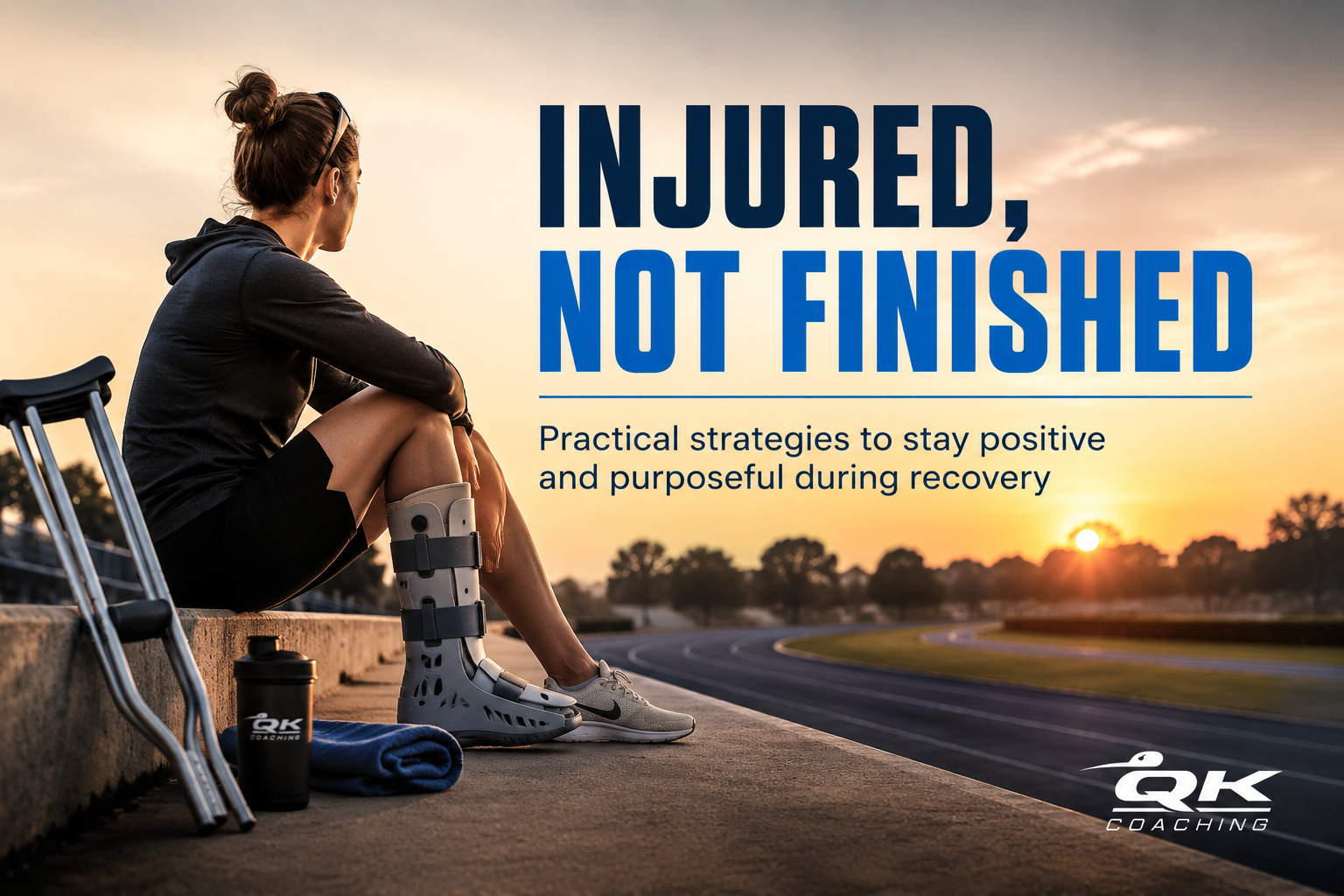
One of the hardest parts of being an athlete is dealing with injury.
Not just the physical side of it, but the mental and emotional challenges that come with suddenly being unable to train, compete, or even follow your normal routine.
Recently, during one of our Qwik Kiwi Coaching Group Coaching Calls, we discussed how athletes can stay motivated while injured. What stood out during the conversation was that almost every athlete, regardless of their level, experiences similar frustrations and fears when injury interrupts their training.
The good news?
An injury does not mean your athletic journey is over.
In many cases, it simply means the journey has temporarily changed direction.
Injury Changes More Than Just Training
One of the biggest challenges with injury is uncertainty.
You might have races planned. You might have specific goals you’ve been building towards for months. Suddenly, you’re asking questions like:
- Will I lose all my fitness?
- Will I make it to my race?
- Will I ever get back to where I was before?
- What if this becomes permanent?
On top of that, injury often disrupts your weekly structure and routine.
A runner who suddenly cannot run may feel completely disconnected from their normal identity. A triathlete who can no longer ride or run may suddenly have large gaps in their week that training used to fill.
For many athletes, training is not just exercise. It is structure, stress relief, social connection, confidence, and identity all rolled into one.
That is why injury can feel mentally exhausting as well as physically limiting.
Most Athletes Fear Losing Fitness More Than They Actually Lose It
One of the biggest misconceptions athletes have during injury is believing they are going to lose all their fitness overnight.
The reality is usually far less dramatic.
Aerobic fitness comes back surprisingly quickly once you are healthy enough to resume training. Athletes often retain far more conditioning than they realise, particularly after years of consistent training.
Yes, longer-term injuries and surgeries can create larger setbacks, but even then, the body is remarkably adaptable.
Many athletes spend more time fearing the loss of fitness than they spend actually losing it.
Perspective matters here.
Long-term athletic development is never perfectly linear anyway. Every athlete experiences interruptions, setbacks, dips in form, illness, life stress, or injury at some point.
Injury is often just one temporary chapter in a much longer journey.
Shift Your Focus From Performance Goals to Recovery Goals
One of the most effective ways to stay motivated during injury is to stop focusing on what you currently cannot do and start focusing on what you can control.
That shift is powerful.
Instead of chasing performance goals, your attention moves toward rehabilitation goals.
That may mean:
- completing your physio exercises consistently
- improving range of motion
- rebuilding strength
- improving sleep and recovery habits
- walking pain-free
- returning to easy training gradually
Small wins matter during rehabilitation.
In the coaching call, I shared the example of one athlete recovering from knee surgery. Initially, his goals were extremely simple: short treadmill walks and controlled movement. Over time, those became longer walks, then easy cycling, then progressively rebuilding strength and mobility.
The important thing was not how glamorous the process looked.
The important thing was consistency.
Recovery Is Training
Athletes sometimes treat recovery as something separate from training.
In reality, recovery is part of training.
Sleep, hydration, nutrition, mobility work, stretching, and rehabilitation exercises all become critical during injury recovery.
The athletes who recover best are often the athletes who:
- follow the process consistently
- communicate well with their physio or medical team
- stay patient
- avoid rushing back too early
- focus on daily habits rather than shortcuts
Patience becomes a performance skill.
Not only during rehabilitation, but later during racing and pacing as well.
Stay Connected To Your Community
One of the easiest mistakes injured athletes make is disconnecting completely from their sporting community.
That isolation can make the mental side of injury even harder.
Even if you cannot fully participate, there is huge value in remaining involved:
- attend sessions socially
- stay active in group chats
- support teammates
- celebrate the success of others
- volunteer at events
- continue following the sport
During my own recent calf injury, I was unable to lead the Velocity cycling sessions the way I normally would. But I still stayed connected with the athletes, monitored sessions, and remained involved in the community.
That connection matters more than many athletes realise.
Comparing Yourself To Your Old Fitness Can Be Dangerous
One of the traps athletes fall into after injury is trying to return immediately to previous fitness levels.
The body rarely works that way.
During the coaching call, we discussed an athlete who had previously been running under 19 minutes for parkrun. After months affected by an Achilles injury, they returned to parkrun and attempted to run their old pace immediately. Unsurprisingly, it became unsustainable very quickly.
The lesson?
Respect where you are now.
Your previous fitness is part of your history, not necessarily your current reality.
Confidence returns through consistent training and small successes, not through trying to prove yourself in one session.
Injury Can Create New Opportunities
One of the most interesting parts of the discussion came from athlete Tanya Winter, who reflected on her own knee injury.
Initially, she feared it might end her running completely. Her motivation shifted toward preserving her health so she could continue hiking, biking, and spending quality time with her mokopuna (grandchildren).
Ironically, that same injury later opened the door to a completely new opportunity: Aquabike competition and qualification for the New Zealand team.
Sometimes injury redirects us toward opportunities we never would have explored otherwise.
Not every setback closes doors.
Some setbacks simply point us toward different ones.
Social Media Can Help — And Hurt
Platforms like Strava can be both motivating and mentally difficult when injured.
On one hand, they help athletes stay connected.
On the other hand, constantly seeing friends training while you cannot can create frustration and self-doubt.
It helps to remember:
- your recovery journey is individual
- other athletes’ training does not diminish your progress
- your current focus is rehabilitation, not comparison
Celebrate the successes of others while still respecting your own process.
The Comeback Can Become Part of the Story
One of the final points discussed during the coaching call was how injuries can ultimately improve long-term self-awareness and resilience.
Athletes often return:
- more patient
- more disciplined
- more balanced
- more aware of recovery
- more appreciative of the opportunity to train
In some cases, the comeback itself becomes a defining part of the athletic journey.
I reflected on one athlete who spent most of her Ironman New Zealand build unable to run due to injury. By focusing on what she could do, particularly swimming and cycling, she maintained her aerobic fitness and eventually completed the marathon strongly on race day.
That is the key lesson.
Injured does not mean finished.
It simply means adapting, rebuilding, and continuing the journey differently for a while.
If you’re currently working through injury, remember that you do not have to navigate the process alone.
Injury recovery is not just about getting rid of pain. It is about rebuilding confidence, restoring routine, managing the mental side of the process, and creating a safe pathway back to the sport and lifestyle you enjoy.
Alongside more than two decades of coaching experience, I also hold a Post Graduate Diploma in Rehabilitation and a Post Graduate Diploma in Sports Medicine, helping me support athletes through both the physical and psychological challenges that injury can create.
If you would like support with your recovery journey and return to training, you can book an obligation-free consultation here:
Let’s start planning your comeback.