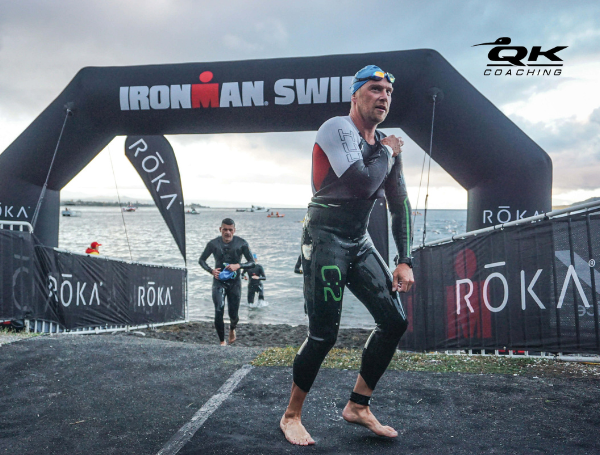
Most Ironman 70.3 athletes don’t struggle in the swim because they lack fitness.
They struggle because they start too hard.
The opening few hundred metres of a race swim are chaotic. Athletes are excited, adrenaline is high, and everyone is trying to find clear water and establish position. The problem is that many athletes respond to that energy by sprinting.
And that decision can affect the entire rest of the swim.
The Real Cost of Starting Too Hard
When you surge aggressively at the start of a swim, your heart rate spikes quickly. Your breathing becomes shallow and rushed. Stroke rhythm disappears. Instead of swimming smoothly, you begin fighting the water.
Once this happens, many athletes spend the remainder of the swim simply trying to recover.
You’ll often hear athletes describe this as:
- “I just couldn’t settle.”
- “I felt out of breath the whole swim.”
- “I never found a rhythm.”
In most cases, the issue wasn’t fitness.
It was pacing.
Control First, Speed Second
The best Ironman 70.3 swimmers are not necessarily the athletes sprinting at the gun.
They are usually the athletes who stay calm enough to establish rhythm early.
A good approach for most recreational triathletes is to begin the swim at approximately 80–85% effort for the first 200–300 metres. That doesn’t mean swimming slowly. It simply means resisting the temptation to surge beyond your sustainable intensity.
During those opening minutes:
- Focus on long, controlled breathing.
- Keep your stroke relaxed.
- Allow the field to spread slightly.
- Find clear water where possible.
- Gradually build into your natural race pace.
You should feel controlled—not desperate.
Why This Matters Beyond the Swim
The swim is only the first part of an Ironman 70.3.
If you exit the water already stressed, oxygen-deprived, and mentally rattled, that carries forward into T1, the bike, and eventually the run.
A calmer opening swim usually means:
- Lower overall stress levels.
- Better energy management.
- Smoother transitions.
- More controlled bike pacing.
- Better decision-making early in the race.
Ironman 70.3 rewards patience far more than panic.
The Mistake Many Athletes Make in Training
A lot of triathletes only practice swimming at steady pace in the pool.
Then race day arrives and suddenly they are swimming hard immediately, surrounded by hundreds of athletes, with elevated adrenaline and very different breathing demands.
That disconnect matters.
In training, it can help to occasionally practise:
- Starting slightly harder for 30–60 seconds.
- Settling back into controlled rhythm.
- Regaining relaxed breathing under pressure.
This teaches you how to calm yourself after the initial surge rather than being overwhelmed by it.
Race-Day Reminder
At your next Ironman 70.3, remember this:
You do not need to “win” the first 200 metres.
You simply need to position yourself to have the best possible race over the entire day.
Sometimes the smartest athletes at the start are the ones who look the calmest.