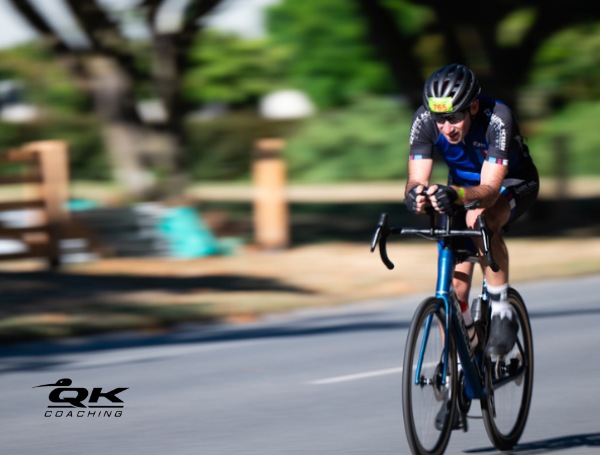
One of the biggest mistakes endurance athletes make indoors is treating the trainer purely as a fitness tool.
Yes, indoor cycling is fantastic for building aerobic fitness, threshold power, and consistency. But one of its greatest advantages is something many athletes completely overlook:
Indoor riding is the ideal place to train your riding position.
For triathletes, that usually means spending time in the aero position. For cyclists, it may mean developing stability, posture, and durability in a more aggressive road position. Either way, position matters — not just for aerodynamics, but for comfort, efficiency, and performance over time.
And indoors gives you a unique opportunity to work on it.
Why Indoor Riding Is So Effective for Position Training
Outdoor riding is constantly interrupted.
Traffic. Corners. Descents. Intersections. Standing up over climbs. Changing hand positions. Coasting.
Even during a focused training ride, you rarely stay in one uninterrupted position for long.
Indoor riding removes most of those interruptions.
That means you can spend sustained periods holding the exact posture you want to develop for racing or long-distance riding.
For triathletes especially, this matters.
Holding an aero position is not just about flexibility or bike fit. It is a specific physical adaptation. Riding with a closed hip angle changes muscle recruitment, challenges posture, affects breathing mechanics, and places additional stress on stabilising muscles through the neck, shoulders, trunk, and hips.
That adaptation only happens if you actually spend time there.
Fitness Is Useless If You Cannot Hold the Position
A common scenario in triathlon is an athlete producing strong power numbers indoors or in training… but struggling to maintain position on race day.
They sit up frequently.
Their neck tightens.
Their lower back fatigues.
Their hips become uncomfortable.
Their power drops late in the ride.
The issue often is not fitness.
It is positional durability.
You are not just training your cardiovascular system during indoor rides. You are training your body’s ability to tolerate the demands of that position for long periods of time.
That is why race-specific indoor riding can be so valuable.
Aero Position Is About More Than Aerodynamics
Aerodynamics absolutely matter.
Reducing frontal area and maintaining an efficient riding posture can significantly reduce drag and improve speed for the same power output.
But for most recreational athletes, the biggest gains often come from consistency and sustainability.
A slightly less aggressive position that you can comfortably maintain for 90 kilometres is usually far more effective than an ultra-aggressive setup you constantly need to escape from.
Indoor riding helps you find that balance.
You quickly learn:
- what feels sustainable
- what creates tension
- how long you can realistically hold position
- whether your bike fit supports your goals
- and where fatigue begins to accumulate
Those are incredibly valuable lessons before race day.
Use Indoor Sessions Strategically
This does not mean every indoor ride must be locked into aero position from start to finish.
In fact, for many athletes, that would be counterproductive.
Instead, gradually build exposure.
You might:
- hold aero during steady endurance efforts
- use aero position during threshold intervals
- alternate between position blocks and recovery blocks
- gradually increase uninterrupted time in position week to week
The goal is progressive adaptation — just like any other part of training.
Comfort Still Matters
One important point:
Indoor riding is more static than outdoor cycling.
There is less movement underneath the bike, fewer posture changes, and often more accumulated pressure through contact points.
That means discomfort can appear sooner indoors.
Do not ignore this.
Sometimes small adjustments to bike fit, front-end height, reach, saddle position, or cooling setup can make a massive difference. Good airflow is also critical indoors because overheating increases fatigue and discomfort quickly.
If your position is so uncomfortable that you cannot consistently train in it, it probably needs adjustment.
Indoor Training Is More Than Fitness
The best endurance athletes use indoor training intentionally.
Not just to ride harder.
Not just to chase power numbers.
But to become more efficient, more durable, and more race-ready.
Your indoor trainer gives you something outdoor riding rarely can:
Uninterrupted time to practise the exact position you want to perform in.
Use it well.