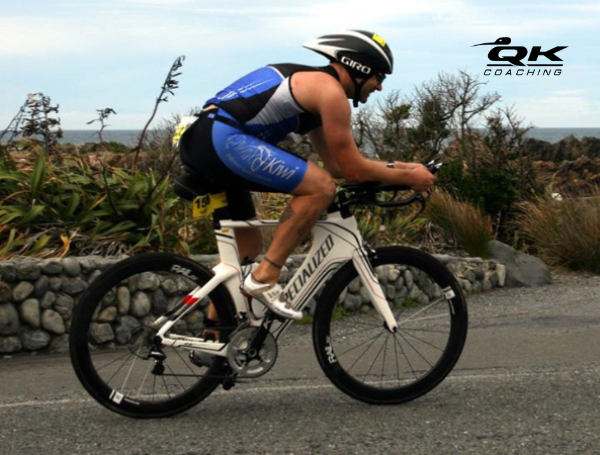
When athletes want to ride faster in an Ironman, the first thing they usually think about is increasing their power.
They chase a higher FTP.
They spend more time doing intervals.
They look for another few watts.
There’s nothing wrong with getting stronger.
But if you’re preparing for an Ironman, there may be a bigger opportunity sitting right in front of you.
Your bike position.
Over 180 kilometres, reducing drag often has a greater impact on your bike split than producing a little more power.
Speed Is About More Than Fitness
Many athletes assume that the fastest rider is the strongest rider.
In reality, the fastest rider is often the one who moves through the air most efficiently.
At Ironman speeds, aerodynamic drag is the biggest force working against you.
That means even a small improvement in your riding position can translate into significant time savings over a full-distance race.
Better still, you can often achieve those gains without having to become any fitter.
Comfort Is Performance
One of the biggest mistakes I see is athletes trying to copy the position of professional triathletes.
It looks fast.
But can you actually hold it for 180 kilometres?
If the answer is no, then it isn’t the fastest position for you.
An aggressive position that forces you to sit up every few minutes isn’t aerodynamic.
A slightly less aggressive position that you can comfortably maintain for the entire ride usually is.
The fastest position is the one you can sustain.
Every Time You Sit Up, You Slow Down
Think about how often athletes sit up unnecessarily during an Ironman.
To stretch.
To eat.
To drink.
Because their neck hurts.
Because their lower back is tight.
Every time you leave your aero position, you increase your frontal area and create more drag.
Some of those moments are necessary.
Many aren’t.
The more comfortable your position, the easier it becomes to stay aerodynamic for longer.
A Good Bike Fit Pays Dividends
A professional bike fit isn’t just about preventing injuries.
It’s about improving performance.
A quality fit should help you find the balance between:
- Comfort
- Aerodynamics
- Sustainable power
- Efficient pedalling
- Good handling
All of those factors contribute to a better Ironman bike leg.
More importantly, they help you arrive at T2 feeling ready to run.
Think Beyond the Bike Split
Your bike position doesn’t just affect your cycling.
It influences your marathon too.
If you’re excessively stretched, constantly shifting position, or placing unnecessary stress on your back, neck, or hips, those muscles will already be fatigued before you even start running.
The best Ironman bike position isn’t necessarily the one that produces the fastest standalone ride.
It’s the one that allows you to ride efficiently and still run well afterwards.
Remember, the goal isn’t to win the bike leg.
The goal is to achieve the fastest overall race.
Practice Your Race Position
One mistake athletes make is spending most of their training rides sitting upright before expecting to stay aero for an entire Ironman.
Like every other skill, riding in the aero position requires practice.
Gradually increase the amount of time you spend riding in your race position during long rides.
Use race-specific sessions to test:
- Comfort
- Nutrition access
- Hydration
- Power output
- Cadence
- Handling
By race day, your aero position should feel normal rather than forced.
Small Gains Become Big Gains
Many athletes underestimate the cumulative effect of small improvements.
A slightly better position.
Holding aero for a few more minutes each hour.
Reducing unnecessary movement.
Saving a little energy.
None of these changes seem dramatic on their own.
Together, they can make a meaningful difference over 180 kilometres.
Sometimes the fastest athlete isn’t the one producing the most power.
It’s the one wasting the least.
Final Thoughts
Fitness matters.
There’s no doubt about that.
But in Ironman, speed comes from combining fitness with smart decisions.
A comfortable, sustainable, aerodynamic position allows you to ride more efficiently, conserve energy, and arrive at the marathon in a much better position to perform.
Before chasing another 10 Watts, ask yourself a different question:
“Could I go faster simply by creating less drag?”
For many athletes, the answer is yes.
Ready to Build Your Best Ironman Yet?
Whether you’re training for your first Ironman, chasing a personal best, or simply trying to avoid the common mistakes that derail so many race days, having the right plan can make all the difference.
If you’d like to discuss your training, race goals, nutrition, pacing, bike setup, or race-day strategy, I’d love to help.
Book a free, no-obligation 40-minute coaching consultation and let’s chat about how we can get you to the start line feeling confident and prepared.
I work with athletes of all abilities, from first-time Ironman finishers through to experienced athletes looking to race smarter and perform at their best.