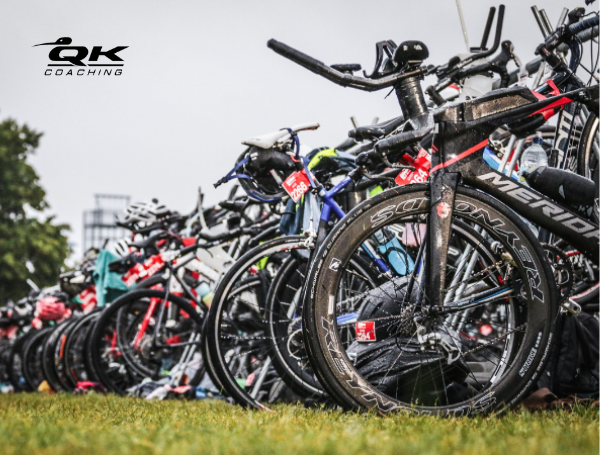
When triathletes think about improving their race times, they usually focus on swimming faster, riding harder, or running stronger.
Very few think about transition.
That’s a mistake.
Transitions are often referred to as the “fourth discipline” of triathlon, yet they’re one of the most overlooked aspects of race-day performance.
The best part?
Improving your transitions doesn’t require you to become any fitter.
It simply requires practice.
The Clock Never Stops
One of the biggest misconceptions among newer triathletes is that transition is a break between disciplines.
It isn’t.
The race clock keeps ticking from the moment you cross the start line until you cross the finish line.
Every second you spend searching for your helmet, struggling with your shoes, or wondering what to do next is time you’ll never get back.
Those seconds quickly become minutes over the course of a race.
And unlike gaining those minutes through extra fitness, they’re often surprisingly easy to save.
What Happens in Transition?
There are two transitions in a standard triathlon.
Transition 1 (T1) is from the swim to the bike.
Transition 2 (T2) is from the bike to the run.
Each involves a series of simple tasks:
- Finding your bike.
- Removing or putting on equipment.
- Fastening your helmet.
- Changing shoes.
- Collecting nutrition.
- Mounting or dismounting your bike.
- Leaving transition efficiently.
None of these tasks are difficult on their own.
The challenge comes when you try to perform them quickly while your heart rate is elevated and adrenaline is flowing.
Simple Beats Complicated
One of the easiest ways to improve your transitions is to simplify them.
Lay your equipment out in the order you’ll use it.
Remove anything you don’t need.
Avoid unnecessary clothing changes if conditions allow.
Know exactly where every piece of equipment belongs.
When you arrive at your transition area, there should be no decisions to make.
Simply follow the sequence you’ve already practised.
The simpler your setup, the less likely you are to make mistakes.
Practise Before Race Day
Many athletes spend months training for the swim, bike, and run.
Then they expect transitions to take care of themselves.
Instead, spend a few minutes rehearsing them.
Practise:
- Running into transition.
- Putting your helmet on before touching your bike.
- Running with your bike.
- Mounting and dismounting safely.
- Removing your helmet only after racking your bike.
- Changing shoes quickly.
The more familiar these movements become, the calmer and more efficient you’ll be on race day.
Stay Calm, Not Frantic
Watch experienced triathletes in transition and you’ll notice something interesting.
They rarely look rushed.
They’re moving quickly, but they’re also controlled.
Newer athletes often make the opposite mistake.
They panic.
They rush.
They fumble with buckles.
They forget equipment.
Ironically, trying to go too fast often makes transitions slower.
Smooth is fast.
Deliberate is efficient.
Stay calm and trust your routine.
Small Improvements Add Up
Imagine you save just 30 seconds in T1 and another 30 seconds in T2.
That’s one minute.
For many athletes, finding an extra minute through swim, bike, or run training could take months.
Improving transitions might take just a few practice sessions.
That’s why coaches often refer to transitions as “free speed.”
They’re one of the easiest opportunities to improve your overall race time without increasing your fitness.
Build Your Own Routine
Every experienced triathlete develops a personal transition routine.
It becomes automatic.
Helmet.
Glasses.
Shoes.
Nutrition.
Bike.
Run.
When race day arrives, there’s no thinking required.
Just execution.
The more automatic your routine becomes, the more mental energy you’ll save for the race itself.
Final Thoughts
Transitions aren’t simply the space between the swim, bike, and run.
They’re part of the race.
Treat them with the same importance as every other discipline.
Practise them.
Simplify them.
Refine them.
You may be surprised how much time you can save without swimming harder, riding faster, or running further.
Because sometimes the easiest way to become a faster triathlete isn’t improving your fitness.
It’s simply becoming more efficient.
What’s Your Biggest Triathlon Goal?
Whether you’re training for your first triathlon, stepping up to an Ironman 70.3, or looking to improve on a previous result, I’d be happy to help.
Book a free, no-obligation 40-minute coaching call and let’s discuss your goals, your current training, and the best path forward.
I look forward to learning more about your journey and helping you achieve your triathlon goals.