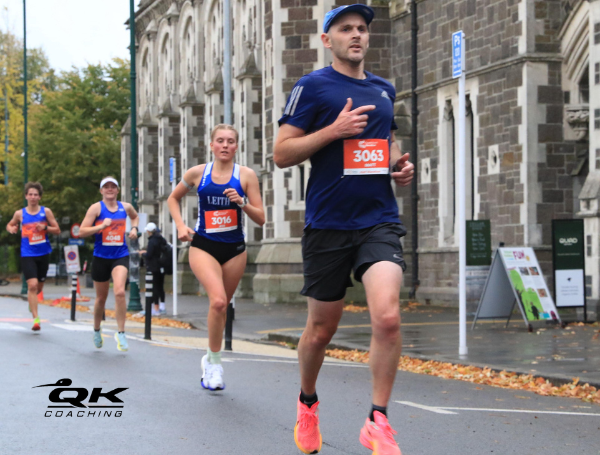
Most runners spend months preparing for a half marathon.
They build mileage, complete long runs, and work hard on their pacing.
Then race day arrives, and many make a mistake that has nothing to do with fitness.
They wait too long to fuel.
The result is often predictable. The race feels comfortable early, pace is on target through halfway, and then somewhere between 12 and 18 kilometres things start to unravel.
The legs feel heavier.
The pace starts slipping.
The effort required to maintain speed suddenly feels much higher.
The runner assumes they need more fitness.
Often, they simply needed a better fuelling strategy.
Why Half Marathon Fuelling Matters
A half marathon sits in an interesting position between shorter and longer endurance events.
For many runners, it is long enough that glycogen availability becomes a significant factor, but short enough that some athletes mistakenly believe they can get away without a fuelling plan.
Sometimes they can.
Sometimes they cannot.
The difference often comes down to pace, experience, weather conditions, and individual physiology.
The faster and harder you race, the greater the demand placed on your body’s carbohydrate stores.
While your body can use both fat and carbohydrates for energy, race pace in a half marathon relies heavily on carbohydrates.
Once those stores begin to run low, maintaining pace becomes significantly harder.
The Problem With Waiting Until You Feel Tired
One of the biggest misconceptions in endurance sport is treating fuelling like an emergency response.
Many runners wait until they feel flat before taking a gel.
The problem is that by the time you notice the decline, the process has already started.
Think of fuelling like topping up a fuel tank rather than waiting for the warning light to come on.
The goal isn’t to recover from low energy.
The goal is to prevent it from happening in the first place.
That’s why many successful half marathon runners begin taking fuel relatively early in the race, often around the 30 to 40-minute mark depending on race duration and individual needs.
Race Day Is Not the Time to Experiment
One of the most common mistakes among first-time half marathon runners is trying something new on race day.
A new gel.
A new sports drink.
A different breakfast.
A different timing strategy.
Every one of these introduces uncertainty.
The best fuelling strategy is one that has already been tested during training.
Your long runs provide the perfect opportunity to practise:
- What you eat before running
- How much fluid you consume
- Which gels or products you tolerate
- When you take them
- How your stomach responds
Nothing should surprise you on race day.
Train Your Gut Like You Train Your Legs
Most runners understand that muscles adapt to training.
What many overlook is that the digestive system adapts too.
If you never consume carbohydrates while running, suddenly introducing gels during a race can create problems.
Regular practice helps your body become more comfortable processing fuel during exercise.
This is particularly important for runners targeting personal best performances where every minute matters.
The athletes who execute their fuelling strategy confidently on race day are often the same athletes who practised it consistently during training.
Keep It Simple
You don’t need a complicated nutrition spreadsheet to fuel a half marathon successfully.
What you need is a plan.
Know what you’re taking.
Know when you’re taking it.
Practise it during training.
Then execute it on race day.
Simple usually beats complicated.
Fitness Gets You to the Start Line. Fuelling Helps Get You to the Finish.
Good training remains the foundation of half marathon success.
There is no nutrition strategy that can compensate for inadequate preparation.
However, poor fuelling can absolutely prevent you from realising the fitness you’ve worked so hard to build.
The goal is simple.
Arrive at the final few kilometres with enough energy to keep running strongly.
Because the runners who finish best are rarely the ones who fuelled the most.
They’re usually the ones who fuelled at the right time.
If you’re preparing for a half marathon and would like guidance on training, pacing, race-day preparation, and fuelling strategies, visit www.coachray.nz and discover how a structured approach can help you race stronger from start to finish.