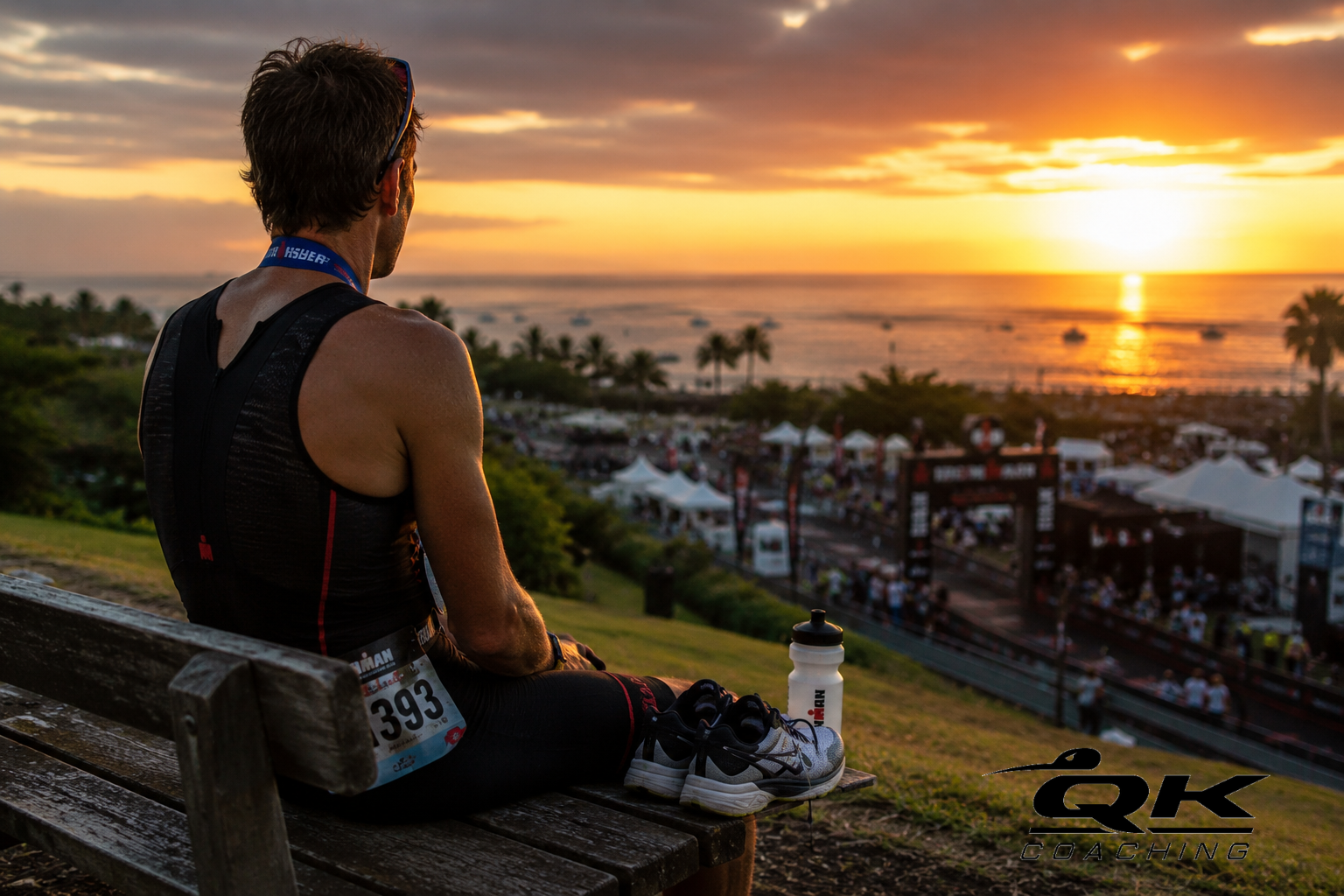
You’ve trained for months.
You sacrificed weekends, early mornings, social events, and countless hours of comfort to prepare for one big goal.
Maybe it was your first Ironman 70.3.
Maybe it was a marathon.
Maybe it was a world championship event.
Maybe it was a miler, ultra-marathon, or a bucket-list cycling challenge.
You crossed the finish line, achieved your goal, collected your medal, took the photos, celebrated with family and friends…
And then a few days later something unexpected happened.
You felt flat.
Unmotivated.
Restless.
Maybe even a little lost.
If that sounds familiar, you’re not alone.
As a coach, I’ve seen this countless times. In fact, among Ironman athletes it’s so common that many coaches simply call it the “Post-Ironman Blues.”
The good news?
It’s completely normal.
The even better news?
There are practical ways to navigate it and come out the other side stronger, happier, and ready for your next challenge.
Why Do Post-Race Blues Happen?
Most endurance athletes spend months focused on a single goal.
Every training session has a purpose.
Every weekend revolves around the event.
Every decision supports race day.
Then suddenly…
It’s over.
The goal that dominated your life for six months, nine months, or even a year no longer exists.
That creates a void.
And human beings don’t particularly like voids.
Your Identity Changes Overnight
For months you’ve been “training for something.”
People ask how your preparation is going.
Your social media is filled with training updates.
Your coach is guiding you towards race day.
Your entire routine revolves around your event.
Then race day arrives.
You complete the challenge.
The next morning you wake up and ask yourself:
“What now?”
That sudden loss of focus can be surprisingly difficult to process.
The Physical Side of Post-Race Blues
Many athletes assume their emotions are purely psychological.
They’re not.
Major endurance events place enormous stress on the body.
Following a marathon, Ironman, ultra-marathon, long-distance swim, or multi-day adventure race, your body is dealing with:
- Hormonal fluctuations
- Physical fatigue
- Muscle damage
- Sleep disruption
- Depleted energy stores
- Nervous system stress
If travel is involved, jet lag and disrupted routines can make things even worse.
It’s no wonder many athletes feel tired, emotional, and unmotivated after a major event.
Your body is asking for recovery.
The Emotional Crash After the Finish Line
Race day is filled with emotion.
Nervous anticipation.
Adrenaline.
Excitement.
Achievement.
Relief.
For many athletes, the emotional high starts fading almost immediately after crossing the finish line.
The finish chute feels incredible.
The crowd is cheering.
The medal goes around your neck.
But before long you’re collecting your gear, finding food, organising transport, or preparing for the journey home.
The celebration is short.
Normal life returns quickly.
That’s when many athletes experience an emotional drop.
The Social Media Trap
One of the biggest challenges in modern endurance sport is comparison.
A few days after your race, you’re doing exactly what your coach recommended:
Resting.
Recovering.
Sleeping.
Rehydrating.
Meanwhile, your social media feed is filled with friends posting:
- Long rides
- Speed sessions
- Race photos
- Training updates
- New goals
Suddenly you feel guilty for doing nothing.
You start wondering if you’re losing fitness.
You feel restless.
You feel like you should be training.
In reality, recovery is training.
Sometimes the most important session you can do is no session at all.
Unrealistic Expectations Can Make Things Worse
Many athletes expect to feel amazing after achieving a big goal.
Sometimes they do.
But often they don’t.
Instead they feel:
- Tired
- Flat
- Unmotivated
- Sore
- Emotionally drained
This doesn’t mean anything is wrong.
It simply means your body and mind are recovering from a major effort.
Understanding this can remove a huge amount of unnecessary stress.
How to Beat the Post-Race Blues
The good news is that there are several practical strategies that work extremely well.
1. Celebrate What You’ve Achieved
Most athletes move on too quickly.
Before focusing on the next goal, take time to appreciate what you’ve just accomplished.
Write a race report.
Share your story.
Post your photos.
Talk about the journey.
Reflect on what you learned.
One reason I encourage athletes to write race reports is because it helps them process the entire experience.
It allows them to celebrate the achievement rather than immediately jumping to the next challenge.
2. Prioritise Recovery
Recovery isn’t being lazy.
Recovery is part of the training process.
Focus on:
- Quality sleep
- Good nutrition
- Hydration
- Relaxation
- Stress reduction
Give your body permission to recover properly.
The fitter you want to become in the future, the more seriously you need to take recovery now.
3. Keep Moving
Recovery doesn’t mean sitting on the couch for two weeks.
Light movement is incredibly valuable.
Consider:
- Easy walks
- Gentle rides
- Easy swims
- Casual jogs
- Mobility work
Move because it feels good.
Not because you’re trying to hit a training target.
Not because you’re trying to prove your fitness.
Just enjoy moving.
4. Set a New Goal
One of the best ways to overcome post-race blues is to create a new sense of direction.
That doesn’t necessarily mean signing up for another major event immediately.
It could be:
- A local fun run
- A cycling challenge
- A parkrun PB attempt
- A trail running adventure
- A new distance
- A different sport
The goal simply needs to provide a sense of purpose.
5. Reconnect With Family and Friends
Major endurance events require commitment.
That commitment often comes at a cost.
Training can become all-consuming.
Long rides.
Long runs.
Travel.
Recovery.
Early mornings.
Late nights.
After your event, take time to reconnect with the people who supported you along the way.
Plan family activities.
Enjoy social occasions.
Be present.
Your relationships matter just as much as your race results.
6. Limit Social Media
Particularly in the first week or two after a major event.
You don’t need constant reminders that other people are still training.
You don’t need to compare your recovery to somebody else’s training block.
Focus on your journey.
Trust the process.
Your time to train hard again will come.
7. Schedule a Post-Race Debrief
One of the most valuable conversations an athlete can have is a proper race debrief.
A good debrief explores:
- What went well
- What didn’t go well
- Lessons learned
- Strengths developed
- Areas for improvement
- Future opportunities
This turns the event into a learning experience rather than simply a result.
Every race contains valuable information.
The athletes who improve most are the ones who take time to analyse it.
Be Patient
Perhaps the most important advice of all:
Be patient.
Post-race blues are normal.
The loss of motivation is temporary.
Your desire to train will return.
Your excitement will return.
Your next goal will emerge.
The athletes who stay in endurance sport for years understand that training isn’t about a single event.
It’s about building a lifelong passion for movement, challenge, growth, and achievement.
Key Takeaways
If you’ve recently completed a major event and are feeling flat, remember:
- Post-race blues are normal.
- Recovery is part of training.
- Your body and mind both need time to recover.
- Social comparison can make recovery harder.
- Celebrating your achievement matters.
- Small goals help rebuild momentum.
- A proper post-race debrief creates future success.
- Motivation always returns.
The finish line isn’t the end of the journey.
It’s simply the beginning of the next chapter.
The key is making sure you recover well enough to enjoy whatever comes next.
Ready For Your Next Goal?
Whether you’ve just completed a marathon, Ironman, Ironman 70.3, ultra-marathon, parkrun PB campaign, or another major endurance challenge, a structured post-race debrief can help you recover smarter and plan your next step with confidence.
Book an obligation-free coaching consultation and let’s discuss your recent race, what you’ve learned, and where your endurance journey should go next: