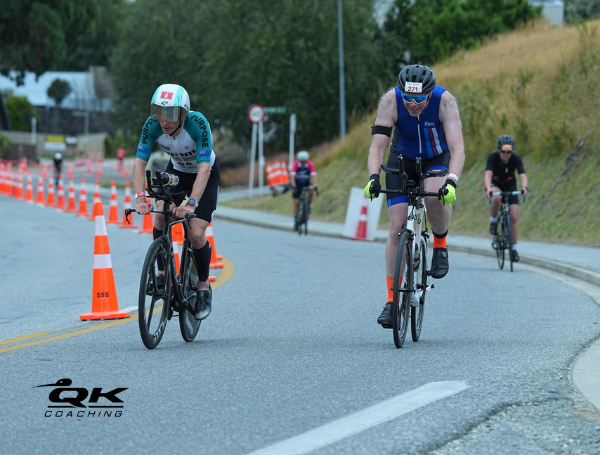
“If your Ironman race falls apart, it probably started in the first 30 minutes of the bike.”
That might sound like a bold statement, but after coaching Ironman athletes for more than two decades, I’ve seen it happen time and time again.
Athletes exit the swim feeling fantastic.
Their adrenaline is pumping.
The crowds are cheering.
They jump on the bike feeling unstoppable.
Then they make one of the biggest mistakes in long-course triathlon.
They ride too hard.
The problem?
They don’t realise they’ve made the mistake until hours later.
Fresh Legs Can Be Deceptive
One of the most dangerous parts of an Ironman isn’t the final 10 kilometres of the marathon.
It’s the first 30 minutes of the bike.
At that point, your body still feels relatively fresh. The swim is over, you’ve settled into the ride, and your perceived effort is often much lower than the actual work you’re producing.
This is where athletes start chasing other riders, climbing hills too aggressively, or riding above their planned power simply because it feels easy.
Unfortunately, Ironman isn’t raced on how you feel in the first hour.
It’s raced on how well you can manage your energy for the next eight to fifteen hours.
The Cost of Riding Too Hard
Every time you push above your planned effort, you’re spending energy you’ll wish you still had later.
Ride too hard early and you’ll often experience:
- Increased carbohydrate use
- Higher heart rate throughout the bike
- Greater muscular fatigue
- Increased risk of dehydration
- More difficulty taking in nutrition
- A much harder marathon
The consequences rarely appear immediately.
Instead, they gradually build until somewhere late on the bike—or early in the run—you begin to wonder why everything suddenly feels so difficult.
Your Marathon Starts on the Bike
Many athletes think of the bike and run as separate events.
They’re not.
The quality of your marathon is largely determined by how well you ride.
The strongest Ironman runners aren’t always the fastest runners.
They’re often the athletes who arrive at T2 with something left in the tank.
That’s why smart bike pacing is so important.
Your goal isn’t to ride the fastest possible bike split.
It’s to ride the fastest bike split that still allows you to run well afterwards.
Ignore Everyone Else
One of the hardest skills to master is letting other athletes ride away from you.
There will always be someone pushing harder.
Someone attacking the hills.
Someone passing you in the opening kilometres.
Let them go.
Your race isn’t against them.
It’s against your own pacing plan.
More often than not, you’ll see many of those same athletes again during the marathon.
Trust Your Numbers
Whether you race using power, heart rate, or perceived effort, trust the plan you’ve developed in training.
If your race plan says to ride at a particular effort, stick to it.
Don’t let adrenaline override months of preparation.
Successful Ironman racing is built on patience.
Discipline early creates opportunities later.
Think Long-Term
Instead of asking yourself:
“Can I hold this effort now?”
Ask yourself:
“Can I still run well after another five or six hours?”
That simple question changes the way you approach every decision on the bike.
It encourages patience rather than emotion.
And patience is one of the greatest competitive advantages you can have in Ironman.
Final Thoughts
The first 30 minutes of the bike should feel controlled.
Almost conservative.
You should feel like you’re holding something back.
That’s exactly the point.
Because Ironman isn’t about proving how strong you are early.
It’s about finishing strong when everyone else is slowing down.
Ride with discipline.
Stick to your numbers.
Trust your training.
Your future marathon legs will thank you for it.
Ready to Build Your Best Ironman Yet?
Whether you’re training for your first Ironman, chasing a personal best, or simply trying to avoid the common mistakes that derail so many race days, having the right plan can make all the difference.
If you’d like to discuss your training, race goals, nutrition, pacing, or race-day strategy, I’d love to help.
Book a free, no-obligation 40-minute coaching consultation and let’s chat about how we can get you to the start line feeling confident and prepared.
I work with athletes of all abilities, from first-time Ironman finishers through to experienced athletes looking to race smarter and perform at their best.