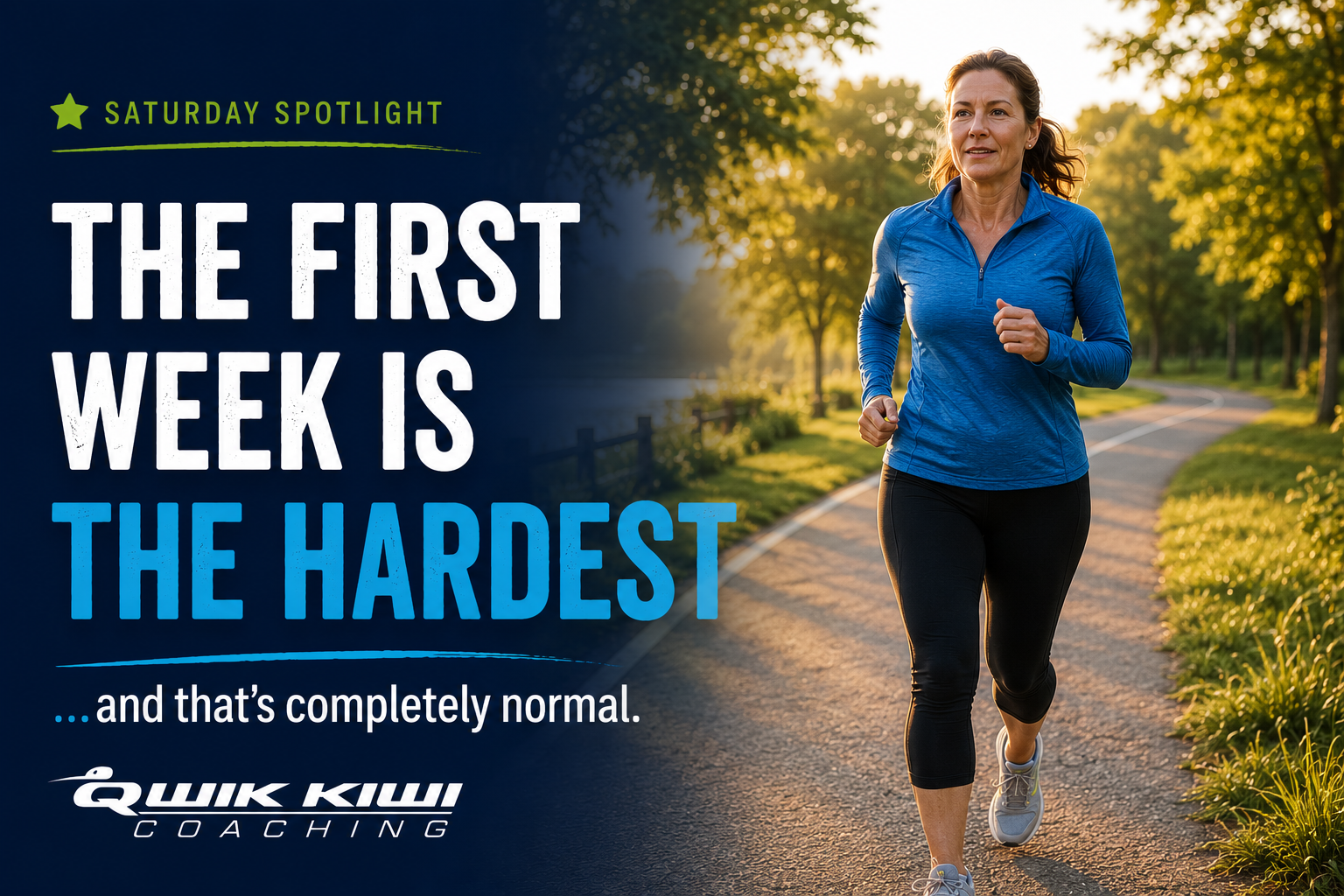
You started.
You bought some running shoes.
You completed your first workout.
Then something unexpected happened.
Running felt… hard.
Harder than you thought it would.
If that’s been your experience, let me reassure you of something.
You’re not doing it wrong.
In fact, feeling challenged during your first week of running is exactly what most beginners experience.
The good news?
It doesn’t stay that way.
Your Body Is Learning Something New
When you first begin running, your heart, lungs and muscles are all adapting to a movement they may not have performed regularly for months—or even years.
Even short periods of running can leave you breathing heavily or wondering if you’re cut out for it.
That doesn’t mean you’re unfit.
It means your body is learning.
Every run sends a signal that says:
“This is something we need to get better at.”
Given time and consistency, your body responds remarkably well.
Lisa Thought the Same Thing

When Lisa began her running journey, she quickly realised that starting wasn’t the biggest challenge.
Continuing was.
Like many beginners, she questioned herself.
Was she progressing quickly enough?
Should it already feel easier?
Would she ever enjoy running?
Those thoughts are incredibly common.
What made the difference wasn’t natural talent or exceptional fitness.
She simply kept turning up.
One workout at a time.
Looking back later, Lisa realised those difficult first sessions weren’t signs she was failing.
They were signs she was changing.
Why Run/Walk Works So Well
One of the biggest mistakes beginners make is trying to run continuously from Day One.
There’s no prize for making yourself exhausted.
That’s why I use a gradual run/walk approach with beginner runners.
Walking isn’t a sign that you’ve failed.
It’s part of the training.
The walking intervals allow your breathing to recover while still keeping you moving forward.
Over time, the running sections become longer.
The walking sections become shorter.
Eventually, something wonderful happens.
You realise you’ve just run further than you ever have before.
Don’t Judge Your Progress Too Early
It’s natural to expect quick improvements.
After all, you’re putting in the effort.
But fitness doesn’t improve overnight.
Some adaptations happen within days.
Others take several weeks.
That’s why judging your progress after your first few runs is like planting a seed and wondering why it hasn’t become a tree by the weekend.
Running rewards patience.
Trust the process.
Progress Isn’t Always Obvious
During your first week, you might notice:
- You’re still breathing heavily.
- Your legs feel tired afterwards.
- You need every walking break.
- You’re wondering whether you’re improving.
Then, almost without noticing, something changes.
You recover more quickly.
You finish a session feeling stronger.
The run feels slightly easier than it did last week.
Those small improvements add up.
That’s how runners are made.
The Secret Isn’t Motivation
Many people think successful runners are more motivated.
They’re not.
They’ve simply learned something beginners haven’t discovered yet.
Some days you’ll feel excited to train.
Other days you won’t.
The runners who improve aren’t the ones who always feel motivated.
They’re the ones who complete the session anyway.
Consistency is far more powerful than motivation.
One Day You’ll Look Back
It’s hard to believe during your first week.
But one day you’ll finish a run and suddenly realise…
You’re no longer counting every step.
You’re no longer watching the clock.
You’re simply enjoying being out there.
That day arrives sooner than most beginners expect.
The only way to experience it is to keep going.
Ready to Keep Moving Forward?
If you’re just beginning your running journey, remember that the first week is often the hardest—not because you’re failing, but because your body is learning something completely new.
Step One: 4 Weeks to 4km Beginner Running Plan has been designed specifically to guide beginners through this stage with gradual run/walk sessions, stretching workouts, detailed coaching notes and a comprehensive Athlete Guide to help you build fitness and confidence safely.
If you’re ready to trust the process and discover what you’re capable of, I’d love to help you take the next step.
Remember, every experienced runner has been exactly where you are today.
The difference is they didn’t stop after the first week.