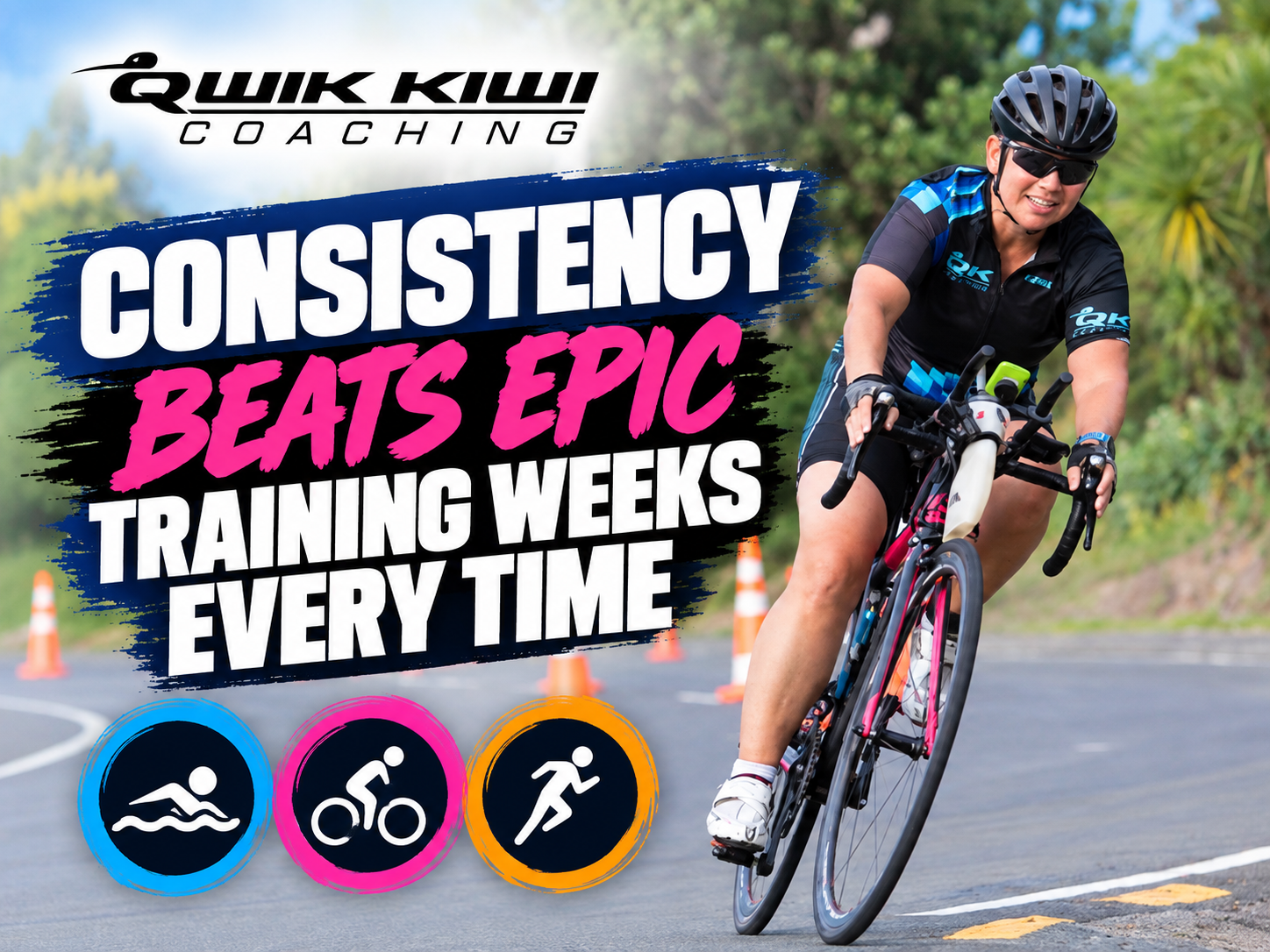
If I could give triathletes just one piece of advice that would improve their long-term performance, it would be this:
Be consistent.
Not for a week.
Not for a month.
But for months and years.
One of the biggest mistakes athletes make is believing that a breakthrough performance comes from a breakthrough workout. They think they need an epic training camp, a monster long ride, or the biggest training week of their life to unlock the next level.
The reality is far less exciting.
Most triathlon success comes from showing up consistently and doing the work week after week.
It isn’t glamorous.
It isn’t exciting.
But it works.
The Problem With Epic Training Weeks
We’ve all seen it.
Someone decides they’re serious about training.
They suddenly double their training volume.
They add extra swims.
Extra rides.
Extra runs.
They stack hard session on top of hard session.
For a week or two, everything feels great.
Then reality arrives.
Fatigue accumulates.
Work gets busy.
Motivation drops.
Recovery becomes difficult.
Small niggles become injuries.
Before long, the athlete is forced to back off completely.
The result?
A short burst of impressive training followed by weeks of inconsistent training or no training at all.
That’s not a recipe for long-term improvement.
Fitness Is Built Like Compound Interest
Imagine you invested a small amount of money every week for the next five years.
The gains might seem insignificant at first.
But over time, the effects compound.
Training works the same way.
A consistent six-hour training week performed for six months will usually outperform an inconsistent pattern of ten-hour weeks followed by missed weeks and burnout.
Your body responds to repeated exposure.
Every swim, ride, and run builds upon the previous one.
Consistency allows those adaptations to accumulate.
That’s where real fitness comes from.
The Athletes Who Improve Most Aren’t Always The Most Talented
One of the interesting things I’ve noticed during more than two decades of coaching is that the athletes who improve the most aren’t always the most naturally gifted.
They’re often the most consistent.
They complete the sessions.
They show up when conditions aren’t perfect.
They train when motivation is low.
They understand that progress isn’t measured by a single workout.
It’s measured by hundreds of workouts added together over time.
Talent is useful.
Consistency is powerful.
What Consistency Actually Looks Like
Consistency doesn’t mean training every day.
It doesn’t mean never missing a session.
It doesn’t mean ignoring illness, injury, or family commitments.
Consistency means maintaining a sustainable training rhythm.
For example:
- Completing three runs most weeks for months on end.
- Attending your scheduled swim sessions regularly.
- Building your long ride gradually rather than dramatically.
- Following a sensible progression instead of chasing hero workouts.
The goal is not perfection.
The goal is repeatability.
A training plan only works if you can continue following it.
The Hidden Benefit of Consistency
Consistent athletes gain something else besides fitness.
Confidence.
Every completed week reinforces belief.
Every successful long ride builds trust.
Every quality session provides evidence that you’re improving.
When race day arrives, confidence isn’t something you magically find.
It’s something you’ve earned through months of consistent preparation.
Athletes who have trained consistently rarely wonder whether they’re ready.
They know they’re ready because they’ve done the work.
Avoid The All-Or-Nothing Mindset
One of the most dangerous traps in endurance sport is all-or-nothing thinking.
Athletes believe if they can’t complete the perfect week, there’s no point doing anything.
Life doesn’t work that way.
Sometimes you’ll miss a swim.
Sometimes work will force you to shorten a ride.
Sometimes family commitments will change your plans.
That’s normal.
The athletes who succeed don’t panic when this happens.
They simply get back on track at the next opportunity.
One missed session won’t hurt your fitness.
Repeatedly quitting because training wasn’t perfect will.
The Best Training Plan Is The One You Can Follow
Athletes often ask me which training plan is best.
The answer is surprisingly simple.
The best training plan is the one you can consistently follow.
Not the most advanced.
Not the hardest.
Not the one with the biggest training volume.
The one that fits your lifestyle, recovery capacity, experience level, and goals.
A manageable plan followed consistently will almost always outperform an ambitious plan that you can’t sustain.
Final Thoughts
Triathlon rewards patience.
It rewards discipline.
Most importantly, it rewards consistency.
You don’t need one epic week.
You don’t need one epic workout.
You don’t need to train harder than everyone else.
You simply need to keep showing up.
Week after week.
Month after month.
Year after year.
Because while epic training weeks make for impressive social media posts, consistent training is what produces results.
And in triathlon, results are what matter.
What’s Your Biggest Triathlon Goal?
Whether you’re training for your first triathlon, stepping up to an Ironman 70.3, or looking to improve on a previous result, I’d be happy to help.
Book a free, no-obligation 40-minute coaching call and let’s discuss your goals, your current training, and the best path forward.
I look forward to learning more about your journey and helping you achieve your triathlon goals.