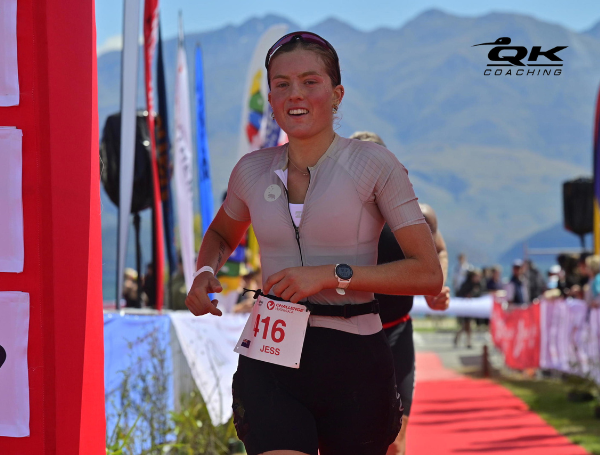
Ask almost any triathlete what the first kilometre of the run feels like, and you’ll probably get the same answer.
“My legs felt like concrete.”
If you’ve experienced that sensation, don’t worry—it’s completely normal.
Running immediately after cycling is one of the most unique challenges in triathlon. Even experienced athletes need a few minutes to find their rhythm after stepping off the bike.
That’s why brick sessions are such an important part of triathlon training.
What Is a Brick Session?
A brick session combines two disciplines in one workout, most commonly a bike ride followed immediately by a run.
The name is often said to come from the feeling of running with “bricks” attached to your feet, although another explanation is that you’re stacking one workout on top of another like building bricks. A third options (and my favourite) is that they are named after a former World Duathlon Champion (and New Zealander) Dr Matthew Brick.
Whatever the origin, the purpose is the same.
Brick sessions prepare your body for one of the biggest challenges you’ll face on race day—running well after cycling.
Why Running Feels So Different
Cycling and running use many of the same muscles, but they use them differently.
On the bike, you’re seated, your movement is circular, and your muscles contract in a very specific pattern.
The moment you start running, everything changes.
Your posture becomes upright.
Your stride length changes.
Your muscles fire differently.
Your body has to absorb impact with every step.
Your brain suddenly has to coordinate an entirely new movement pattern.
No wonder those first few minutes feel awkward.
It’s Not About Fitness
Many athletes think heavy legs mean they aren’t fit enough.
Usually, that’s not the case.
The strange feeling is less about cardiovascular fitness and more about neuromuscular adaptation.
Your nervous system simply needs time to switch from cycling to running.
The more often you practise that transition, the quicker your body learns to make the change.
Eventually, what once felt uncomfortable starts to feel completely normal.
Brick Sessions Build Confidence
One of the biggest benefits of brick training isn’t physical—it’s mental.
The first time you run after a long ride, it can be unsettling.
You might wonder whether you’ll ever find your running rhythm.
But after completing a few brick sessions, you’ll realise something important.
Your legs always come around.
That confidence becomes invaluable on race day.
Instead of worrying that something is wrong, you’ll recognise the feeling and trust that your body will settle into its rhythm within a few minutes.
Bigger Isn’t Better
One of the biggest myths surrounding brick sessions is that they have to be huge.
They don’t.
For many triathletes, especially beginners and recreational athletes, a simple session works perfectly.
For example:
- 60–90 minute bike ride
- Followed immediately by a 10–20 minute easy run
That’s enough to teach your body the skill of transitioning.
The goal isn’t to smash yourself.
The goal is to become familiar with the feeling.
Focus on Technique
During the run portion of your brick session, don’t worry too much about pace.
Instead, concentrate on:
- Running tall.
- Keeping your cadence light and relaxed.
- Letting your stride settle naturally.
- Breathing rhythmically.
- Finding your race-day effort.
Within a few minutes, you’ll usually notice your running becoming smoother.
That’s exactly the adaptation you’re trying to achieve.
Practise More Than Just Running
Brick sessions are also an excellent opportunity to rehearse race-day routines.
Use them to practise:
- Transitioning quickly from bike to run.
- Changing shoes efficiently.
- Taking nutrition before leaving transition.
- Starting at your planned race pace rather than sprinting.
The more familiar these routines become, the more confident you’ll feel when race day arrives.
How Often Should You Do Brick Sessions?
You don’t need to include a brick session every week.
For most triathletes, completing one every week or two is enough to build familiarity without creating unnecessary fatigue.
As your goal race approaches, you may include more race-specific brick sessions that closely replicate your event.
Remember, quality is far more important than quantity.
Final Thoughts
Brick sessions aren’t designed to make you exhausted.
They’re designed to make race day predictable.
Every time you ride before you run, you’re teaching your body how to make that transition more efficiently.
You’re building confidence.
You’re refining your pacing.
And you’re removing one more uncertainty from race day.
The next time you leave transition and your legs feel heavy, don’t panic.
Trust your training.
Your rhythm is only a few minutes away.
What’s Your Biggest Triathlon Goal?
Whether you’re training for your first sprint triathlon, preparing for an Olympic-distance event, or stepping up to an Ironman 70.3, I’d love to help.
Book a free, no-obligation 40-minute coaching call and we’ll discuss your goals, your current training, and the smartest path to race-day success.
I look forward to helping you train smarter, race with confidence, and achieve your triathlon goals.