Good freestyle technique isn’t something you practise once and then forget about. It needs regular reinforcement, particularly when you’re tired and your natural tendency is to fall back into less efficient movement patterns. This week’s Saturday Swim Session puts technique at the centre of the workout, using three different freestyle drills before immediately transferring each movement back into normal swimming. The result is a session designed to improve your catch, recovery, body position and overall stroke efficiency.
As usual, there are three options to choose from. Option A is for swimmers looking for a workout between 1,000 and 2,000 metres, Option B is for swimmers wanting between 2,000 and 3,000m, and Option C provides a workout of more than 3,000m.
Read my article on Swim Intensity for an explanation of the terminology and intensities used throughout the workout.
Today’s Goal
The goal of today’s session is to improve your freestyle technique by isolating different parts of your stroke and then immediately incorporating those movements into your normal swimming.
You’ll work through Catch Up, Finger Drag and One Arm drills, with each drill followed by regular freestyle within the same repetition.
Rather than simply completing the drills, concentrate on what each one is teaching you and try to carry that feeling into the freestyle that follows.
Why You’re Doing This Session
Technique drills are most valuable when there’s a clear connection between the drill and your normal swimming.
Today’s session progressively works on several important components of freestyle.
Catch Up Drill encourages you to maintain length through your stroke and helps develop coordination between your arms.
Finger Drag Drill encourages a relaxed recovery with a high elbow and helps reinforce good arm positioning as your hand travels forward.
One Arm Drill allows you to concentrate on the catch, pull, rotation and recovery of one side at a time, making it easier to identify differences between your left and right sides.
Importantly, every drill transitions directly into normal freestyle. This gives you an immediate opportunity to take the movement you’ve just practised and incorporate it into your complete stroke.
Session Inspiration
The inspiration for this week’s session came from an Instagram reel by triathlon coach Natasha Van Der Merwe. I’ve used the ideas from that session as the basis for today’s workout and adapted the distances and structure to provide three options suitable for recreational swimmers, masters swimmers and age-group triathletes.
Today’s Workout
Option A – 1,950m
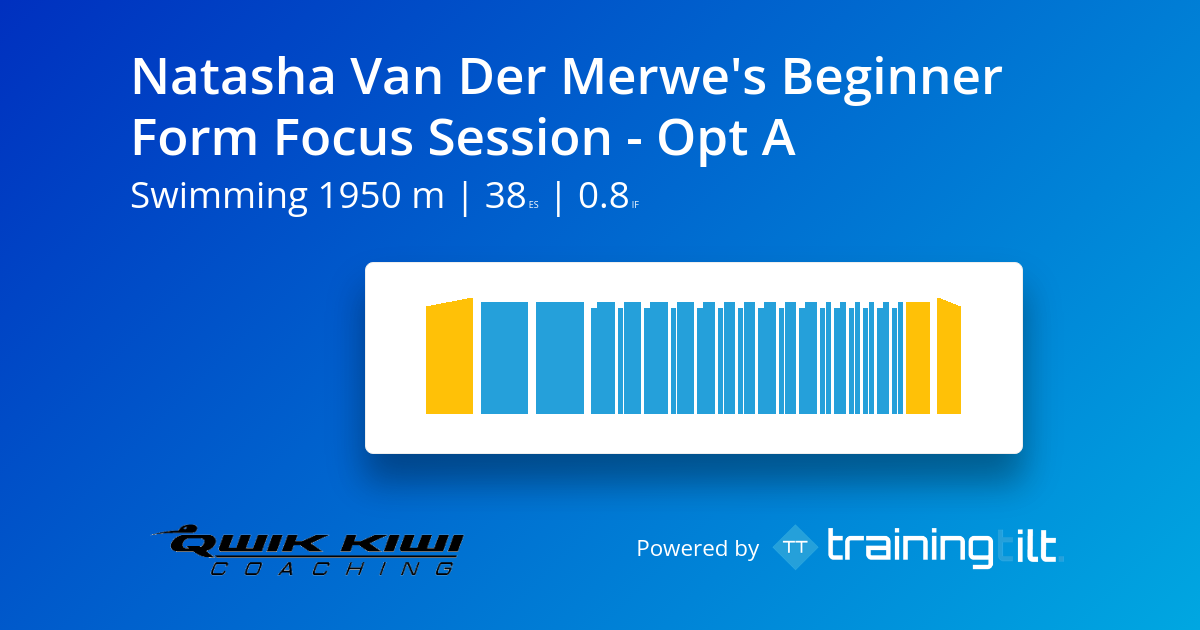
- 200m Warm Up (WU)
- 200m Kick (K)
- 200m Pull Buoy & Paddles (PP)
- 4 × 100m (25m Catch Up / 75m Freestyle)
- 6 × 75m (25m Finger Drag / 50m Freestyle)
- 6 × 50m (25m One Arm / 25m Freestyle)
- 100m Cool Down – Freestyle
- 100m Cool Down – Choice
Option B – 2,850m
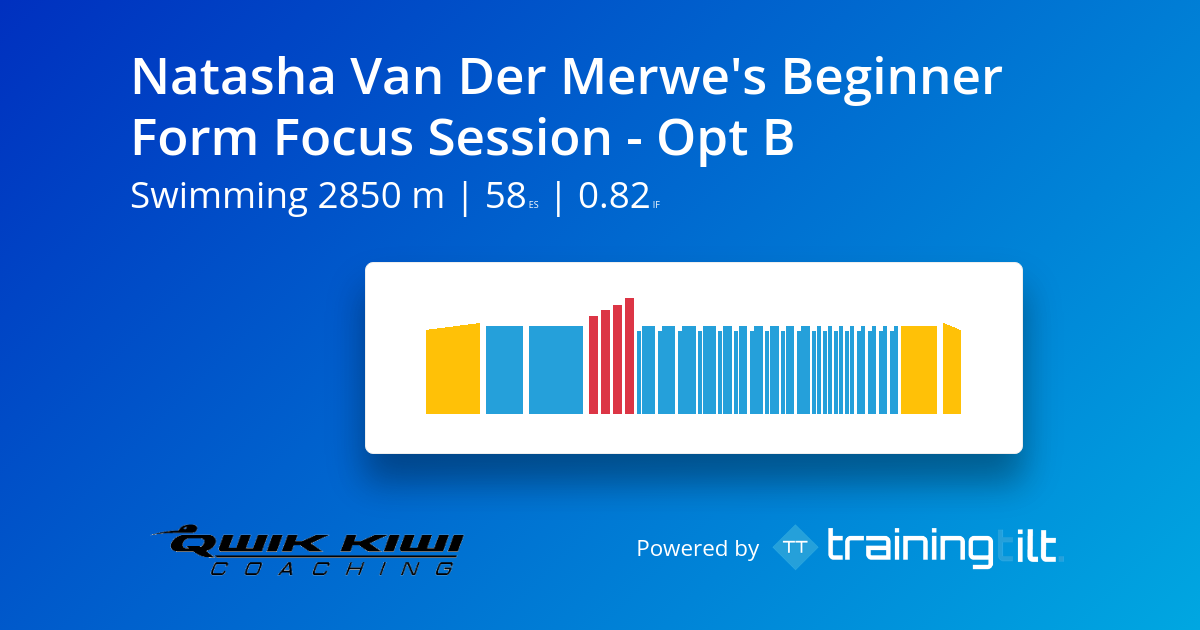
- 300m Warm Up (WU)
- 200m Kick (K)
- 300m Pull Buoy & Paddles (PP)
- 4 × 50m Build 1–4 – 15 sec RI
- 4 × 100m (25m Catch Up / 75m Freestyle)
- 6 × 75m (25m Finger Drag / 50m Freestyle)
- 8 × 50m (25m One Arm / 25m Freestyle)
- 300m Pull Buoy & Paddles (PP)
- 200m Cool Down – Freestyle
- 100m Cool Down – Choice
Option C – 3,400m
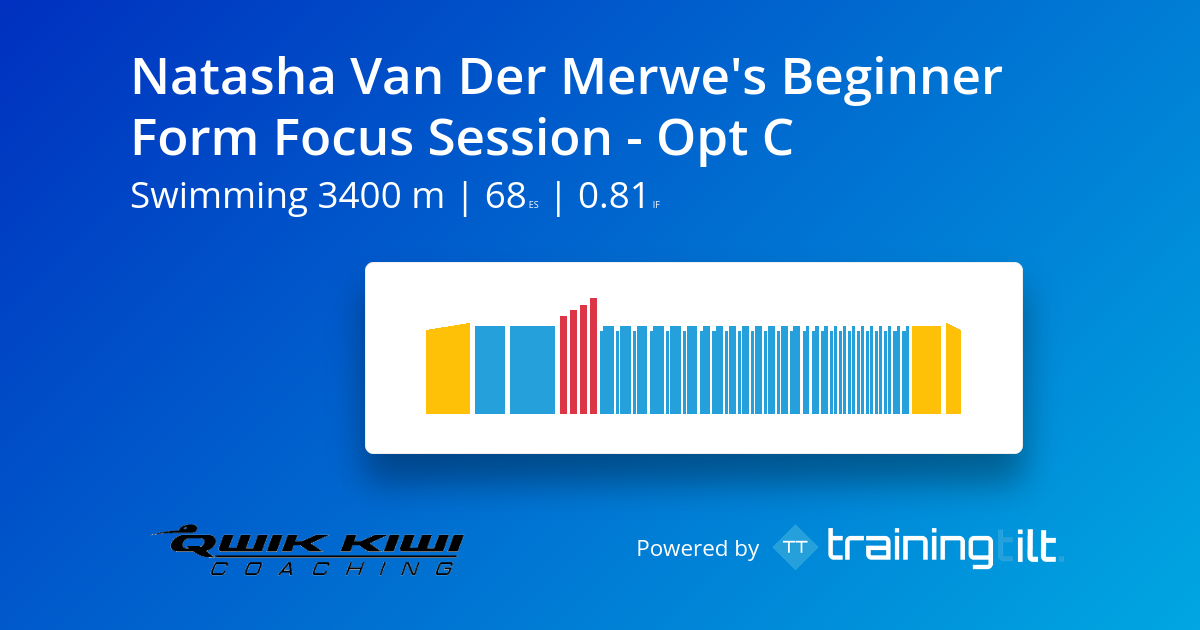
- 300m Warm Up (WU)
- 200m Kick (K)
- 300m Pull Buoy & Paddles (PP)
- 4 × 50m Build 1–4 – 15 sec RI
- 6 × 100m (25m Catch Up / 75m Freestyle)
- 8 × 75m (25m Finger Drag / 50m Freestyle)
- 12 × 50m (25m One Arm / 25m Freestyle)
- 300m Pull Buoy & Paddles (PP)
- 200m Cool Down – Freestyle
- 100m Cool Down – Choice
What You Should Focus On
- Complete each drill deliberately rather than rushing to finish it.
- Identify the specific movement you’re working on and carry that feeling into the freestyle immediately afterwards.
- During Catch Up Drill, concentrate on maintaining length and coordination without introducing an exaggerated pause into your normal stroke.
- Keep your arm relaxed during Finger Drag Drill and allow the elbow to lead the recovery.
- During One Arm Drill, pay attention to differences between your left and right sides.
- Maintain good body position and rotation rather than concentrating solely on what your arms are doing.
- Prioritise technically good swimming over speed throughout the drill sets.
Common Mistakes To Avoid
Going Through The Motions
A drill only helps if you understand what you’re trying to achieve. Simply completing the prescribed distance without concentrating on the movement turns technique work into easy swimming.
Carrying The Drill Too Far Into Your Freestyle
The drills deliberately exaggerate certain aspects of your stroke. You’re trying to transfer the useful movement into your freestyle—not reproduce the entire drill while swimming normally.
Pausing During Catch Up
Catch Up Drill encourages coordination and stroke length, but don’t allow it to teach you an exaggerated glide. When you transition into freestyle, your stroke should remain continuous and rhythmic.
Forcing The Finger Drag
Your fingertips don’t need to be pressed firmly against the surface. Keep your recovery relaxed and allow the movement to encourage good elbow positioning rather than forcing your arm into an unnatural position.
Ignoring Your Weaker Side
One Arm Drill can expose differences between sides. Don’t simply rush through whichever arm feels less coordinated. That’s often the side that deserves the most attention.
Tips For Completing The Workout Successfully
Start the session patiently. Technique sessions aren’t about accumulating metres as quickly as possible.
During the 200m kick set, feel free to use fins if they help you maintain good body position, but avoid using a kickboard. You can see a demonstration of how I recommend completing kick without a board in this video.
Options B and C include 4 × 50m Build 1–4 before the main drill work. Start the first repetition at a moderate pace, make the second fast, the third faster and finish with your fastest repetition. Take a 15-second Rest Interval after each.
This isn’t simply about increasing your effort. As your speed rises, continue concentrating on maintaining good technique.
When you reach the drill sets, think about one technical cue at a time. Trying to correct five aspects of your stroke simultaneously usually results in concentrating properly on none of them.
Workout Breakdown
Begin with 200m (Option A) or 300m (Options B and C) of mixed swimming. Include a variety of strokes and gradually prepare your shoulders and body for the session. Feel free to stop and stretch during the Warm Up—it doesn’t need to be continuous.
Continue with 200m of kick. Feel free to use fins, but avoid using a kickboard so you can maintain a body position that more closely resembles your normal swimming.
Next, complete 200m (Option A) or 300m (Options B and C) using a Pull Buoy and Paddles. Concentrate on maintaining good body position and applying pressure effectively through the water.
Options B and C then complete 4 × 50m Build 1–4, with a 15-second Rest Interval after each repetition.
The main technique work begins with the Catch Up Drill. Complete four 100m repetitions for Options A and B or six for Option C. Swim the first 25m using Catch Up Drill before transitioning directly into 75m of normal freestyle.
Next comes Finger Drag Drill. Complete six 75m repetitions for Options A and B or eight for Option C. Swim 25m Finger Drag before immediately completing 50m of freestyle.
Finish the drill progression with One Arm Drill. Option A completes six 50m repetitions, Option B eight and Option C twelve. Swim the first 25m using One Arm Drill before transitioning into 25m of normal freestyle.
When completing the One Arm Drill, alternate arms so you’re giving both sides equal attention.
Options B and C then complete another 300m with Pull Buoy and Paddles. This provides a useful opportunity to assess whether the technique work has changed how your stroke feels. Concentrate on a strong catch, effective propulsion and smooth body rotation.
Finish with 200m (Option A) or 300m (Options B and C) of Cool Down. Option A swims 100m freestyle followed by 100m of your choice. Options B and C swim 200m freestyle followed by 100m of a non-freestyle stroke of your choice.
Keep the Cool Down relaxed, stop and stretch if required, and allow your heart rate to gradually return towards normal.
After Your Swim
Before leaving the pool, think about what you learned from today’s technique work.
Ask yourself:
- Which of the three drills produced the biggest improvement in how my freestyle felt?
- Could I carry the movement from each drill into the freestyle immediately afterwards?
- Did I notice a difference between my left and right sides during One Arm Drill?
- Did my freestyle feel smoother towards the end of the workout than it did during the Warm Up?
- Which technical cue would be most valuable to concentrate on during my next swim?
Don’t judge today’s session primarily by your pace. If you’ve identified something that helps you swim more smoothly and efficiently—and can reproduce it during normal freestyle—you’ve achieved the main goal of the workout.
Want 8 Weeks of Swim Sessions Like This?
If you enjoyed today’s workout, why stop at just one?
Download my FREE Swim Engine Builder Workout Pack and receive 24 structured swim sessions spread across three training options:
🏊 Foundation – Under 2,000m per session
🏊 Performance – 2,000–3,000m per session
🏊 Endurance – 3,000m+ per session
Whether you’re swimming for fitness, preparing for your next triathlon or simply looking for more variety in the pool, you’ll have eight weeks of purposeful workouts ready to go.
👉 Download your FREE Swim Engine Builder Workout Pack today and start building a stronger swim engine!
