Every race tells a story.
Sometimes it’s a story of perfect preparation and a personal best.
Other times, it’s a story of resilience.
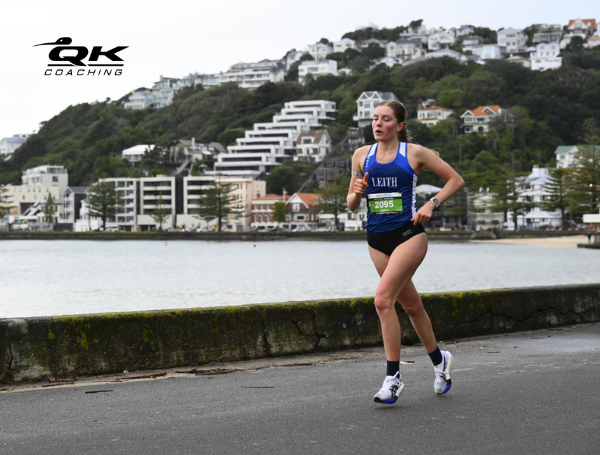
Jess Bray’s Wellington Half Marathon was definitely the second.
After suffering a hip injury halfway through her training block, there were genuine doubts about whether she would even make it to the start line. Running had been significantly reduced, training plans had to be rewritten, and maintaining fitness became less about logging kilometres and more about making smart decisions.
Then race day arrived.
Cold.
Wet.
Windy.
Exactly the sort of conditions that make even the best-prepared athletes question themselves.
Yet somehow, Jess crossed the finish line in 1:25:12, finished 6th female overall, and claimed 1st Under-20 Female.
More importantly, she reminded us that great performances aren’t always built on perfect preparation.
Sometimes they’re built on smart decisions.
Fitness Doesn’t Disappear Overnight
One of the biggest takeaways from our post-race debrief was Jess’s realisation that fitness isn’t created solely during one training block.
Despite missing a significant amount of running because of her hip injury, she maintained much of her aerobic fitness through cycling and swimming. Rather than trying to force extra running and risk making the injury worse, she trusted the process.
As Jess reflected after the race:
“It wasn’t completely based off this training block. It was based on the years of training I’d already done.”
That’s an important lesson for every runner.
When injury interrupts your preparation, it doesn’t erase years of consistent training. Your aerobic engine is far more resilient than many athletes realise.
Letting Go of Expectations
Originally, Wellington was supposed to be Jess’s goal race.
She had ambitious time goals.
Then the injury happened.
Instead of stubbornly holding onto those expectations, she adjusted her mindset.
Rather than chasing the clock, she focused on enjoying the experience and racing according to how her body felt.
Ironically, that mental shift may have been one of the biggest reasons the race went so well.
When athletes stop forcing a performance and start responding to the race in front of them, they often perform closer to their true ability.
Smart Racing Beats Brave Racing
The Wellington course presented another challenge.
The opening half of the race featured a significant headwind in exposed sections, making pacing particularly difficult.
Jess resisted the temptation to attack into the wind.
Instead, she tucked in behind other runners where possible, managed her effort, and accepted that some kilometres would naturally be slower.
Her splits tell the story:
- First 5km: 3:56/km average
- Second 5km: 3:58/km average
- Middle section: 4:04/km average (into the toughest conditions)
- Final 6.1km: Strong, controlled finish 4:03/km
That slight slowdown through the exposed section wasn’t a weakness—it was intelligent racing.
Too many runners fight the conditions instead of adapting to them.
The fastest runners are often the ones who lose the least time when conditions become difficult.
Preparation Goes Beyond Training
One thing Jess did exceptionally well was controlling the things she could control.
Despite uncertainty around her fitness, she made sure the details were right:
- Consistent nutrition in the days leading into the race
- Staying well hydrated
- A familiar race morning breakfast
- Regular gel intake throughout the event
- Taking fluids at every aid station
- A thorough warm-up to prepare her injured hip
When training isn’t perfect, these seemingly small decisions become even more important.
They don’t replace fitness—but they allow you to maximise the fitness you have.
Support Makes a Difference
Jess also spoke about something many runners underestimate.
Support.
For much of her racing career, she’d completed races largely on her own, with family waiting only at the finish.
This time, supporters were spread around the course.
Seeing familiar faces multiple times during the race gave her something positive to focus on whenever the conditions became difficult.
Sometimes a smile, a cheer, or hearing your name shouted from the sidelines can lift you more than another energy gel ever could.
Trust Your Training
Perhaps my favourite moment from our debrief came when Jess spoke about overcoming pre-race doubts.
She admitted she questioned whether she’d trained enough.
Whether she’d gone out too quickly.
Whether history might repeat itself.
Then she reminded herself of something important:
She wasn’t relying on just ten weeks of training.
She was relying on years of consistent work.
That confidence allowed her to trust her instincts rather than panic when things became uncomfortable.
It’s a lesson every endurance athlete can take into their next race.
The Bigger Picture
At first glance, you could simply look at the results and see:
- 1:25:12
- 6th Female Overall
- 1st Under-20 Female
But the real story lies beneath those numbers.
This was a race built on resilience rather than perfection.
It showed that maintaining fitness through injury matters.
It showed that mindset can influence performance just as much as fitness.
It showed that racing intelligently often beats racing aggressively.
Most of all, it showed that setbacks don’t have to define the outcome.
Sometimes they simply become part of the story.
If anything, this race should give Jess enormous confidence moving forward. With a healthy training block and the lessons gained from Wellington, there’s every reason to believe her best performances are still to come.
🎥 Watch the Full Race Debrief
In this video, Jess and I dive deeper into:
- How she adapted after her hip injury
- Managing expectations before race day
- Racing in terrible Wellington weather
- Her pacing strategy and nutrition
- Mental resilience during the toughest parts of the race
- The key lessons she’ll take into her next big goal
If you’re training for your own half marathon, there’s plenty you can learn from Jess’s honest reflections.
Ready to Run Your Best Half Marathon?
Whether you’re chasing your first finish or your next personal best, having the right training plan and coaching support can make all the difference.
If you’d like help preparing for your next half marathon, I’d love to chat.
Together, we can build a plan that helps you train consistently, race confidently, and perform at your best.