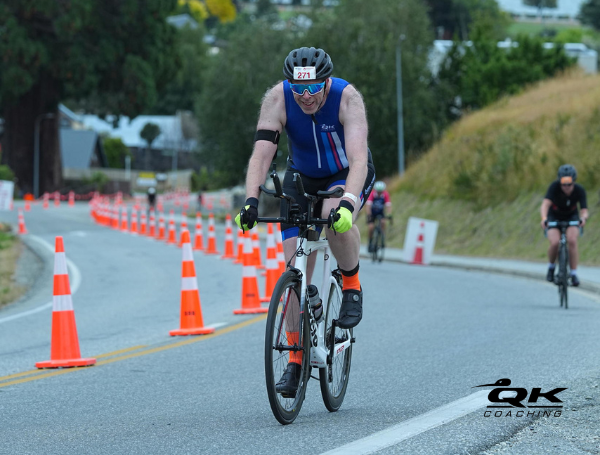
Many age-group triathletes hear the words “no drafting” and assume they must stay as far away from every other rider as possible.
That’s not how Ironman 70.3 racing works.
While the bike leg is a non-drafting event, understanding how to ride efficiently within the rules can save energy, improve your race execution, and help you arrive at T2 feeling stronger. The key is knowing the difference between illegal drafting and riding smart. Current IRONMAN competition rules specify how athletes must maintain separation, complete passes, and avoid blocking during the bike leg.
Understand the Rules
Every Ironman 70.3 athlete should familiarise themselves with the race rules before race day because they can change over time.
In general, the bike leg is an individual time trial. You must maintain the required distance behind the rider in front unless you are actively overtaking, complete your pass within the permitted time, and then move back into the correct riding position without blocking other competitors.
The goal isn’t simply to avoid penalties.
It’s to race efficiently.
Pass With Purpose
One mistake I often see is athletes sitting just behind another rider, waiting for the perfect moment to pass.
If you’ve decided to overtake, commit to it.
Accelerate smoothly, complete the pass decisively, and return to your normal race effort.
A hesitant pass usually wastes more energy than a confident one.
Likewise, if another athlete overtakes you, allow them to move ahead and re-establish the required gap before settling back into your own rhythm.
Avoid Constant Surges
Every unnecessary acceleration costs energy.
If you’re repeatedly speeding up to pass riders only to slow down immediately afterwards, you’re turning your steady endurance ride into a series of anaerobic efforts.
Instead, think about maintaining consistent power.
If you’re clearly riding faster than another athlete, make the pass efficiently.
If you’re not, stay patient until the opportunity naturally presents itself.
Ride Your Own Race
Remember, another athlete’s pace has nothing to do with your race plan.
Someone flying past you might be having the race of their life—or they may be riding far above their sustainable effort.
Your objective isn’t to respond to every move.
It’s to execute your pacing strategy from start to finish.
The athletes who run well off the bike are usually the ones who stayed disciplined throughout the ride.
Smart Positioning Saves Energy
Racing efficiently isn’t about finding shortcuts.
It’s about avoiding wasted effort.
Choosing the right moment to pass, riding predictably, avoiding unnecessary braking, and maintaining your rhythm all help conserve valuable energy over 90 kilometres.
Those small savings add up.
And they’ll be far more noticeable during the final 10 kilometres of the run than they ever were on the bike.
Final Thoughts
Ironman 70.3 rewards athletes who make smart decisions.
Understanding the rules, riding predictably, and passing efficiently won’t make headlines—but they can make a significant difference to your overall performance.
Ride within the rules.
Ride with purpose.
And save your energy for where it really matters: the run.
Need Help Preparing for Your Next Ironman 70.3?
A successful Ironman 70.3 isn’t just about fitness—it’s about pacing, strategy, nutrition, and making smart decisions throughout the day.
If you’d like personalised guidance for your next race, I’d love to help.
Book a free, no-obligation coaching consultation and let’s discuss your goals: