If you’re new to triathlon, one of the strangest experiences can be getting off your bike and immediately trying to run.
Your legs might feel heavy. Your stride might feel awkward. You may even wonder how you’re supposed to run properly when your legs have just spent the last 40 minutes cycling.
That’s exactly why we practise brick sessions.
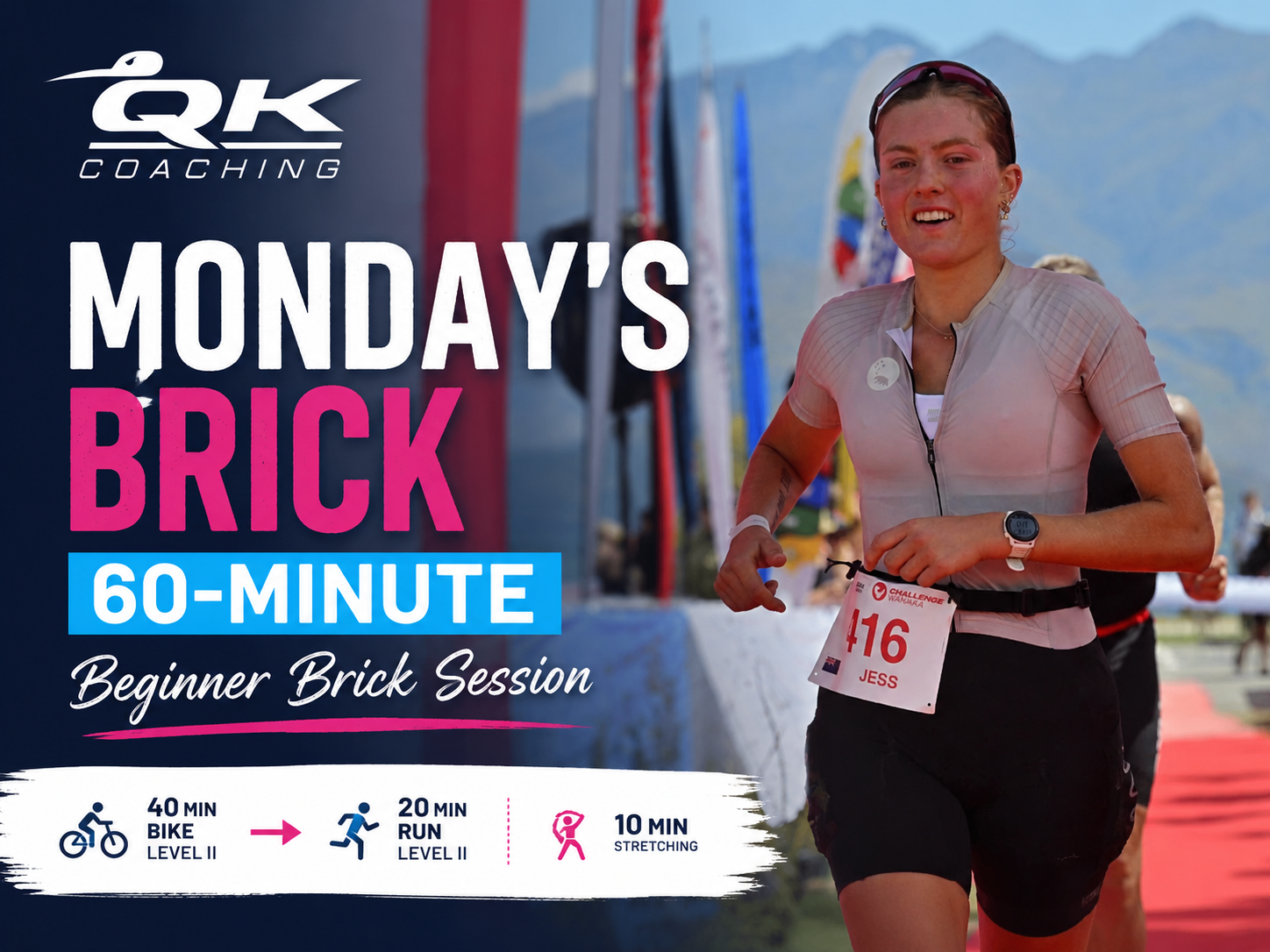
This week’s Monday’s Brick is a beginner-friendly introduction to running off the bike. You’ll complete 40 minutes of Level II cycling followed by 20 minutes of Level II running, with the emphasis firmly on keeping everything comfortable and learning what the transition from cycling to running feels like.
You don’t need to be fast.
You don’t need to push yourself to exhaustion.
Your goal is simply to ride comfortably, transition onto the run and discover how your body responds.
Why You’re Doing This Session
When you first start triathlon training, it’s natural to train swimming, cycling and running separately.
But on race day, there’s one important difference.
You don’t get to start the run with fresh legs.
You begin running immediately after cycling, and your body needs a little time to adjust from one movement pattern to another.
Brick training gives you an opportunity to practise that feeling before race day.
This session will help you:
- Experience running off the bike in a controlled training environment.
- Become familiar with how your legs feel during the first few minutes of running.
- Learn to control your effort rather than starting the run too quickly.
- Practise moving efficiently from your bike into your running gear.
- Develop aerobic fitness across cycling and running.
- Build confidence that you really can run after riding.
For a beginner triathlete, that last point can be particularly important.
The more often you experience the bike-to-run transition in training, the less intimidating it becomes.
I’ve been prescribing this workout to athletes for many years because it develops aerobic endurance without the excessive fatigue that comes from high-intensity training. It’s also similar in concept to the brick session featured by EventsATW, demonstrating just how valuable these workouts are for triathletes of all abilities.
What You Should Focus On
On the Bike
The bike is 40 minutes at Level II.
Keep it comfortable.
You should be riding at an intensity where you could maintain a conversation rather than feeling like you’re racing or completing a hard cycling workout.
It’s very easy for beginners to think that training harder must produce better results.
That’s not the objective today.
You’re preparing yourself to run afterwards, so finish the bike feeling like you still have plenty left.
During the Transition
Before you start, have everything you’ll need for the run ready.
That might include your running shoes, hat and anything else you normally take with you.
When you finish cycling, get off your bike, change into your running gear and start running.
There’s no need to panic or race through transition.
At this stage, you’re simply learning the process.
Try not to turn it into a long rest, though. The purpose is to experience what it’s like to begin running soon after cycling.
Every time you practise this, you’ll become a little more organised and confident.
On the Run
This is where the session can feel unusual.
For the first few minutes, your legs might feel heavy or uncoordinated.
That’s okay.
Don’t immediately assume you’re running badly or that something has gone wrong.
Your body is simply adapting from cycling to running.
Keep your effort at Level II, relax your shoulders and concentrate on comfortable running rather than your pace.
After a few minutes, you’ll probably notice your stride beginning to feel more normal.
That transition—from “this feels strange” to “I’m running normally again”—is one of the main things you’re learning from today’s workout.
Common Mistakes to Avoid
Riding Too Hard
You don’t need to prove anything during the bike.
If you finish the 40 minutes exhausted, you’ve made the run much harder than it needs to be.
Keep the bike at Level II and save plenty of energy for what comes next.
Starting the Run Too Fast
Your sense of running speed can be slightly distorted when you first get off the bike.
Don’t worry about pace.
Start comfortably and allow your body to settle.
Worrying About Heavy Legs
Heavy or slightly awkward legs during those opening minutes don’t mean you’re bad at running off the bike.
It’s one of the reasons we’re doing the session.
As you gain more brick-training experience, that sensation should become increasingly familiar and easier to manage.
Comparing Yourself With Experienced Triathletes
Your session doesn’t need to look like somebody else’s training.
If you’re preparing for your first triathlon, completing 40 minutes of cycling followed by 20 minutes of running is already a worthwhile training session.
Focus on completing your workout well.
Tips for Your First Brick Session
Make everything as simple as possible.
Set out your running shoes before starting the bike so you don’t have to search for anything afterwards.
Keep both parts of the session at a comfortable Level II effort.
There’s no prize for making your first brick unnecessarily difficult.
The objective is to finish the session thinking:
“I can do this.”
That’s a much better outcome than finishing completely exhausted and dreading your next brick workout.
Today’s Workout
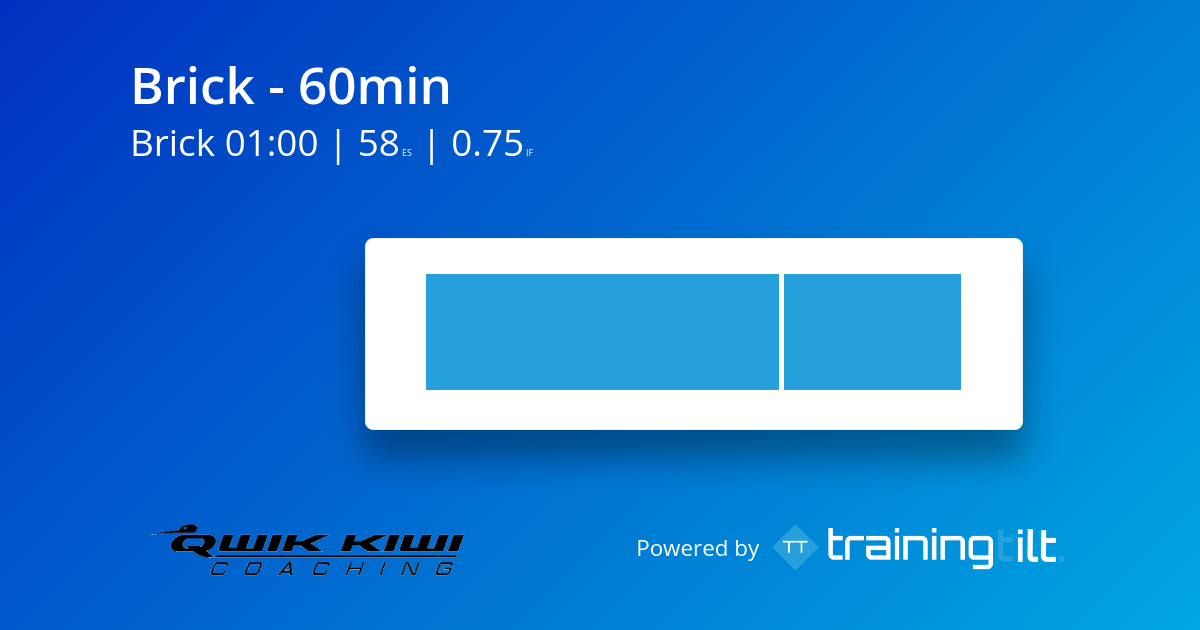
60-Minute Beginner Brick
Bike
40 minutes – Level II
Ride at a comfortable, conversational intensity.
Finish feeling like you still have energy available for the run.
Transition
Get off the bike, change into your running gear and begin the run without an extended rest.
Keep things calm and organised.
Run
20 minutes – Level II
Run at a comfortable intensity and don’t worry about your pace during the opening minutes.
Recovery
10 minutes stretching
Finish with some relaxed stretching, particularly through your calves, quadriceps, hamstrings, glutes and hip flexors.
How This Session Should Feel
This shouldn’t feel like a race.
The bike should feel comfortable and controlled.
The beginning of the run may feel strange—and that’s probably the most valuable part of the entire workout.
Give yourself time to settle.
As the run progresses, your legs should gradually begin to feel more familiar and your running rhythm should become easier to find.
At the end of the 20 minutes, you should feel like you’ve completed a good training session without completely emptying the tank.
Most importantly, you’ll have successfully ridden your bike, transitioned and run afterwards.
For an experienced triathlete that might sound routine.
For someone preparing for their first triathlon, it’s an important milestone.
And the next time you do it, it won’t feel quite so unfamiliar.
Want to Get More From Your Brick Sessions?
Want to run better off the bike and learn how to use brick workouts properly?
Get my FREE Brick Session Blueprint.
Inside you’ll discover:
- Smarter brick sessions.
- Better pacing.
- Stronger triathlon runs.
- Sessions suitable for Sprint through to Ironman-distance athletes.
Get your free Brick Session Blueprint and start building confidence running off the bike.