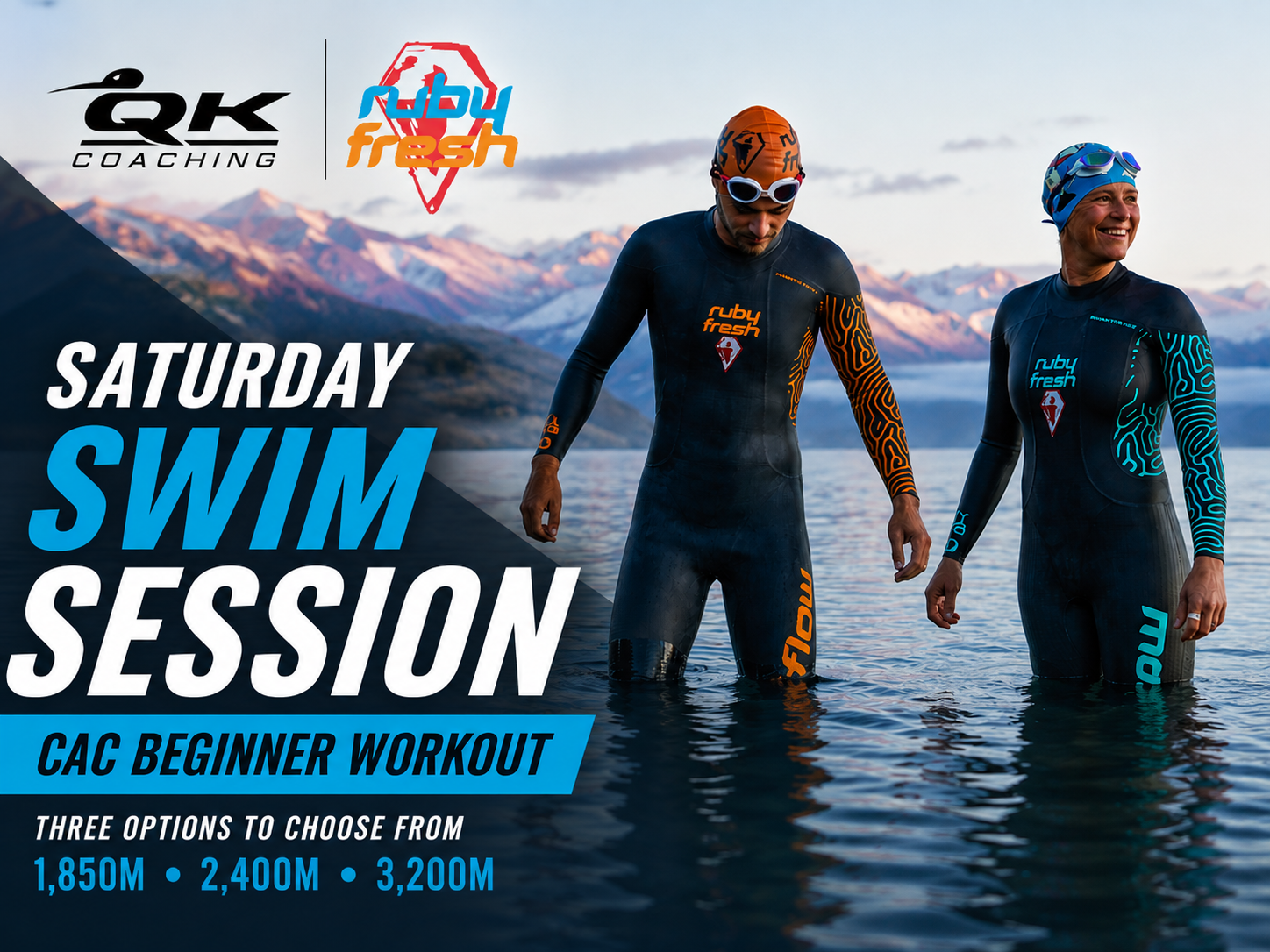
This week’s Saturday Swim Session combines sustained aerobic swimming with short, fast efforts to give you two very different challenges within the same workout. You’ll first settle into a series of consistent 100m repetitions before recovering and changing gears for a set of 25m sprints. The challenge is to pace the longer repetitions well enough that you can maintain their quality while still having the speed and technique required for the short efforts later in the session.
As usual, there are three options to choose from. Option A is for swimmers looking for a workout between 1,000 and 2,000 metres, Option B is for swimmers wanting between 2,000 and 3,000m, and Option C provides a workout of more than 3,000m.
Read my article on Swim Intensity for an explanation of the terminology and intensities used throughout the workout.
Today’s Goal
The goal of today’s session is to develop your ability to maintain consistent swimming over repeated 100m efforts before producing quality speed over short 25m sprints.
The 100m repetitions make up the bulk of the workout, so pacing is important. You don’t want one brilliant first repetition followed by a gradual decline. Aim to establish a strong, repeatable pace that you can maintain across the entire set.
After an easy recovery swim, the focus changes. The 25m repetitions are short enough to swim very fast, but the challenge remains the same: maintain good technique and consistency from the first repetition to the last.
Why You’re Doing This Session
This workout combines two useful qualities for swimmers and triathletes: repeatable aerobic speed and short-distance speed.
The repeated 100m efforts provide an opportunity to develop endurance while learning how to judge your pace. With a 30-second Rest Interval after each repetition, you’ll have enough recovery to maintain good-quality swimming, but the accumulated volume will gradually make the set more challenging.
The easy swim that follows isn’t wasted distance. It allows you to actively recover and prepare for a completely different type of effort.
The final 25m repetitions then introduce speed. Because they’re short, you can concentrate on swimming fast while maintaining good body position, an effective catch and a controlled stroke.
Learning to change gears like this is valuable for pool swimmers, open-water swimmers and triathletes. It develops your ability to settle into sustained swimming but still produce speed when required.
Session Inspiration
This week’s workouts were developed from a beginner swim workout published by Chicago Athletic Clubs (CAC).
The original article described its workout as being 1,800 metres long. When I added the individual components together, however, I calculated a total of 1,250 yards.
Rather than simply reproducing the session, I’ve used its structure as the starting point. I’ve extended the original concept to create Option A at 1,850m, then developed two additional versions at 2,400m and 3,200m so swimmers can choose a training volume appropriate for their fitness and goals.
Today’s Workout
Option A – 1,850m
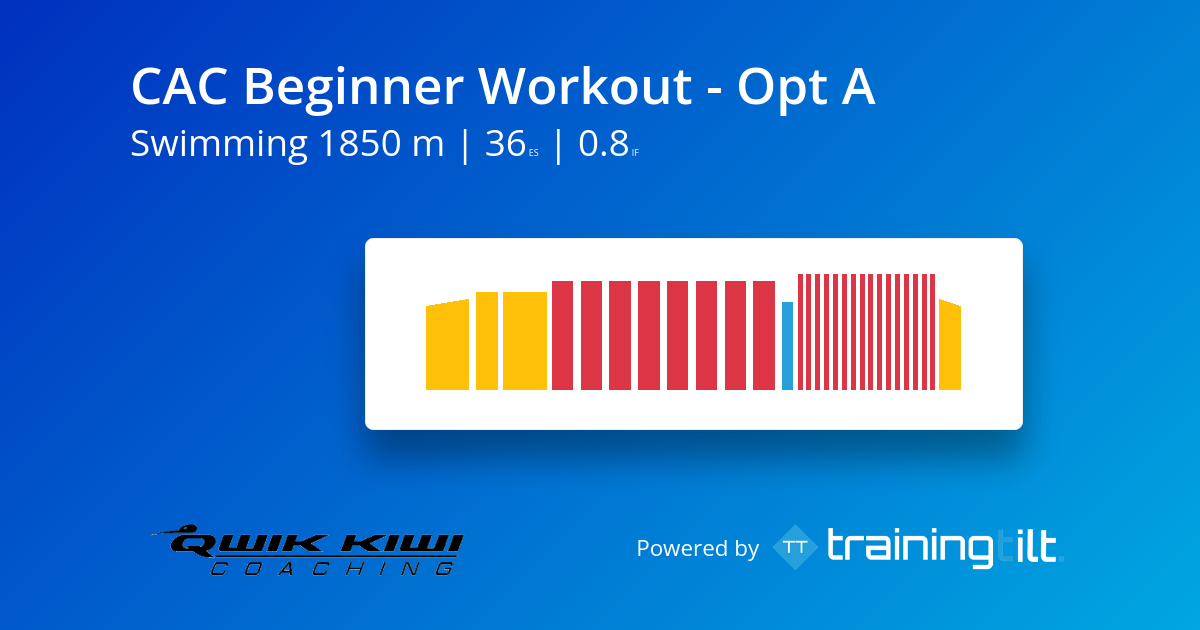
- 200m Warm Up (WU)
- 100m Kick (K)
- 200m Pull Buoy (PB)
- 8 × 100m – 30 sec RI
- 50m Easy
- 16 × 25m Sprint – 15 sec RI
- 100m Cool Down (CD)
Option B – 2,400m
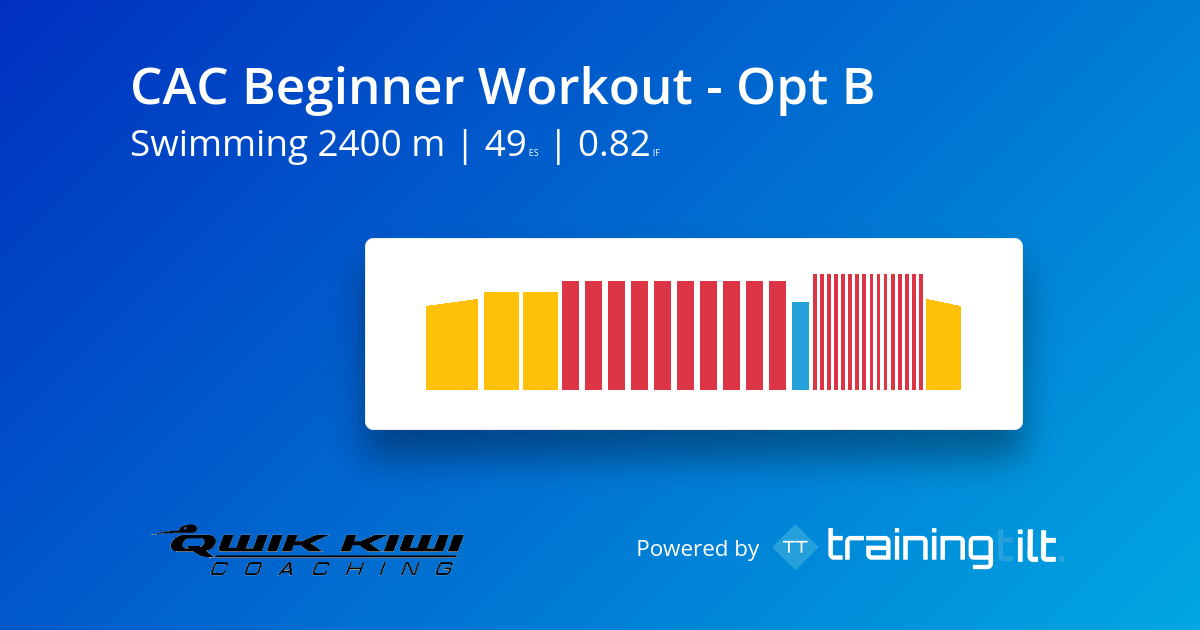
- 300m Warm Up (WU)
- 200m Kick (K)
- 200m Pull Buoy (PB)
- 10 × 100m – 30 sec RI
- 100m Easy
- 16 × 25m Sprint – 15 sec RI
- 200m Cool Down (CD)
Option C – 3,200m
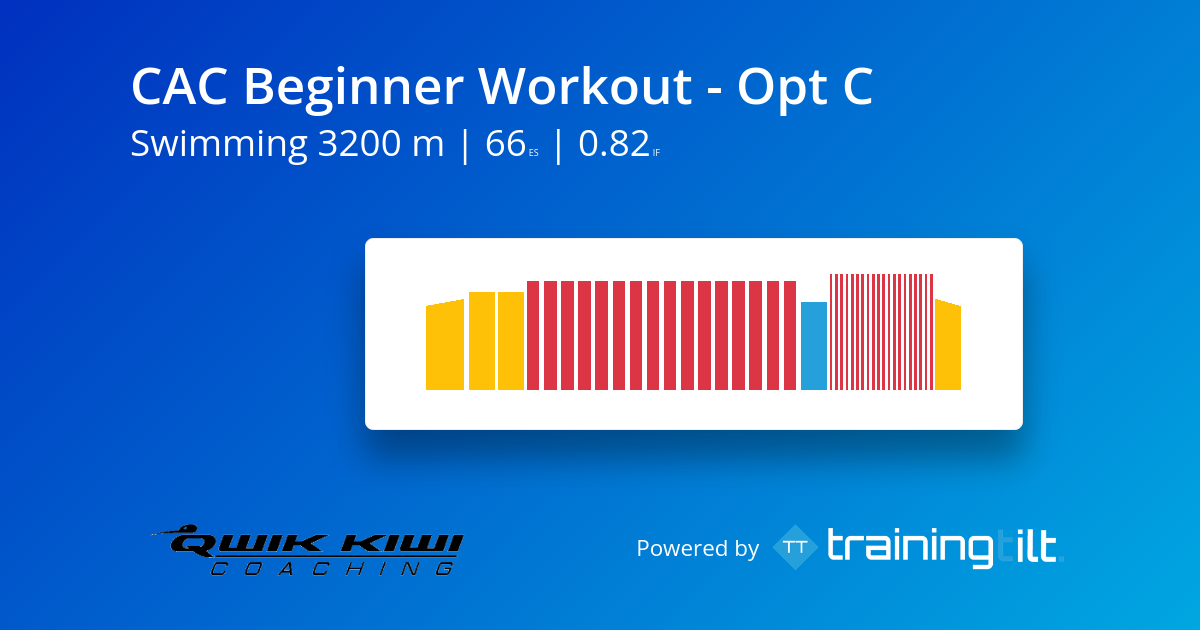
- 300m Warm Up (WU)
- 200m Kick (K)
- 200m Pull Buoy (PB)
- 16 × 100m – 30 sec RI
- 200m Easy
- 20 × 25m Sprint – 15 sec RI
- 200m Cool Down (CD)
What You Should Focus On
- Establish a sustainable pace during the first few 100m repetitions rather than starting too quickly.
- Aim for consistent times throughout the 100m set.
- Maintain good body position and an effective catch as fatigue develops.
- Use the easy swimming between the main sets as genuine active recovery.
- Swim the 25m repetitions fast while retaining good technique.
- Accelerate into your sprint rather than simply increasing your stroke rate without control.
- Aim to make your final 25m sprint as technically strong and fast as your first.
Common Mistakes To Avoid
Starting The 100s Too Fast
Thirty seconds of recovery can make the first few repetitions feel deceptively easy. Don’t use that as an excuse to swim the opening 100s significantly faster than you can sustain.
A well-paced set should be relatively consistent from beginning to end.
Turning Every 100m Into A Time Trial
The objective isn’t to produce your fastest possible 100m on every repetition. You’re trying to produce repeatable quality across the entire set.
This becomes especially important in Option C, where you’re completing sixteen repetitions.
Swimming The Recovery Too Hard
Once you’ve completed the 100s, back the intensity off during the easy swim. Its purpose is to help you recover before the sprint set.
Sprinting By Spinning Your Arms
Swimming faster doesn’t simply mean moving your arms faster. Maintain your catch and continue applying effective pressure to the water.
If your stroke becomes frantic, you’re probably sacrificing efficiency for turnover.
Fading Through The 25s
Don’t make the first few sprints spectacular if it means the final repetitions are considerably slower.
You’re looking for fast, repeatable swimming.
Tips For Completing The Workout Successfully
Use the first couple of 100m repetitions to establish your pace. Once you’ve found a rhythm you can repeat, try to keep your times within a relatively narrow range for the remainder of the set.
During the kick set, feel free to use fins if they help you maintain good body position, but avoid using a kickboard. You can see how I recommend completing kick without a board in this video.
The 200m Pull Buoy set is another opportunity to prepare for the main work. Concentrate on good body alignment and a strong, effective catch rather than trying to make this another hard set.
When you reach the 25m sprints, swim as fast as possible while continuing to swim with good technique and staying consistent with your pace. The last rep should be as fast as the first rep.
Fifteen seconds isn’t a huge amount of recovery, so good pacing still matters even though the repetitions are short.
Workout Breakdown
Begin with 200m (Option A) or 300m (Options B and C) of mixed swimming. Include a variety of strokes and gradually prepare your shoulders and body for the session. Feel free to stop and stretch during the Warm Up—it doesn’t need to be continuous.
Continue with 100m (Option A) or 200m (Options B and C) of kick. Fins are optional, but avoid using a kickboard where possible.
All three options then complete 200m with a Pull Buoy. Use this to settle into good body position and establish an effective catch before beginning the main set.
The first main set consists of 8 × 100m (Option A), 10 × 100m (Option B) or 16 × 100m (Option C). Take a 30-second Rest Interval after every repetition.
Rather than focusing on one particularly fast repetition, concentrate on producing consistent swimming across the entire set. Pay attention to your times and see how closely you can match them as fatigue accumulates.
Once you’ve completed the 100s, swim 50m (Option A), 100m (Option B) or 200m (Option C) easily. Allow your breathing to settle and prepare yourself for the change in intensity that follows.
The final working set consists of 16 × 25m for Options A and B or 20 × 25m for Option C, with a 15-second Rest Interval after each repetition.
These are sprint efforts. Swim fast, but don’t allow your technique to disappear. Aim for consistency across the complete set so that your final repetitions remain as strong as your first.
Complete the workout with 100m (Option A) or 200m (Options B and C) of easy Cool Down. Use whichever stroke feels most comfortable, stop and stretch if required, and allow your heart rate to gradually return towards normal.
After Your Swim
Before leaving the pool, think about how successfully you managed the two very different parts of today’s session.
Ask yourself:
- How consistent were my 100m times?
- Did I start the 100s at a pace I could genuinely maintain?
- Did the easy swim allow me to recover before the sprint set?
- Could I maintain good technique during the 25m sprints?
- Was my final 25m as fast as my first?
- If I repeated this workout, would I pace the 100s differently?
Don’t judge the success of the workout purely by your fastest repetition. If you maintained consistent 100m swimming and then produced a strong set of repeatable 25m sprints without your technique falling apart, you’ve achieved the main goal of today’s session.
Want 8 Weeks of Swim Sessions Like This?
If you enjoyed today’s workout, why stop at just one?
Download my FREE Swim Engine Builder Workout Pack and receive 24 structured swim sessions spread across three training options:
🏊 Foundation – Under 2,000m per session
🏊 Performance – 2,000–3,000m per session
🏊 Endurance – 3,000m+ per session
Whether you’re swimming for fitness, preparing for your next triathlon or simply looking for more variety in the pool, you’ll have eight weeks of purposeful workouts ready to go.
👉 Download your FREE Swim Engine Builder Workout Pack today and start building a stronger swim engine!
