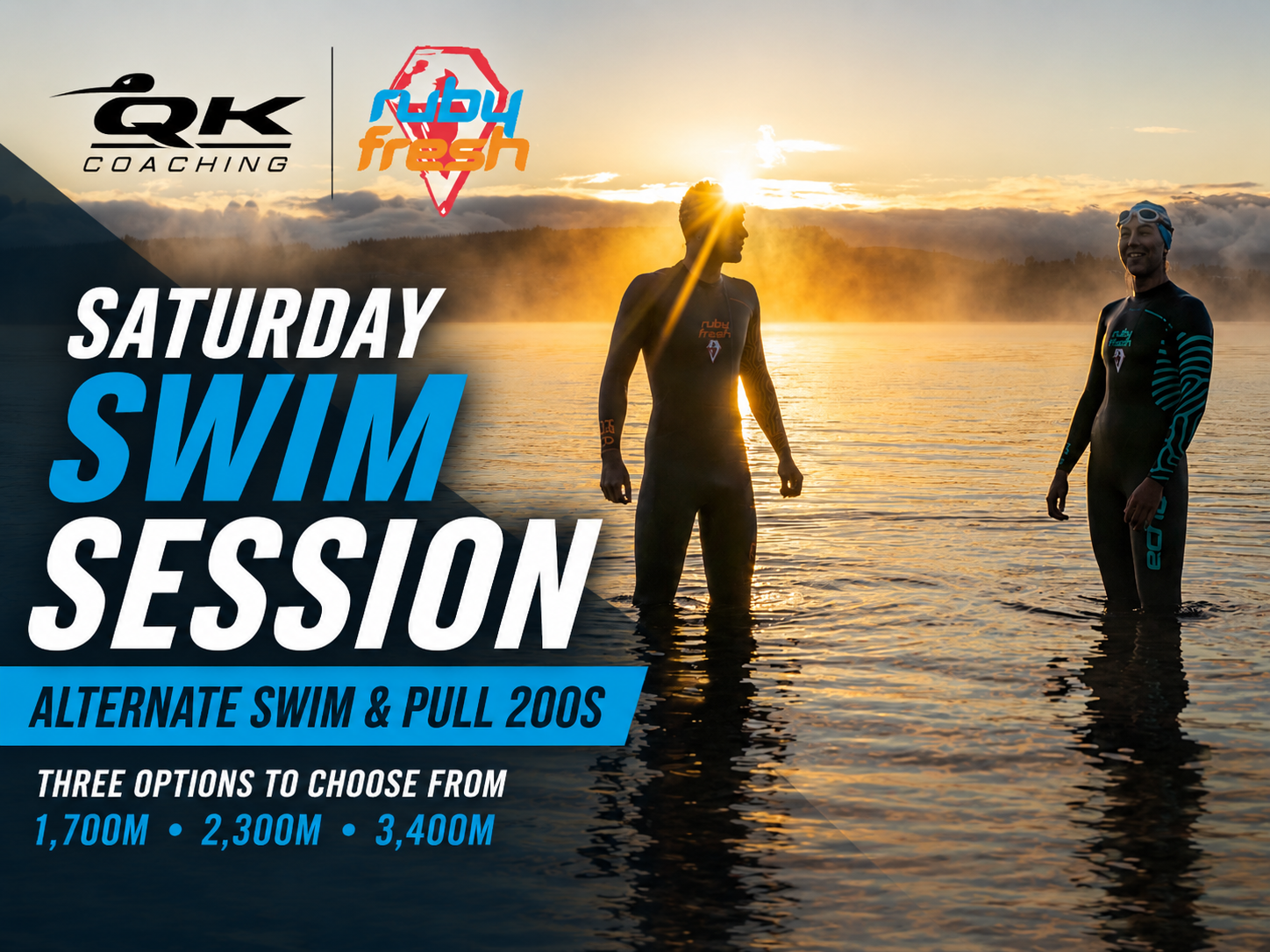
This week’s Saturday Swim Session is deliberately simple: alternate between freestyle swimming and Pull Buoy work over repeated 200m efforts. But simple doesn’t necessarily mean easy.
Removing the kick with the Pull Buoy changes how you move through the water and places greater emphasis on your upper body, catch and pull. Returning to normal freestyle on the following 200m gives you an opportunity to carry that strong connection with the water back into your complete stroke. As the repetitions accumulate, the challenge is to maintain your technique and pace rather than allowing fatigue to gradually shorten your stroke.
Each Saturday I post a Swim Session, and most weeks there are three options to choose from. Option A is for swimmers looking for a workout between 1,000 and 2,000 metres, Option B is between 2,000 and 3,000m, and Option C is greater than 3,000m.
You can also read my article explaining Swim Intensity if you’re unfamiliar with the terminology I use in these sessions.
Today’s Goal
The goal of today’s workout is to develop aerobic endurance and freestyle efficiency while maintaining consistent technique across repeated 200m efforts.
By alternating between normal freestyle and Pull Buoy swimming, you’ll experience subtle differences in body position and propulsion. Use those differences to become more aware of how effectively your upper body is contributing to your stroke.
The aim isn’t simply to get through all the 200s. You want the final repetitions to look and feel technically similar to the first.
Why You’re Doing This Session
A Pull Buoy reduces the contribution from your legs and helps support your lower body, allowing you to concentrate more closely on your upper-body mechanics.
That makes the Pull Buoy repetitions particularly useful for focusing on your catch, pull and connection with the water.
But the most important part of this workout is what happens when you remove it.
On the freestyle repetitions, try to retain the effective catch and pull you established while using the Pull Buoy while reincorporating your normal kick and body position.
Alternating between the two also adds variety to what would otherwise be a straightforward aerobic set of repeated 200s.
With only 20 seconds Rest Interval, the session encourages sustained swimming rather than complete recovery between repetitions.
Session Inspiration
This workout was originally published in the Guide to Triathlon Swimming, a supplement accompanying Triathlon Plus, Issue 46 from October 2012.
The original workout forms Option A, consisting of a 300m Warm Up, six alternating 200m Swim/Pull repetitions and a 200m Cool Down for a total of 1,700m.
I’ve retained that original session and developed two longer alternatives using the same concept. Option B increases the workout to 2,300m, while Option C provides a 3,400m session for swimmers who need greater training volume.
Today’s Workout
Option A – 1,700m
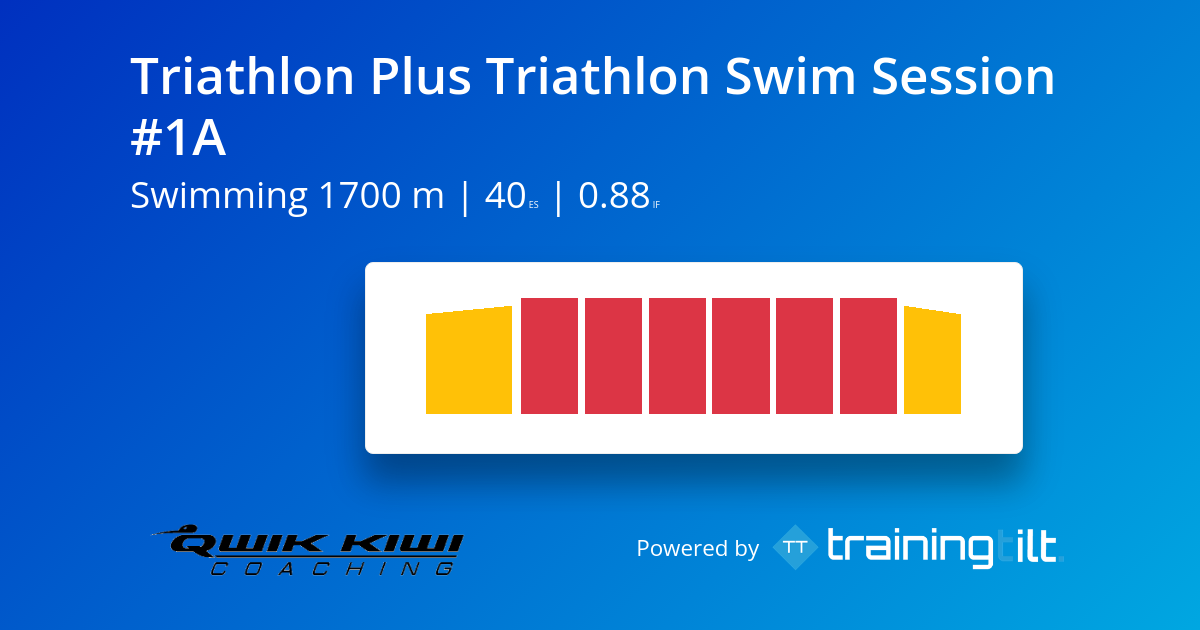
- 300m Warm Up (WU)
- 6x 200m – Alternate Swim/Pull – 20sec RI
- 200m Cool Down (CD)
Option B – 2,300m
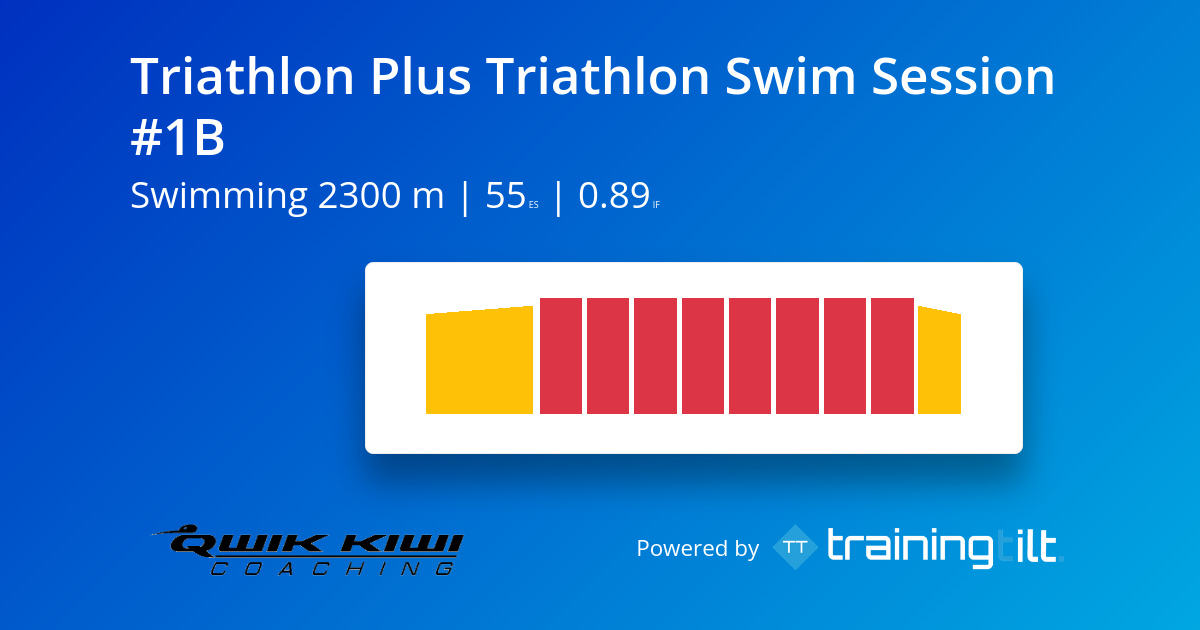
- 500m Warm Up (WU)
- 8x 200m – Alternate Swim/Pull – 20sec RI
- 200m Cool Down (CD)
Option C – 3,400m
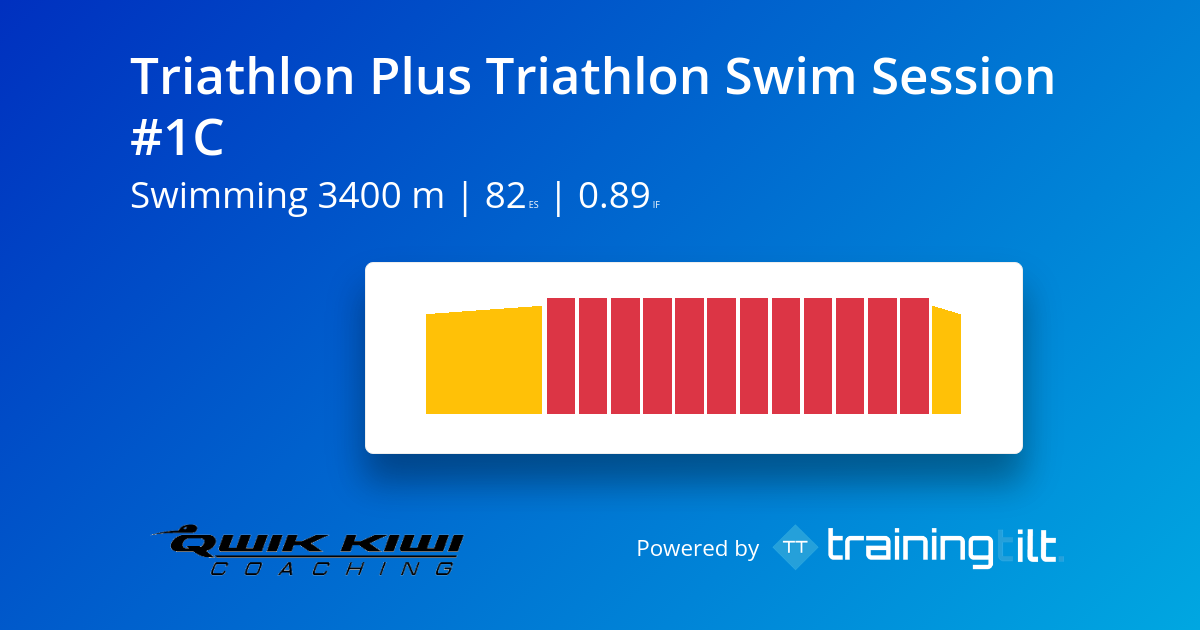
- 800m Warm Up (WU)
- 12x 200m – Alternate Swim/Pull – 20sec RI
- 200m Cool Down (CD)
What You Should Focus On
The simplicity of this workout gives you plenty of opportunity to pay attention to how you’re swimming, rather than remembering a complicated set.
During the Pull Buoy repetitions, concentrate on establishing a good body position and feeling a strong, effective catch. Avoid simply increasing your stroke rate as you fatigue.
When you return to normal freestyle, notice what changes. Try to maintain the same connection with the water while bringing your kick back into the complete stroke.
Consistency is important too. Your 200m repetitions shouldn’t become progressively slower because you attacked the opening repetitions too aggressively.
Common Mistakes To Avoid
Swimming The Pull Reps Too Hard
A Pull Buoy can make swimming feel easier or faster for some swimmers. Don’t turn those repetitions into races.
The Pull Buoy is there to change the emphasis of your swimming, not automatically increase the intensity.
Letting The Pull Buoy Do All The Work
Because the Pull Buoy helps support your legs, your body position may improve immediately.
Pay attention to that position rather than becoming dependent on the equipment. When you remove the Pull Buoy, try to recreate a similarly streamlined position through good technique.
Forgetting About Technique On The Swim Reps
The freestyle 200s aren’t simply filler between Pull Buoy repetitions.
They’re where you can apply what you’ve just felt during the Pull repetition to your complete freestyle stroke.
Starting Too Fast
Twenty seconds isn’t much recovery over a set containing up to twelve 200m repetitions.
Start at an intensity you can maintain rather than producing a very fast opening 200m and gradually slowing throughout the session.
Turning The Rest Interval Into Extra Recovery
Keep the Rest Interval to 20 seconds. The relatively short recovery is an important part of the aerobic nature of the workout.
Tips For Completing The Workout Successfully
Choose a sustainable pace from the beginning. You should be working, but you shouldn’t be wondering after the second repetition how you’re possibly going to finish the set.
If you’re timing your 200m repetitions, use those times as feedback. You don’t need every repetition to be identical, particularly because Pull Buoy and normal swimming may naturally produce different times, but look for consistency within each type.
Try comparing your first Swim 200m with your final Swim 200m, and do the same with your Pull repetitions. That gives you a much more useful comparison than simply comparing every repetition with the one immediately before it.
Use your Pull Buoy to help isolate the upper-body component of your stroke, but continue thinking about your complete swimming technique rather than treating Pull as a completely separate way of swimming.
Most importantly, keep asking yourself what you can transfer from the Pull repetition into the freestyle repetition that follows.
Workout Breakdown
Begin with 300m for Option A, 500m for Option B or 800m for Option C of mixed swimming.
Include a range of strokes during your Warm Up and gradually prepare your body for the main set. You can stop and stretch whenever needed—the Warm Up doesn’t need to be completed continuously.
The main set consists of six, eight or twelve repetitions of 200m, depending on the option you’ve selected.
Alternate each repetition:
200m Freestyle → 200m Pull Buoy → 200m Freestyle → 200m Pull Buoy
Continue alternating in this manner until you’ve completed the prescribed number of repetitions.
Take a 20-second Rest Interval after every 200m.
The Swim and Pull repetitions should both be completed as freestyle. Concentrate on controlled, sustainable swimming and maintaining good technique as fatigue develops.
Finish with a 200m Cool Down.
Unlike the main set, your Cool Down can include whichever strokes you prefer. Swim easily, stop and rest whenever you need to, and use the opportunity to stretch during the Cool Down if that feels beneficial.
After Your Swim
Before you leave the pool, think about the differences you noticed between swimming with and without the Pull Buoy.
Ask yourself:
- Did my body position noticeably change when I added the Pull Buoy?
- Could I feel a stronger catch or pull when my kick was removed?
- Was I able to carry that feeling into the following freestyle 200m?
- How consistent were my Swim 200m repetitions?
- How consistent were my Pull 200m repetitions?
- Did my stroke begin to shorten or deteriorate towards the end of the workout?
- What technical cue could I take into my next swim?
A successful session isn’t necessarily the one with the fastest 200m. If you can maintain your aerobic pace and technical quality throughout the set—and transfer something useful from the Pull repetitions into your normal freestyle—you’ve achieved the purpose of the workout.
Want 8 Weeks of Swim Sessions Like This?
If you enjoyed today’s workout, why stop at just one?
Download my FREE Swim Engine Builder Workout Pack and receive 24 structured swim sessions spread across three training options:
🏊 Foundation – Under 2,000m per session
🏊 Performance – 2,000–3,000m per session
🏊 Endurance – 3,000m+ per session
Whether you’re swimming for fitness, preparing for your next triathlon or simply looking for more variety in the pool, you’ll have eight weeks of purposeful workouts ready to go.
👉 Download your FREE Swim Engine Builder Workout Pack today and start building a stronger swim engine!
