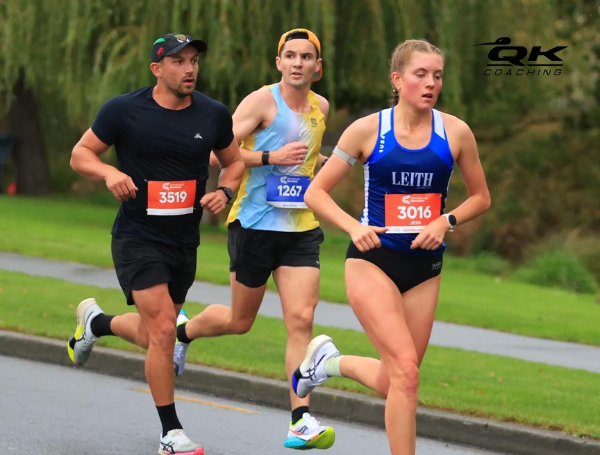
When runners think about marathon training, they usually focus on building fitness.
Long runs.
Tempo runs.
Intervals.
Weekly mileage.
All of those are important.
But there’s another part of marathon performance that’s often overlooked.
Running technique.
The goal isn’t to look like an elite athlete.
The goal is to run efficiently for 42.2 kilometres.
The more efficiently you move, the less energy you waste—and the more likely you are to finish your marathon strongly.
Fatigue Changes Everything
During the first few kilometres of a marathon, most runners naturally have good posture.
They’re fresh.
Their stride feels smooth.
Their arms swing comfortably.
Their breathing is relaxed.
Fast forward to 35 kilometres and things often look very different.
Shoulders creep up towards the ears.
The head starts to drop.
The stride becomes heavy.
Cadence slows.
Arm swing loses rhythm.
Every small change makes running slightly less efficient.
Individually these changes seem insignificant.
Together they can make the final kilometres much harder than they need to be.
Good Form Conserves Energy
Running efficiently isn’t about looking good.
It’s about reducing unnecessary movement.
Every extra bounce, every collapsed posture, and every exaggerated movement requires energy.
Over a 5-kilometre run, that might not matter much.
Over a marathon, those small inefficiencies add up.
Good running form helps you direct more of your energy into moving forwards instead of wasting it on unnecessary movement.
Focus On The Basics
You don’t need to overthink every part of your running technique.
In fact, trying to consciously control dozens of movements at once usually makes running feel awkward.
Instead, focus on a few simple cues.
Run tall.
Keep your shoulders relaxed.
Look ahead rather than down at your feet.
Allow your arms to swing naturally without crossing excessively across your body.
Aim for light, quick steps rather than long, reaching strides.
These simple reminders can help restore good running mechanics when fatigue begins to creep in.
Practise During Easy Runs
One mistake runners make is only thinking about technique during races.
Good running form should be practised throughout training.
Easy runs are an ideal opportunity because you’re not distracted by high intensity.
Every so often, perform a quick body scan.
Are your shoulders relaxed?
Are you running tall?
Are your arms moving smoothly?
Are your feet landing underneath your body?
These small check-ins gradually build better habits.
By race day, they become much more automatic.
Strength Supports Technique
Good running form isn’t just about concentration.
It’s also about strength.
As fatigue builds, your muscles have to work harder to maintain posture and control.
Strong glutes, hips, core, and lower legs help you maintain efficient running mechanics for longer.
This is one reason strength training can have such a positive effect on marathon performance.
It’s not just about becoming stronger.
It’s about maintaining good technique deep into the race.
Don’t Chase Perfect Form
It’s important to remember that no runner maintains textbook technique for an entire marathon.
Even elite athletes show small changes as fatigue develops.
The goal isn’t perfection.
The goal is minimising unnecessary deterioration.
Small corrections made at the right time can help you stay relaxed and efficient when it matters most.
Use Mental Checkpoints
As the marathon progresses, choose regular moments to check your technique.
Perhaps every 5 kilometres, or each time you pass an aid station.
Ask yourself:
- Am I running tall?
- Are my shoulders relaxed?
- Is my breathing under control?
- Am I taking quick, light steps?
These simple questions only take a few seconds but can help prevent fatigue from gradually taking over.
Final Thoughts
Marathon success isn’t just about fitness.
It’s also about preserving that fitness for as long as possible.
Good running form helps you do exactly that.
By practising efficient technique throughout your training, strengthening the muscles that support your posture, and checking in with your form during the race, you’ll give yourself the best chance of finishing strongly.
The goal isn’t to look perfect.
The goal is to waste less energy so you have more left when it matters most.
That’s one of the smartest ways to become a better marathon runner.
Ready to Run Your Best Marathon?
Whether you’re training for your first marathon or chasing a new PB, having the right plan can make all the difference.
If you’d like help with your training, pacing strategy, nutrition planning, or simply want to discuss the best approach for your next marathon, book a free, no-obligation coaching consultation.
We’ll talk about your goals, your experience, your upcoming race, and what it will take to get you to the finish line feeling strong.