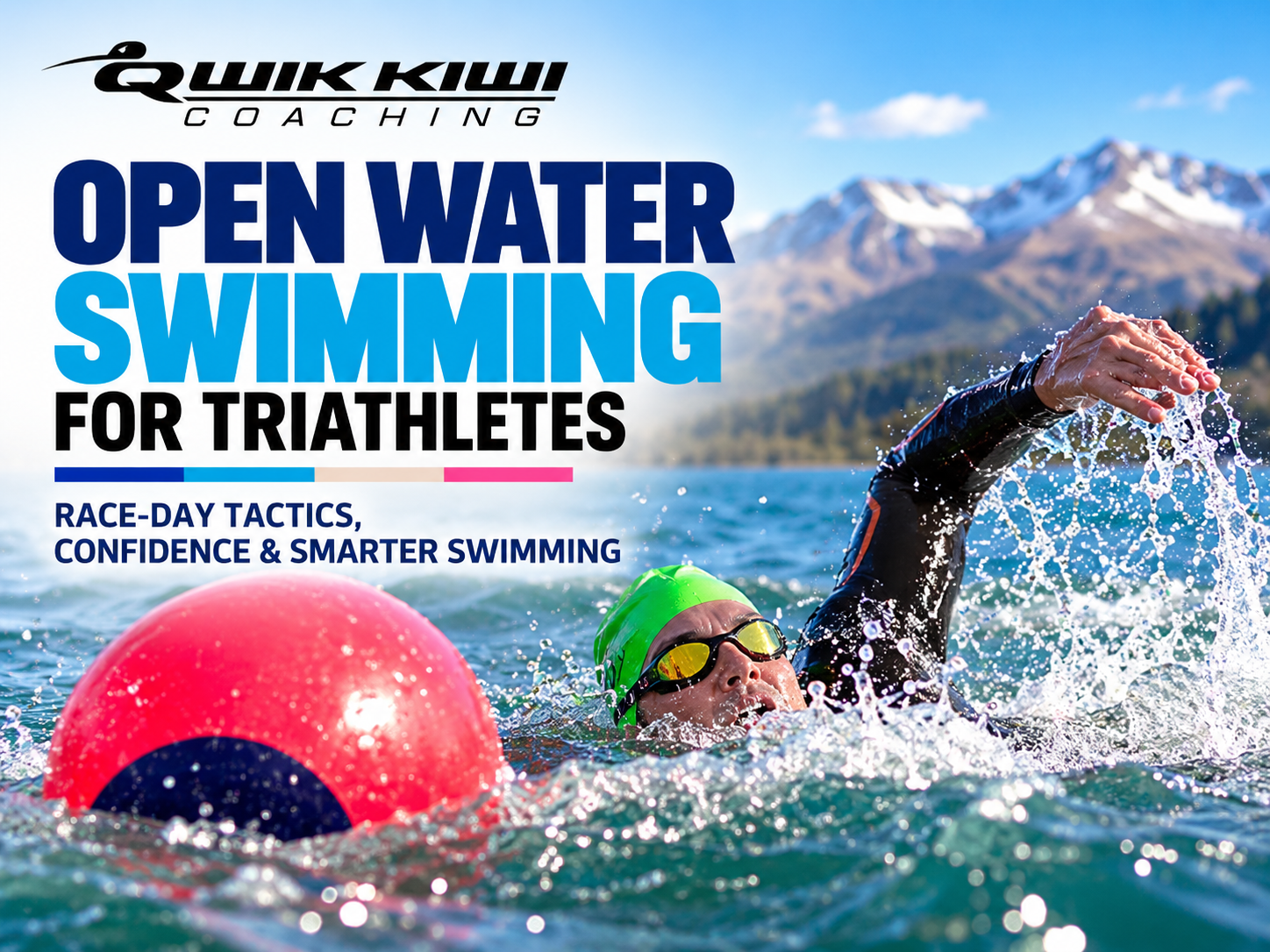
Open Water Swimming for Triathletes: Race-Day Tips & Tactics
You can be a strong swimmer in the pool, but put yourself in open water with a couple of hundred other triathletes, waves, currents and a crowded swim start, and suddenly everything changes.
Your heart rate goes through the roof, you’re struggling to breathe, and you’ve barely swum 100 metres.
Sound familiar?
Open water swimming presents challenges that you simply don’t experience in the pool. There are no lane ropes, no black line to follow, no wall every 25 or 50 metres, and the conditions can change dramatically between events.
During our recent Qwik Kiwi Coaching group coaching call, we explored how triathletes can prepare for different swimming environments, manage their breathing, navigate efficiently and conserve energy.
We also addressed questions from athletes preparing for events including Ironman Florida, Challenge Wānaka, Ironman New Zealand, Ironman 70.3 Taupō and the Mount Festival of Multisport.
The goal isn’t necessarily to record your fastest-ever swim split. It’s to swim efficiently, confidently and arrive at T1 ready to continue racing.
Why Open Water Swimming Is More Than Just Fitness
One of the things I regularly see as a triathlon coach is an athlete who swims confidently in the pool but struggles when they enter open water.
That doesn’t necessarily mean their swimming fitness is inadequate.
In the pool, everything is predictable. You have lane ropes, a black line, controlled water conditions and regular opportunities to stop.
Open water removes those familiar reference points.
You may encounter hundreds of swimmers, poor visibility, cold water, waves, currents and unfamiliar entry or exit points.
Suddenly, swimming becomes much more than fitness and technique.
Three principles can make an enormous difference.
Preparation builds confidence. Understanding the course, conditions and starting arrangements helps remove uncertainty.
Smart tactics conserve energy. Drafting, effective sighting, appropriate positioning and efficient navigation can improve your performance without requiring additional fitness.
The swim is only the beginning. Unlike a standalone swimming event, a triathlon still requires you to cycle and run after leaving the water.
The best swim isn’t always the fastest swim. It’s the swim that sets you up for your best overall race.
1. Know Before You Go: How to Check Open Water Conditions
One of my athletes, Harrison, asked an excellent question before our coaching call:
Is there a website that provides information about water temperature, currents, waves and whether the water will be choppy or flat?
The answer is that there isn’t one website that covers every swimming location.
However, several useful resources are available.
Where to find open water information
A useful starting point for New Zealand athletes. Marine forecasts and paddleboarding forecasts can provide information about wind, weather and conditions on the water.
Land, Air, Water Aotearoa (LAWA)
Particularly useful for checking recreational water quality. However, water-quality monitoring doesn’t necessarily tell you whether a location has strong currents or significant waves.
Port authorities sometimes publish detailed local monitoring information, including water temperature, tides, currents, wind and wave conditions.
Useful for obtaining an indication of sea temperatures and seasonal patterns, although estimates should not be confused with recent measurements taken at your exact swimming location.
Regional councils, harbour authorities and other local organisations may also publish monitoring information.
A simple Google search can be surprisingly effective. Try searching for the name of your swimming location followed by water conditions, water temperature or marine forecast.
A practical example: Port of Tauranga
During the coaching call, we discussed monitoring information from the Port of Tauranga.
The latest conditions at time of publication are:
| Measurement | Recorded condition |
|---|---|
| Water temperature | 15.8°C |
| Significant wave height | 0.4 m |
| Harbour entrance current | 1.8 knots, incoming |
| Entrance wind | 0 knots |
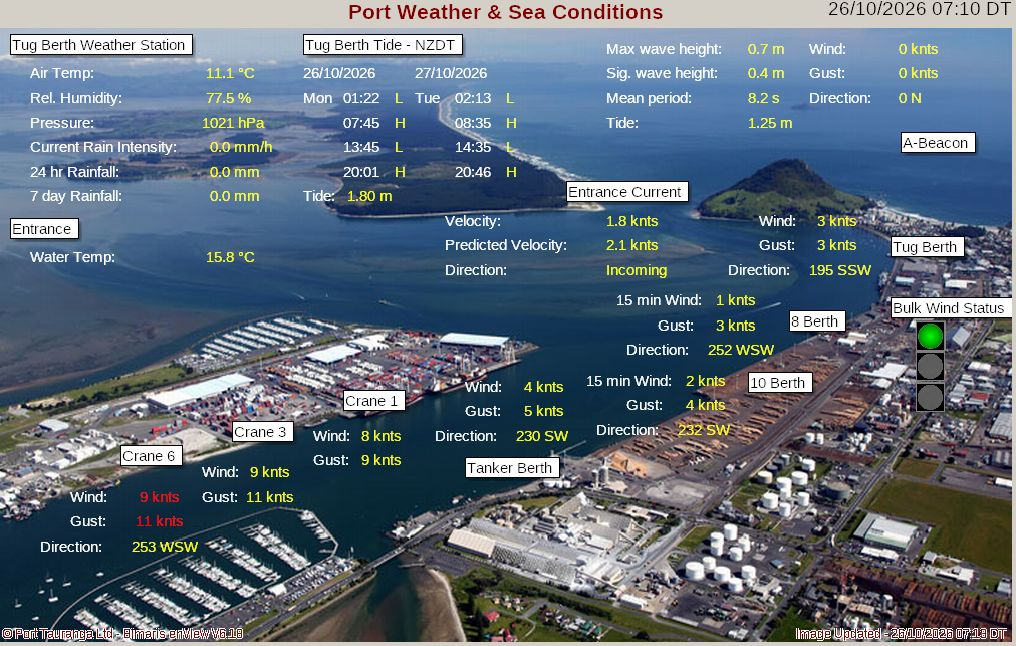
The previous data when I checked it prior to the coaching call is particularly interesting.
One knot is approximately 0.514 metres per second, meaning a current of 1.4 knots is moving at approximately 0.72 metres per second.
For comparison, an athlete swimming at 2:00 min/100 m travels at approximately 0.83 metres per second relative to the surrounding water.
You can see how a current of that magnitude could have a substantial impact on a swimmer attempting to swim directly against it.
However, there’s an important qualification.
The current measured at the Tauranga Harbour entrance doesn’t necessarily represent the current inside Pilot Bay.
Monitoring stations tell you what’s happening at their particular location, not necessarily where you’re planning to swim.
Always assess the actual conditions
When you arrive at your swimming location, look at the water.
Consider the wind direction, surface chop, waves, currents and available entry and exit points.
Speak with lifeguards or event safety personnel where available.
And remember that water quality matters too. Water can appear perfectly calm while being unsuitable for swimming because of contamination.
The key is to combine information from several sources with an assessment of the conditions at the venue.
2. The Minimum-Effective Open Water Warm-Up
Jason raised two questions that will resonate with many triathletes.
The first was how to avoid becoming breathless after the first 100 metres.
The second was:
What’s the bare minimum warm-up or acclimatisation for those of us who aren’t particularly strong swimmers and don’t want to use all our energy before the race?
It’s a very sensible question.
A warm-up shouldn’t leave you tired before the race has even started.
For less-confident swimmers, I would prioritise becoming comfortable with the water over completing a substantial swimming warm-up.
A simple 3–5 minute preparation routine
Where conditions are safe and pre-race water access is permitted, consider the following:
| Stage | Suggested activity |
|---|---|
| Gentle movement | Approximately 1 minute of easy movement on land |
| Water acclimatisation | Enter gradually, wet your face and become familiar with the temperature |
| Breathing familiarisation | Practise comfortable breathing and gentle underwater exhalation |
| Easy swimming | Swim gently for approximately 1–2 minutes if conditions permit |
The objective isn’t to cover a particular distance.
It’s to become physically and mentally prepared for the start.
A short, easy warm-up is unlikely to use a meaningful amount of your race-day energy.
In fact, becoming comfortable with the water and avoiding a frantic start may save considerably more energy than the warm-up requires.
What if you cannot enter the water beforehand?
Some events restrict access to the water before the start.
In these circumstances, use gentle dry-land movement to prepare your body.
Then plan to start particularly conservatively, allowing time to become comfortable with the water and establish your breathing.
Cold-water conditions require additional consideration. Acclimatisation shouldn’t be rushed, and athletes should never force themselves to continue swimming while experiencing uncontrolled breathing or distress.
Think about the warm-up in terms of readiness, not distance.
3. Surviving the First 200 Metres: Breathing, Anxiety and Pacing
Why do some athletes swim comfortably in training but suddenly feel breathless within the first 100 metres of a race?
There are several possible explanations.
One of the most common is starting too fast.
At a triathlon start, adrenaline is high. There are swimmers all around you, everyone is moving, and it’s easy to get caught up in the excitement.
Without realising it, you may start swimming significantly harder than you would during training.
Your heart rate increases, your breathing becomes rapid, and suddenly you feel as though you’re struggling to get enough air.
Cold water can make the situation worse by triggering an involuntary increase in breathing rate.
Anxiety can also contribute.
Another common issue is holding your breath underwater rather than exhaling comfortably.
When swimming freestyle, you generally want to exhale into the water so that you can take your next breath without rushing.
Holding your breath and then trying to exhale and inhale during the brief period your mouth is above the surface can make breathing more difficult.
Is it actually hypoxia?
Jason described the sensation as becoming hypoxic.
However, feeling short of breath doesn’t necessarily mean your blood oxygen level is low.
Excessive effort, anxiety, altered carbon dioxide levels and cold-water responses can all contribute to uncomfortable breathing sensations.
It’s important not to assume that all breathing difficulties are simply anxiety.
Severe or persistent breathlessness, chest pain, faintness or confusion require stopping and seeking assistance.
My first 200 metres strategy
I encourage athletes to divide the beginning of their swim into three sections.
0–50 metres
Start
Begin easier than you think necessary. Focus on entering safely and establishing comfortable breathing.
50–100 metres
Settle
Find your stroke rhythm, exhale gently underwater and resist the temptation to chase faster swimmers.
100–200 metres
Build
Once breathing is comfortable, gradually settle into your sustainable race effort.
Your starting position also matters.
If you’re uncomfortable with close contact, positioning yourself further back or slightly wider can make it easier to establish your rhythm.
If you become overwhelmed, don’t force yourself to maintain race pace. Establish a safe position, regain controlled breathing and seek assistance when necessary.
The first 200 metres should be about getting into your race, not winning your race.
4. Swim Smarter, Not Further: Drafting, Sighting and Buoy Turns
Once you’ve settled into your swim, there are opportunities to improve your performance without swimming harder.
Drafting
Swimming behind another athlete can reduce resistance and help conserve energy.
The key is finding someone swimming at a suitable pace.
There’s little benefit in drafting behind someone so fast that you have to work beyond your sustainable effort to stay with them.
Drafting alongside another swimmer can also be useful, depending on your position.
Sighting
In a swimming pool, the black line provides continuous direction.
In open water, you need to look ahead periodically to confirm you’re heading towards the correct buoy or landmark.
How frequently you sight depends on visibility, currents, surface conditions and how straight you naturally swim.
Calm water and clear landmarks may allow less frequent sighting.
Wind, chop and cross-currents may require more frequent checks.
Buoy turns
Turning buoys can become congested as multiple swimmers converge on the same point.
Taking the tightest possible line isn’t always the fastest option.
Sometimes swimming a few extra metres around the outside is preferable to becoming trapped in a crowded group.
Koren also asked whether athletes are permitted to swim inside the buoys.
This depends on the event’s rules.
Some buoys are mandatory turning markers, while others are directional or sighting markers.
Always study the official course instructions rather than assuming you can follow another swimmer’s line.
The hidden cost of poor navigation
Imagine an athlete competing in a 1,900 m swim.
If poor navigation means they actually cover 2,050 m, they’ve added 150 m to their race.
At a pace of 2:00 min/100 m, that’s approximately three additional minutes of swimming.
Sometimes the easiest way to improve your swim split is simply to swim less distance.
5. Ocean Swimming: Currents, Waves and Surf Entries
Ocean swimming introduces another layer of complexity.
Koren, who is preparing for Ironman Florida, asked several questions about currents, swimming through waves, entering and exiting the ocean, and swimming parallel to shore.
Understanding currents
A longshore current moves along the coastline.
If you’re swimming parallel to the beach, it may help you in one direction and work against you in the other.
A cross-current can carry you sideways, meaning you may need to adjust your heading to compensate.
Think about swimming across a river.
If you aim directly at the point on the opposite bank that you want to reach, the current may carry you downstream.
Instead, you may need to aim upstream to compensate for the movement of the water.
The same principle applies in open water.
Rather than constantly correcting your position after drifting, aim to account for the current while maintaining a sustainable effort.
Entering through surf
When waves are present, observe their pattern before entering.
Waves often arrive in sets, with periods of smaller waves followed by larger ones.
In shallow water, you may be able to run or wade before transitioning to swimming.
Experienced ocean swimmers may use techniques such as dolphin diving or passing beneath breaking waves, but these techniques require appropriate conditions, adequate depth and prior practice.
Race day is not the time to experiment with unfamiliar surf techniques.
Swimming into waves
When approaching waves, adjust your breathing and stroke timing to avoid inhaling just as a wave reaches your face.
Sometimes this means breathing to the opposite side or timing your breath between waves.
Swimming parallel to shore
If waves are approaching from one side, breathing to the other side may be easier.
This is one reason I encourage triathletes to develop the ability to breathe comfortably on either side, even if they have a preferred breathing side.
Returning through surf
Waves travelling towards shore may sometimes assist your progress, but breaking waves can also disrupt your balance and direction.
Continue swimming until you can establish secure footing.
Standing too early can leave you struggling through water that’s still too deep to run effectively.
Most importantly, observe the conditions and follow the instructions of event safety personnel.
6. Ironman Florida: Managing a Two-Lap Ocean Swim
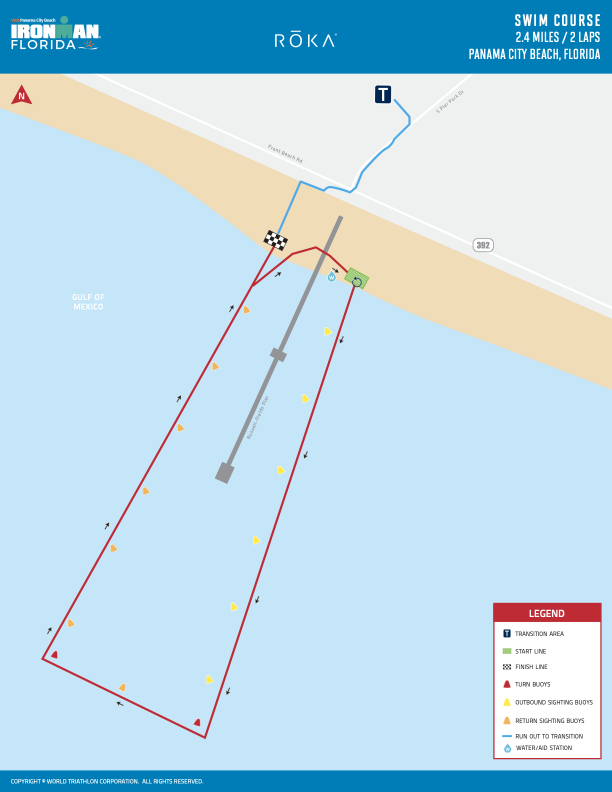
Ironman Florida provides an excellent example of how ocean conditions can influence race tactics.
The swim takes place in the Gulf of Mexico and includes two loops, with a beach exit and short run between them.
This creates additional challenges compared with a continuous lake swim.
Athletes must manage their initial entry, the first swim loop, the beach exit, the run between laps, a second ocean entry and the final exit towards T1.
Study the course
Before race day, identify the entry point, direction of travel, turning buoys and exit.
Pay particular attention to mandatory turning markers and any specific instructions for the beach run.
Adapt to the conditions
Waves and currents may make one section of the swim feel faster or slower than another.
Don’t automatically interpret a slower pace as a deterioration in your swimming performance.
Maintain an appropriate effort and navigate accurately.
Manage the Australian exit
The beach run between swimming laps is commonly referred to as an Australian exit.
As you approach shore, identify the exit point and continue swimming until you can safely stand.
Once out of the water, avoid treating the beach run as a sprint.
You’ve still got another lap to complete.
Use the opportunity to regain your composure and prepare for the second entry.
Treat the second entry as another start
This is where Jason’s questions about breathing and pacing become particularly relevant.
Even though you’ve already completed one lap, rushing into the water again can cause another spike in effort and breathing rate.
Re-enter under control, establish your breathing and gradually return to sustainable swimming effort.
The same principle applies to the final exit.
Your objective is to reach T1 composed and ready to start the bike.
7. Challenge Wānaka: Preparing for Alpine Lake Conditions
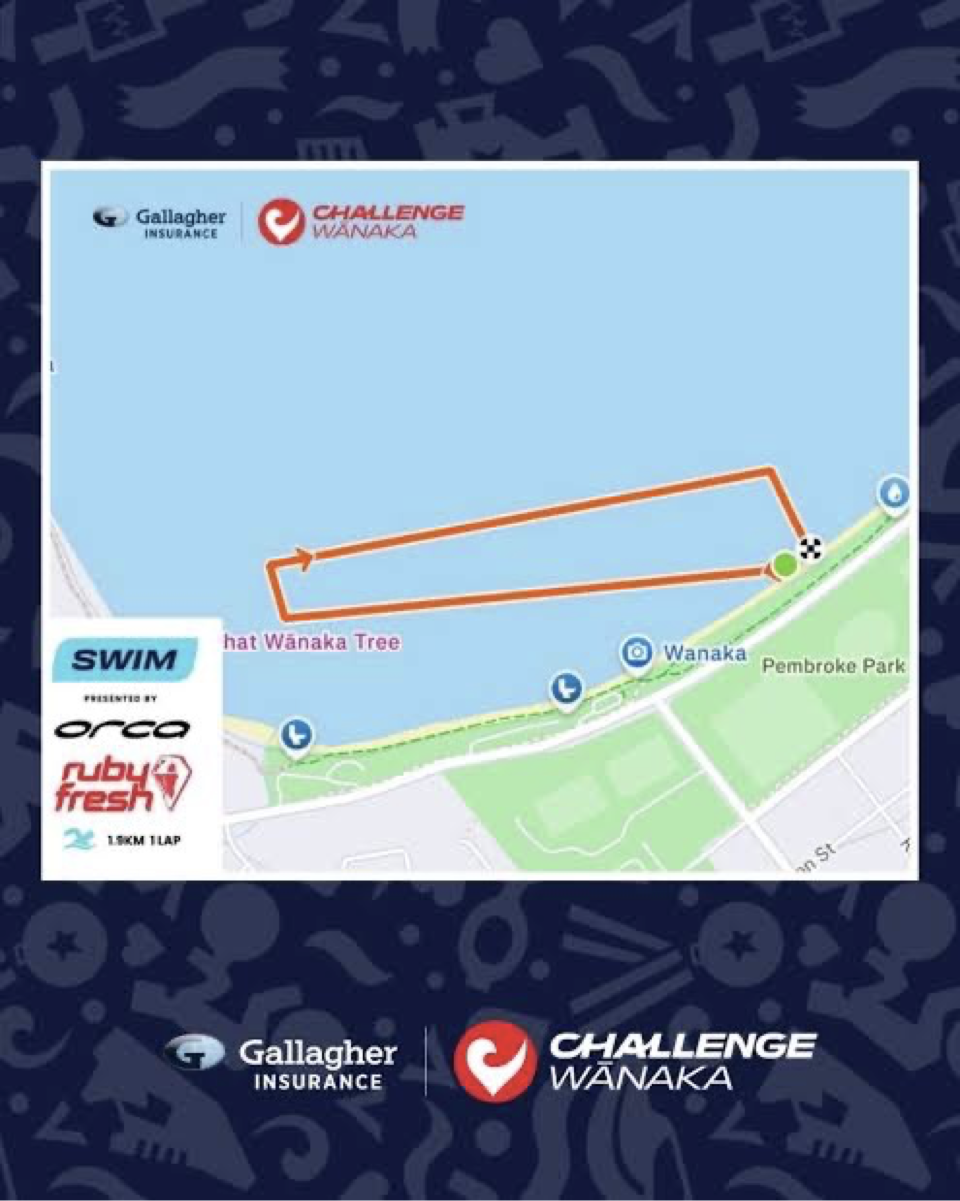
Lake Wānaka presents a very different swimming environment from the Gulf of Mexico.
Although it’s a freshwater lake, conditions can still be challenging.
Water temperature, wind and surface chop are important considerations.
Cold-water preparation
Depending on the season and recent weather, the lake can be cool.
Athletes should prepare with appropriate equipment and experience swimming in cooler conditions.
Cold-water acclimatisation is particularly important for those prone to rapid breathing when entering the water.
Wind and chop
Large lakes can develop significant surface chop when wind acts across the water.
Conditions may also change during the swim.
Trying to maintain exactly the same speed you would achieve in calm water can create unnecessary fatigue.
Instead, focus on maintaining a sustainable effort and adapting your stroke and breathing.
Navigation
Wānaka’s surrounding mountains and shoreline provide prominent landmarks.
However, an easily visible mountain isn’t necessarily aligned with your next turning buoy.
Identify suitable sighting landmarks before entering the water.
The swim exit
After swimming, athletes need to transition from a horizontal position to standing and running towards T1.
Take a moment to establish your balance rather than rushing unnecessarily.
Freshwater swimming isn’t automatically easy swimming. Wind, temperature and exposure can make a lake every bit as challenging as the ocean.
8. Ironman New Zealand and 70.3 Taupō: Racing on Lake Taupō
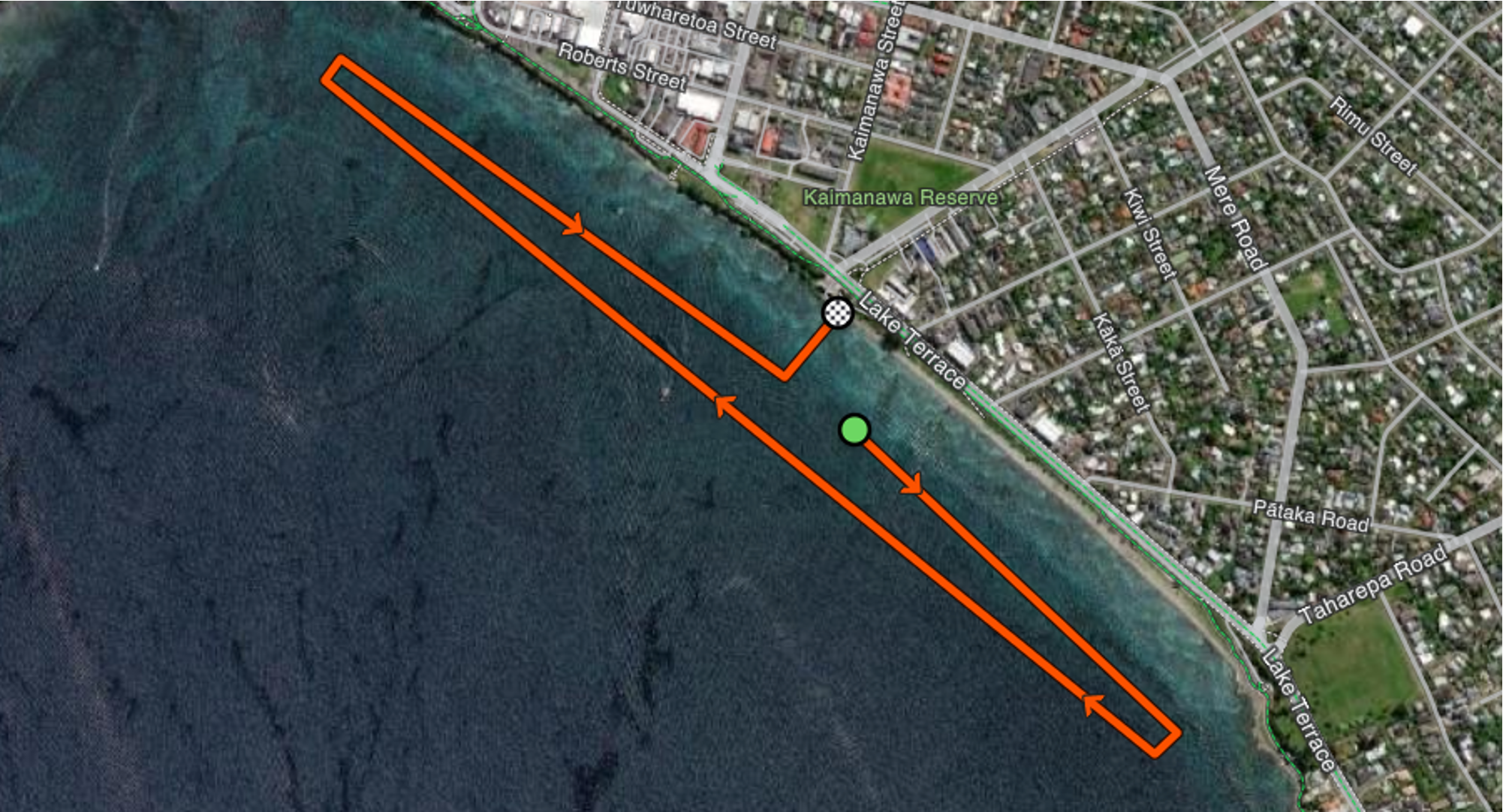
Lake Taupō hosts both full-distance and Ironman 70.3 racing.
Although both involve freshwater swimming, the demands of 1.9 km and 3.8 km require different pacing considerations.
Understand the environment
Lake Taupō is a large body of water.
Depending on the weather, conditions can range from beautifully calm to challenging chop.
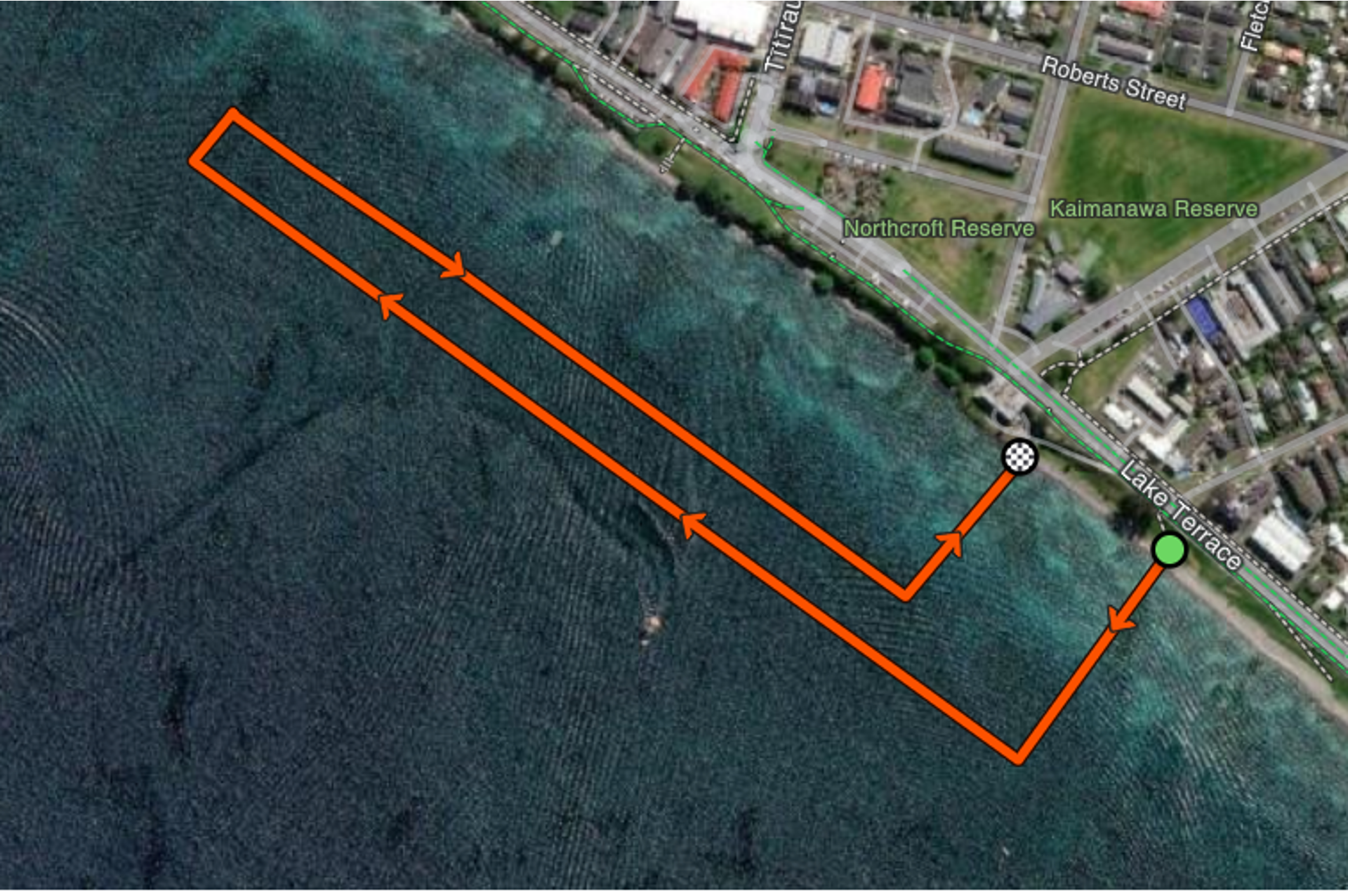
Prepare for both possibilities.
Position yourself appropriately
The rolling start of the 70.3 can reduce some of the congestion associated with mass starts (like the full distance), but starting position remains important.
If you expect to swim approximately 40 minutes, there’s little benefit in positioning yourself among athletes targeting 30 minutes.
Start with swimmers of similar ability and establish your own rhythm.
Pace for the race distance
The full Ironman swim is twice the distance of the 70.3 swim.
The longer event generally requires a more conservative approach to energy expenditure.
However, both distances are followed by substantial cycling and running.
Draft without blindly following
Drafting can be valuable, particularly over longer distances.
But don’t simply assume the swimmer ahead is navigating correctly.
Continue sighting and checking your course.
A faster swim isn’t necessarily beneficial if the effort compromises your performance on the bike.
During our discussion, we also noted that warm-up arrangements can differ between events. At Ironman 70.3 Taupō, athletes may have limited opportunities to enter the water beforehand, whereas full-distance race arrangements have allowed pre-start water access.
Always check the current athlete guide for your particular event.
9. Mount Maunganui: Harbour Currents and Coastal Swimming
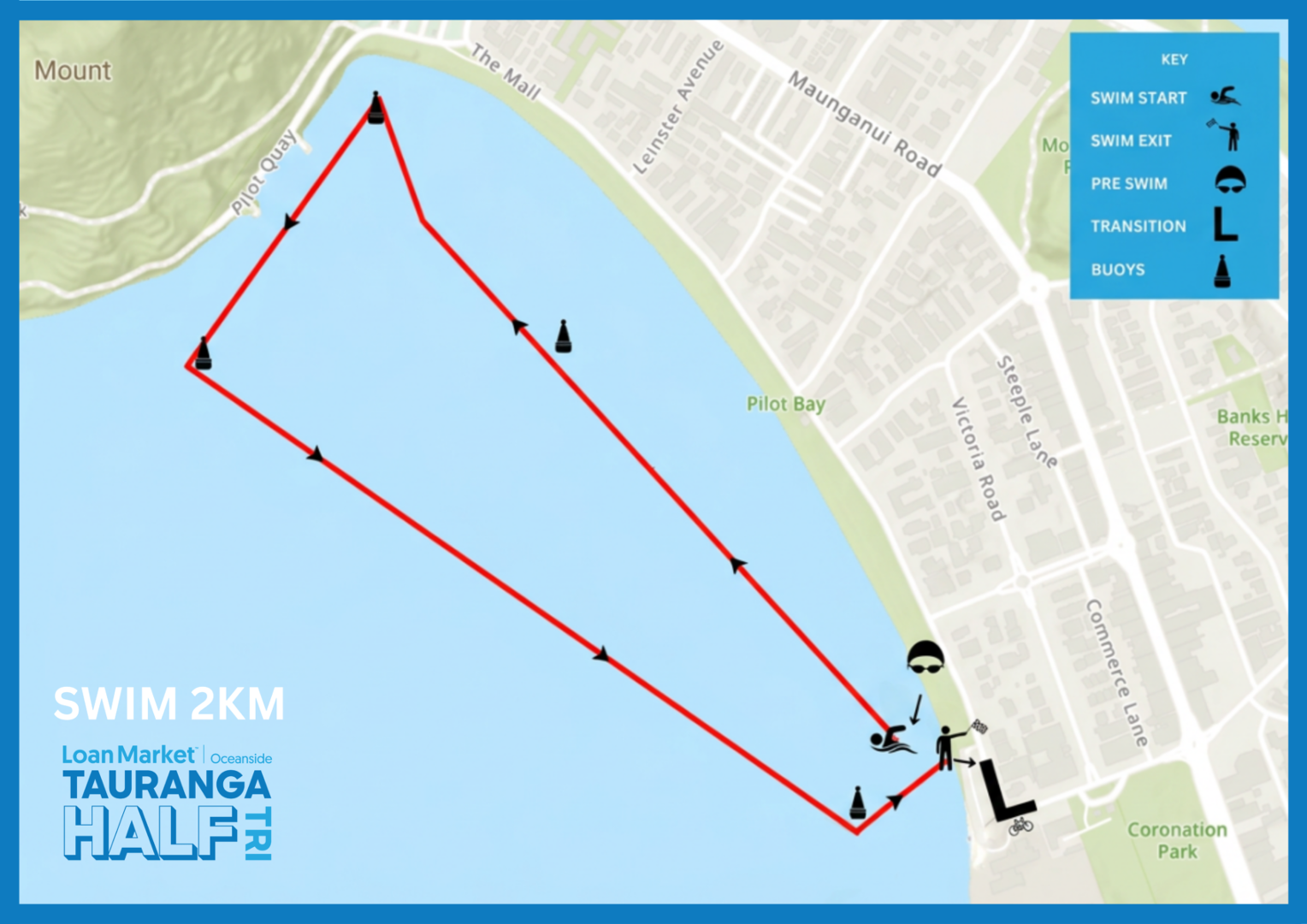
Mount Maunganui is an interesting location because several different swimming environments are located close together.
Pilot Bay (where the Mount Festival of Multisport and Tinman Triathlon are held), the Tauranga Harbour entrance (included as part of the course for the Around the Mount Swim) and the ocean beaches (for events like the Surfbreaker Tri) can experience very different conditions.
Pilot Bay may be relatively sheltered under some circumstances.
The ocean side can be exposed to swell and breaking waves.
The harbour entrance can experience significant tidal currents.
For athletes racing at the Mount Festival of Multisport or other events in the area, understanding the actual swim location is essential.
Check the course
Establish whether the swim takes place inside the harbour, near the harbour entrance or on the ocean side.
The tactical considerations can be quite different.
Understand tidal movement
Tidal currents may influence your swimming speed and direction.
Current direction and strength don’t necessarily correspond exactly with published high- and low-tide times because local geography affects water movement.
Consider wind exposure
Wind can generate surface chop across exposed stretches of water, even when swell is relatively small.
Use local monitoring intelligently
The Port of Tauranga provides a useful example of detailed local monitoring.
However, remember that conditions recorded at one station may differ from those at the event course.
Two swimming locations only a few hundred metres apart can have very different conditions.
10. When Things Go Wrong: Staying Calm and Making Smart Decisions
Even with excellent preparation, unexpected problems can occur.
Being a confident open water swimmer doesn’t mean ignoring those problems.
It means recognising them early and responding appropriately.
Breathing difficulties
If you become overwhelmed, stop trying to maintain race pace.
Establish a safe position, regain controlled breathing and seek assistance if necessary.
If symptoms don’t settle, or you experience severe breathlessness or other concerning symptoms, don’t continue swimming.
Dislodged goggles
Contact with another swimmer can knock your goggles loose or cause them to fill with water.
Rather than panicking, establish a safe position and adjust them.
Losing a few seconds is preferable to continuing without adequate visibility.
Contact with other swimmers
Crowded starts and turning buoys can involve unintentional contact.
Practising swimming alongside other athletes can help you become more comfortable in these situations.
Navigation mistakes
If you discover you’ve drifted away from the intended course, don’t immediately sprint back towards the group.
Identify where you need to go, correct your heading and return to a sustainable rhythm.
Knowing when to stop
Sometimes the correct decision is to withdraw or request assistance.
If conditions exceed your ability or you’re experiencing a genuine safety problem, continuing isn’t worth the risk.
11. Your Race-Day Open Water Swimming Checklist
Before your next triathlon, work through these six areas.
Pre-race checklist
- Know the course — entry, exit, turning buoys and sighting landmarks
- Check the conditions — water temperature, wind, waves, currents and warnings
- Prepare your equipment — wetsuit, goggles and race-day essentials
- Warm up and acclimatise — establish comfort and controlled breathing
- Swim your own race — start conservatively, draft and navigate efficiently
- Finish ready to race — exit composed and prepare for the bike
Whether you’re racing a sprint triathlon, Olympic-distance event, Ironman 70.3 or full Ironman, these principles remain relevant.
The swim is only the beginning.
12. Building Open Water Confidence Through Experience
One of the most valuable contributions during our coaching call came from Tanya, who shared two approaches that have improved her confidence.
The first was getting into the water before an event whenever possible.
She explained that acclimatising to the water on race morning has made a meaningful difference to her preparation.
The second was participating in standalone open water swimming events.
Rather than waiting until a major triathlon to experience crowded swimming conditions, Tanya has taken part in ocean and lake swimming events, including the Banana Boat Swim Series.
These events provide opportunities to practise swimming alongside others, navigating courses, managing starts and adapting to different environments.
And because they’re standalone swimming events, there’s no bike or run afterwards.
You can focus entirely on the swimming experience.
Why this matters
The more frequently you experience open water swimming in controlled, supported environments, the more familiar those situations can become.
You can practise skills such as sighting, drafting, pacing and managing contact with other swimmers.
You also learn how you respond to different water temperatures and conditions.
Tanya raised another interesting example from mixed team relay racing at the World Championships.
For athletes swimming later relay legs, opportunities for a traditional water warm-up may be limited.
That creates an additional challenge when athletes are expected to complete a short, hard swim immediately after entering the water.
She also described an unusual swim course from the Long Distance World Championships in Denmark, where athletes had to climb onto a pontoon, cross a timing mat and re-enter the water midway through the swim.
These examples reinforce an important point:
Every open water event has its own challenges, and experience across different environments helps athletes become more adaptable.
Final Thoughts: Swim Smarter, Not Just Harder
Open water swimming rewards more than physical fitness.
Preparation, confidence, navigation, breathing control, pacing and the ability to adapt to changing conditions can all influence your performance.
For Jason, the priority is becoming comfortable with the water and managing effort during the first 200 metres.
For Koren, preparing for Ironman Florida means understanding ocean conditions, surf entries and exits, and the demands of a two-loop swim.
For Harrison, the starting point is knowing where to find reliable information about local swimming conditions.
And Tanya’s experiences highlight the value of practising open water skills before your major race.
The common theme is preparation.
You don’t necessarily need to swim harder to improve your open water performance.
You need to make better decisions, conserve energy where possible and develop the confidence to handle the environment you’re racing in.
A successful open water swim isn’t necessarily about swimming faster. It’s about swimming smarter and setting yourself up for your best overall triathlon.
Need Help Preparing for Your Next Triathlon?
Whether you’re struggling with open water confidence, preparing for your first Ironman 70.3 or looking to improve your overall triathlon performance, having a structured training plan and experienced coaching support can make a difference.
At Qwik Kiwi Coaching, I help triathletes develop the fitness, skills and confidence they need to prepare for their events.
If you’d like to discuss your training, upcoming race or open water swimming challenges, book a free 40-minute coaching consultation.
Book Your Free 40-Minute Coaching Consultation
Coach Ray Boardman
Qwik Kiwi Coaching