Brick sessions don’t need complicated intervals or high intensities to make you a better triathlete.
Sometimes the simplest sessions are among the most valuable.
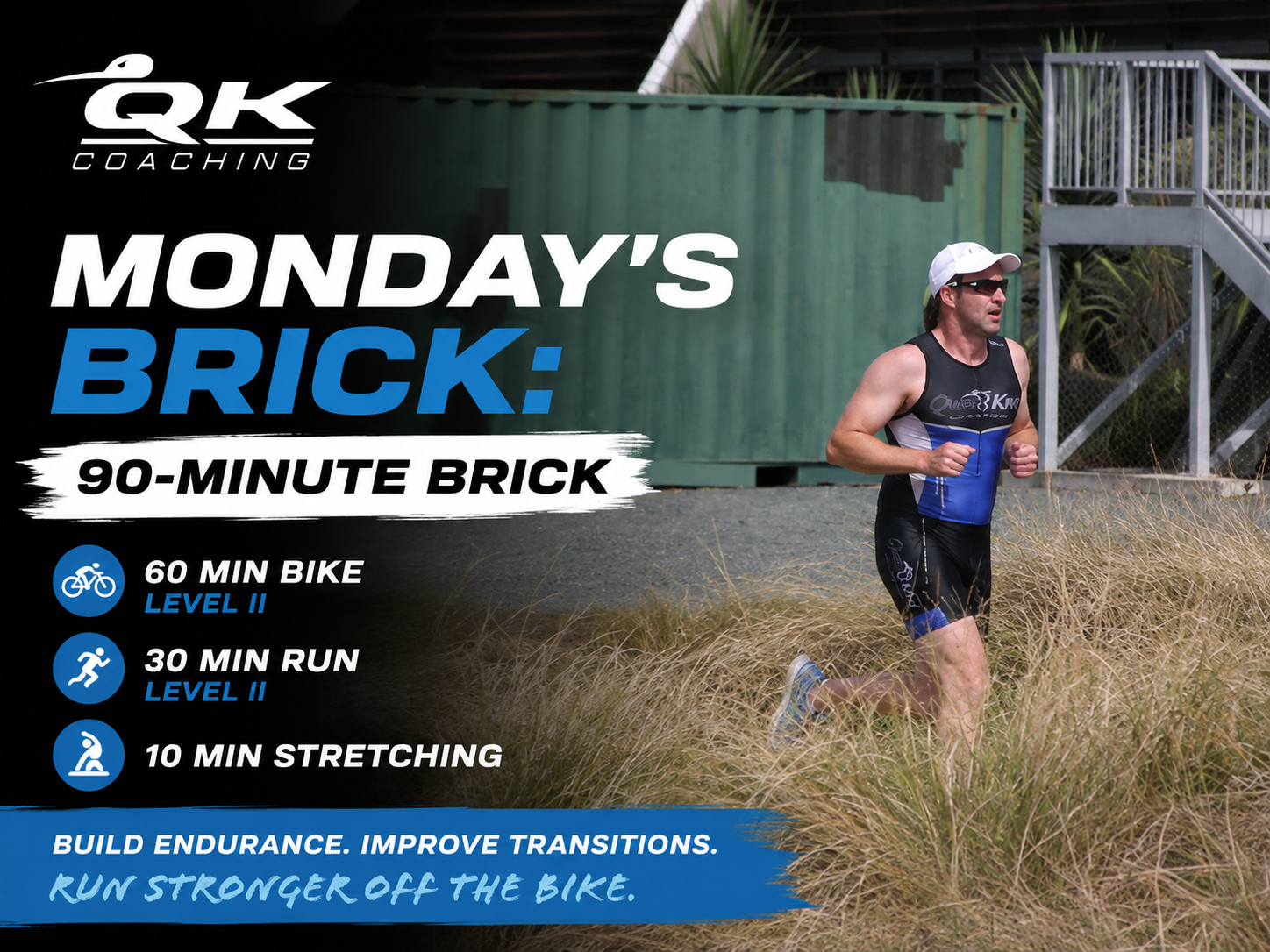
This week’s Monday’s Brick combines a steady 60-minute Level II ride with a 30-minute Level II run. The challenge isn’t how hard you can push—it’s whether you can remain disciplined on the bike, transition efficiently and settle into your running rhythm without allowing the intensity to creep upwards.
It’s a straightforward session that helps make running off the bike feel increasingly familiar.
I’ve been prescribing this workout to athletes for many years because it develops aerobic endurance without the excessive fatigue that comes from high-intensity training. It’s also similar in concept to the brick session featured by EventsATW, demonstrating just how valuable these workouts are for triathletes of all abilities.
Why You’re Doing This Session
One of the purposes of brick training is to teach your body that finishing the bike doesn’t mean the workout is finished.
You still need to run.
By moving directly from 60 minutes of aerobic cycling into 30 minutes of aerobic running, you’re practising that change of movement while continuing to develop your endurance.
This session can help you:
- Become more comfortable running immediately after cycling.
- Develop aerobic endurance across two disciplines.
- Learn to control your effort on the bike.
- Improve your ability to find your running rhythm quickly.
- Build confidence in the bike-to-run transition.
Neither part of this workout should be particularly hard. The value comes from combining them.
What You Should Focus On
On the Bike
Keep the entire 60 minutes at Level II.
Your effort should feel comfortable and sustainable. Avoid gradually increasing your power, speed or heart rate simply because you’re feeling good.
Think about the run waiting for you.
One of the most important lessons a triathlete can learn is that a strong bike split means very little if you’ve used so much energy that you can’t run effectively afterwards.
Ride smoothly, maintain a comfortable cadence and finish the bike feeling ready to run.
During the Transition
Keep the transition reasonably quick.
You don’t need to race through it, but don’t turn it into a recovery break either.
Have your running shoes and equipment organised beforehand so you can finish the bike, change what you need to change and start running.
The transition itself is part of the training.
On the Run
The first few minutes may feel unusual.
Your stride can feel short, your legs may feel heavy and your perception of running pace can be distorted after cycling.
Don’t respond by forcing the pace.
Stay at Level II, concentrate on relaxed running and give your body time to find its normal rhythm.
After several minutes, the run should begin to feel progressively more natural.
Common Mistakes to Avoid
Riding Too Hard
This is probably the most common mistake.
Because the bike is only an hour, it’s easy to convince yourself that riding a little harder won’t matter.
It does.
Today’s objective is to practise running well after a controlled aerobic ride—not to turn the bike into a time trial.
Attacking the Start of the Run
Your perception of pace can be misleading when you first get off the bike.
Don’t chase a particular pace during the opening minutes. Use your Level II intensity to guide you and allow your running rhythm to develop naturally.
Taking Too Long in Transition
Sitting down, checking your phone, having something to eat and then eventually heading out for the run removes some of the specificity we’re trying to develop.
Organise everything beforehand and keep moving.
Turning an Easy Brick Into a Hard Workout
Both disciplines are deliberately Level II.
Making either one harder doesn’t automatically make the session better.
Tips for Completing This Session Successfully
Set up your running gear before starting the bike. The less you need to think about during transition, the smoother it will be.
Use the bike to practise good hydration habits, particularly if you’re training in warm conditions or combining this workout with a larger training week.
During the first five minutes of the run, concentrate more on how you’re moving than how fast you’re moving. Relax your shoulders, maintain good posture and let your stride settle.
Most importantly, finish feeling as though you could have done more.
That’s a sign you’ve kept the session where it belongs.
Today’s Workout
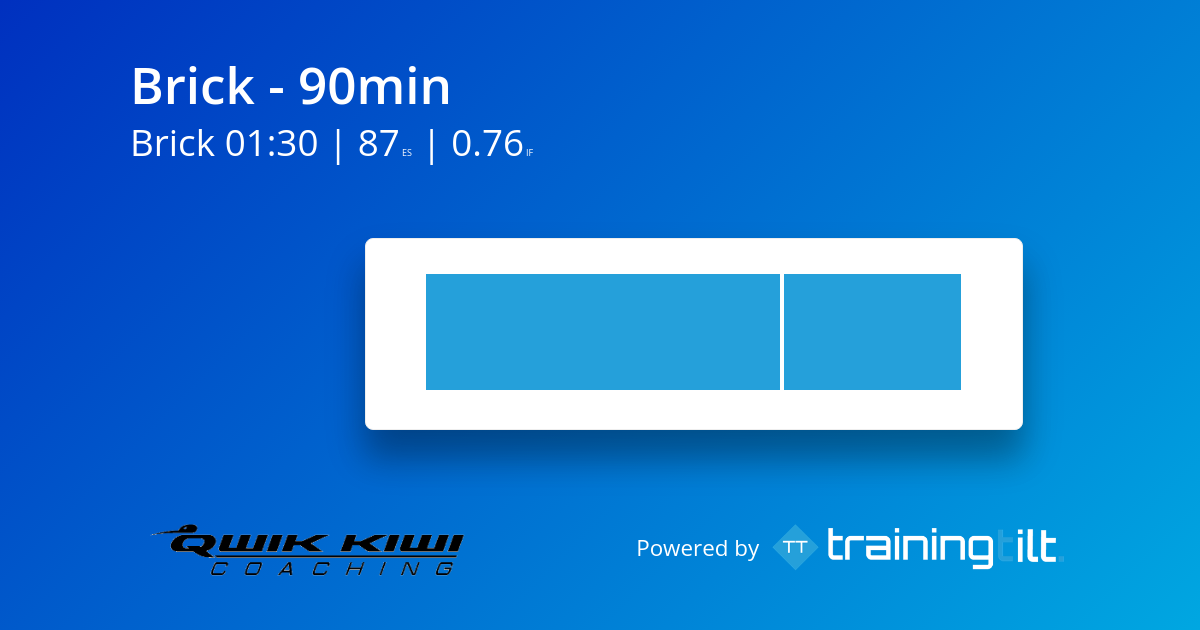
90-Minute Brick
Bike
60 minutes – Level II
Ride at a comfortable aerobic intensity throughout.
Transition
Move directly from the bike into your run.
Keep the transition purposeful rather than using it as additional recovery.
Run
30 minutes – Level II
Run comfortably and concentrate on settling into a smooth rhythm after the bike.
Recovery
10 minutes stretching
Finish with some relaxed stretching, paying particular attention to the muscles you’ve just used during the bike and run.
How This Session Should Feel
The bike should feel comfortable from beginning to end.
The first few minutes of the run may feel slightly awkward, but that should gradually disappear as your body adjusts to running.
By the second half of the run, you should feel controlled and settled at Level II.
You shouldn’t finish exhausted.
Instead, you should finish with the confidence that you could have continued—and with another successful bike-to-run transition in the bank.
That’s what makes a simple aerobic brick so valuable.
Want to Get More From Your Brick Sessions?
Want to run better off the bike and use brick workouts properly?
Get my FREE Brick Session Blueprint.
Inside you’ll discover:
- Smarter brick sessions.
- Better pacing.
- Stronger triathlon runs.
- Sessions suitable for Sprint through to Ironman-distance athletes.
Get your free Brick Session Blueprint and start making every brick session count.