Good swimming isn’t just about fitness. The more efficiently you can move through the water, the easier it becomes to maintain your pace without wasting energy. This week’s Saturday Swim Session combines technique drills, short 50m repetitions and Distance Per Stroke (DPS) swimming to help you develop a smoother, more efficient freestyle stroke. With three distances available, you can choose the volume that best suits your current swimming fitness and training goals.
As usual, there are three options to choose from. Option A is for swimmers looking for a workout between 1,000 and 2,000 metres, Option B is for swimmers wanting between 2,000 and 3,000m, and Option C provides a workout of more than 3,000m.
Read my article on Swim Intensity for an explanation of the terminology and intensities used throughout the workout.
Today’s Goal
The goal of today’s session is to improve your freestyle efficiency.
You’ll start by concentrating specifically on body position and stroke mechanics through a series of drills before putting those movements back into your normal freestyle. The main set then combines shorter 50m repetitions with longer Distance Per Stroke swimming.
The aim is to finish the session swimming smoothly and efficiently, getting good propulsion from every stroke rather than simply trying to turn your arms over faster.
Why You’re Doing This Session
Swimming efficiency has a significant influence on how much energy you use to maintain a particular pace.
The technique work at the beginning of this session encourages better body position, balance and rotation. Importantly, each 25m drill is immediately followed by 25m of normal swimming, giving you an opportunity to transfer what you’ve just practised into your freestyle stroke.
The 50m repetitions in the main set add some intensity before you move into 300m of Distance Per Stroke (DPS) swimming. Here, the focus shifts towards generating effective propulsion from each stroke and maintaining that efficiency over a longer distance.
Options B and C repeat this combination, challenging you to maintain your stroke quality as fatigue accumulates.
Session Inspiration
This week’s workouts were developed from a session completed by professional triathlete Jeanne Lehair in a Supertri YouTube video. I’ve used the original session as inspiration and adapted the volume to provide three options suitable for recreational swimmers, masters swimmers and age-group triathletes.
Today’s Workout
Option A – 1,700m
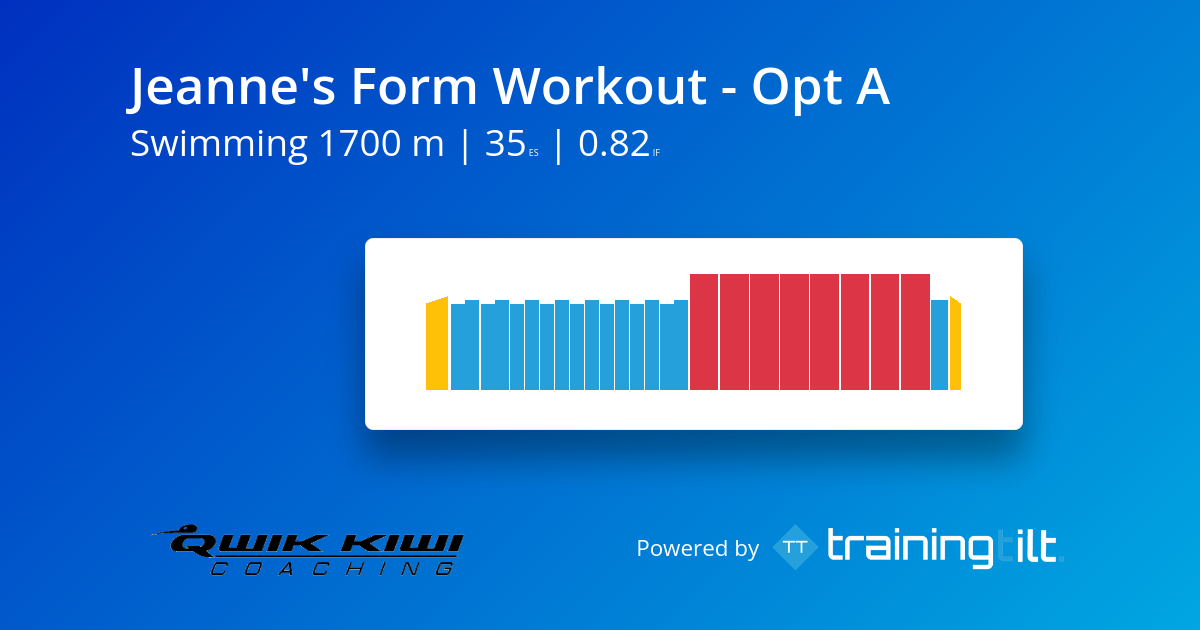
- 400m Warm Up (WU)
- 8 × 50m Drill / Swim
- 8 × 50m – 15 sec RI
- 300m Distance Per Stroke (DPS)
- 200m Cool Down (CD)
Option B – 2,400m
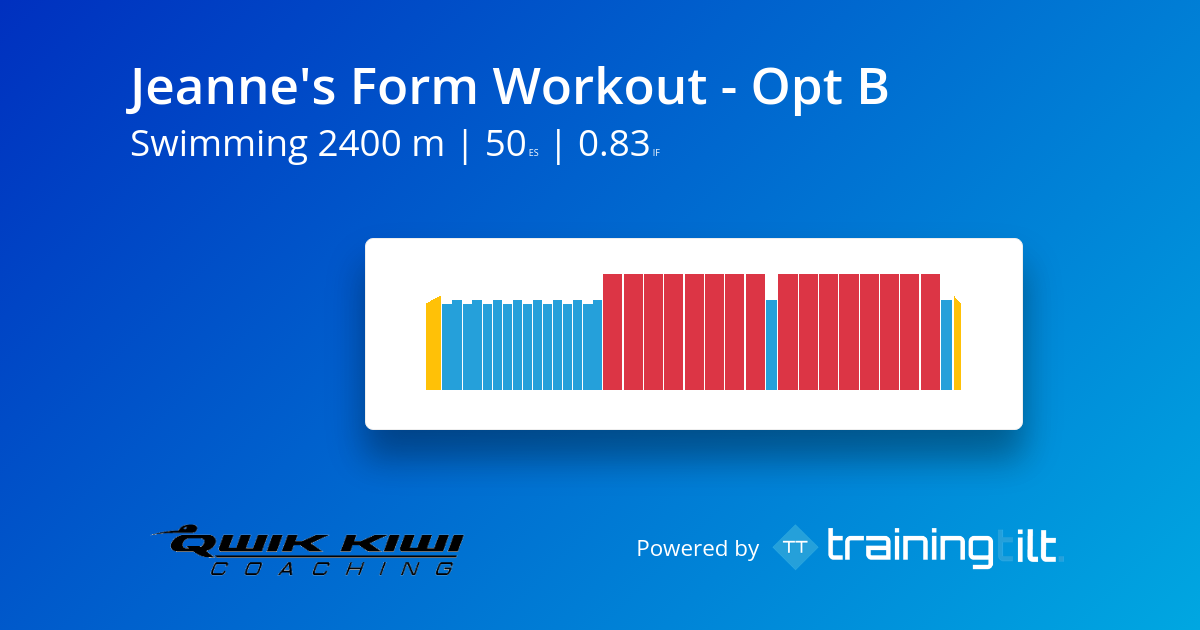
- 400m Warm Up (WU)
- 8 × 50m Drill / Swim
- 2 sets of:
- 8 × 50m – 15 sec RI
- 300m Distance Per Stroke (DPS)
- 200m Cool Down (CD)
Option C – 3,100m
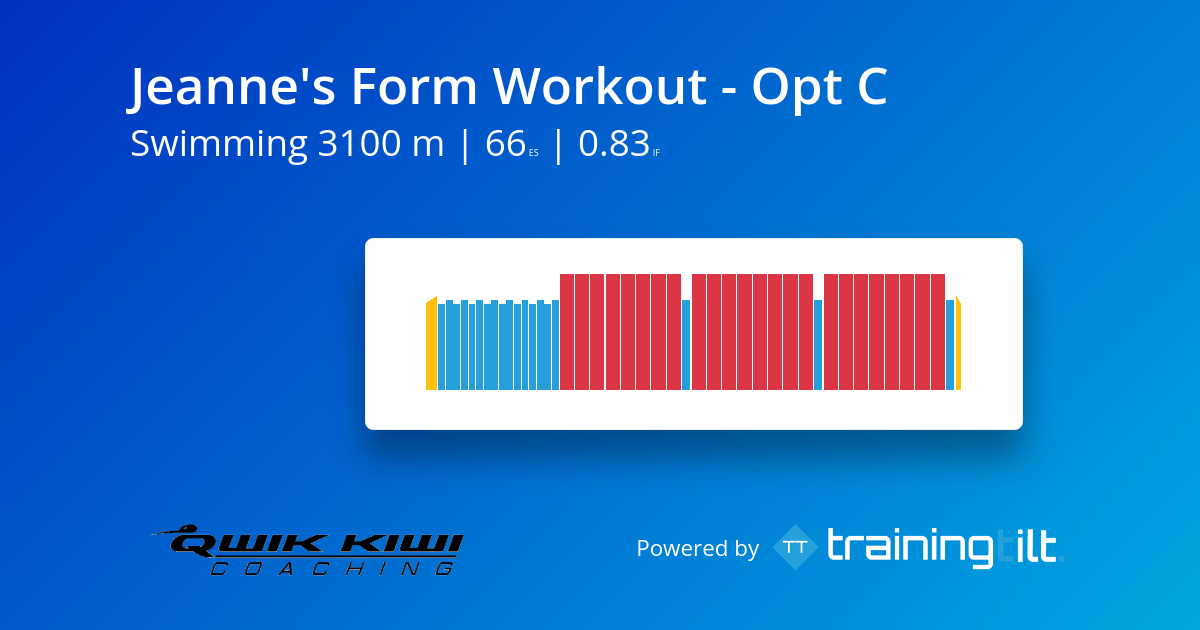
- 400m Warm Up (WU)
- 8 × 50m Drill / Swim
- 3 sets of:
- 8 × 50m – 15 sec RI
- 300m Distance Per Stroke (DPS)
- 200m Cool Down (CD)
What You Should Focus On
- Treat the drill work as an important part of the session rather than something to rush through.
- Transfer the movement you’re practising during each drill into the 25m of normal swimming that immediately follows.
- Maintain good body position and controlled rotation throughout your freestyle.
- During the DPS swimming, concentrate on getting effective propulsion from each stroke.
- Count your strokes per length and look for consistency before trying to reduce the number.
- Keep your stroke smooth as fatigue builds.
Common Mistakes To Avoid
Rushing The Drills
Swimming drills quickly defeats much of their purpose. Slow things down enough that you can concentrate on the movement you’re trying to develop.
Forgetting The Drill During The Swim
The 25m of normal swimming isn’t separate from the drill. It’s your opportunity to incorporate the movement you’ve just practised into your full freestyle stroke.
Turning DPS Into A Gliding Competition
Fewer strokes aren’t automatically better. Excessively extending the glide can create dead spots in your stroke and actually slow you down.
The objective is effective distance per stroke, not simply recording the lowest possible stroke count.
Swimming The 50s Too Hard
Don’t turn the 50m repetitions into all-out sprints unless your prescribed intensity calls for it. You still need enough control to swim the following 300m with good technique.
Sacrificing Technique As You Tire
Options B and C repeat the main set. Your challenge is to maintain the same quality of swimming during the final set that you achieved during the first.
Tips For Completing The Workout Successfully
During the drill set, complete the following four drills twice through:
Each 50m repetition consists of 25m drill followed immediately by 25m normal swimming. Feel free to use fins during this set if they help you maintain good body position and concentrate on the purpose of each drill.
During the 300m DPS swims, count your strokes for each length. Rather than immediately trying to take fewer strokes, establish your normal stroke count first.
From there, concentrate on improving your catch, maintaining good body position and applying pressure effectively through the water. If your stroke count gradually decreases without your pace slowing or your stroke becoming exaggerated, you’re moving in the right direction.
Workout Breakdown
Begin with 400m of mixed swimming, regardless of which option you’re completing. Include a range of strokes and gradually prepare your shoulders and body for the session. Feel free to stop and stretch during the Warm Up—it doesn’t need to be continuous.
Next comes 8 × 50m of Drill / Swim. Complete 25m of the prescribed drill before immediately transitioning into 25m of normal swimming. Work through Kick On Side left, Kick On Side right, 6/1/6 and 6/3/6 twice each.
The main set consists of 8 × 50m with a 15-second Rest Interval, followed by 300m Distance Per Stroke.
Option A completes this combination once, Option B twice and Option C three times.
During the 50m repetitions, swim these reps as fast as possible while continuing to swim with good technique and stay consistent with your pace (the last rep should be as fast as the first rep). When you move into the 300m DPS, settle back into a smooth rhythm and concentrate on getting good propulsion from every stroke.
Count your strokes each length and see whether you can maintain—or gradually improve—your stroke count throughout the 300m without artificially slowing your swimming or introducing an excessive glide.
Complete the workout with an easy 200m Cool Down. Use whichever stroke feels most comfortable, stop and stretch as required, and allow your heart rate to gradually return towards normal.
After Your Swim
Before leaving the pool, take a moment to think about how your stroke changed during today’s session.
Ask yourself:
- Did I notice a difference in my freestyle immediately after each drill?
- Could I maintain my technique during the 50m repetitions?
- What happened to my stroke count during each 300m DPS swim?
- If my stroke count decreased, did I maintain my swimming speed?
- For Options B and C, was my final set as technically controlled as my first?
Don’t judge the success of this session solely by how quickly you completed it. If you finished with a better understanding of your stroke and were able to swim more efficiently without forcing an exaggerated glide, you’ve achieved the main goal of today’s workout.
Want 8 Weeks of Swim Sessions Like This?
If you enjoyed today’s workout, why stop at just one?
Download my FREE Swim Engine Builder Workout Pack and receive 24 structured swim sessions spread across three training options:
🏊 Foundation – Under 2,000m per session
🏊 Performance – 2,000–3,000m per session
🏊 Endurance – 3,000m+ per session
Whether you’re swimming for fitness, preparing for your next triathlon or simply looking for more variety in the pool, you’ll have eight weeks of purposeful workouts ready to go.
👉 Download your FREE Swim Engine Builder Workout Pack today and start building a stronger swim engine!
