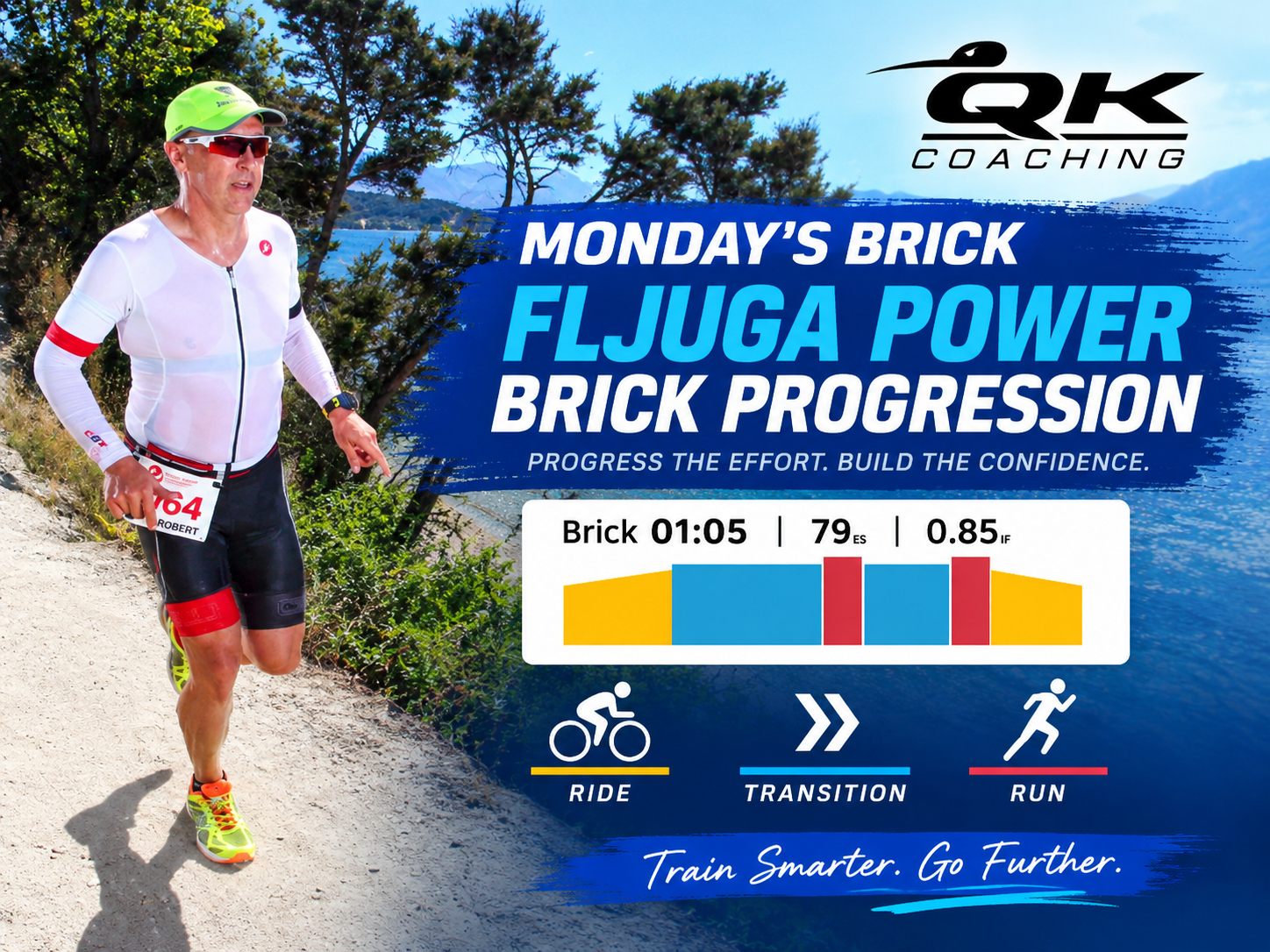
This week’s brick is all about progression.
Rather than riding at one steady intensity before heading out for an easy run, the FLJUGA Power Brick Progression asks you to gradually increase the demands on your body. You progress from Level II to Level III and then Level IV on the bike before carrying that controlled intensity through the transition and onto the run.
The challenge isn’t simply reaching Level IV. It’s getting there progressively, maintaining control, and then being able to produce another quality Level IV effort once you are running.
That makes this a useful session for developing your ability to increase intensity while fatigue is accumulating—without turning the workout into an uncontrolled race effort.
The workout itself takes 65 minutes, with an additional 10 minutes of stretching that can be completed afterwards.
Why You’re Doing This Session
Triathlon rarely feels equally comfortable from start to finish.
As a race progresses, maintaining—or increasing—your intensity can become increasingly difficult. Your legs are accumulating fatigue, your energy stores are being depleted, and when you transition from cycling to running you also have to adapt quickly to a completely different movement pattern.
This brick gives you an opportunity to practise that progression in a controlled training environment.
On the bike, you move through:
Level II → Level III → Level IV
Then, rather than recovering before beginning the run, you transition directly into:
Level III → Level IV
Only after completing that harder running effort do you bring the intensity back down to Level II for your cool-down.
The objective is therefore not to see how hard you can push the Level IV sections. It is to arrive at them under control and still execute them well.
Session Inspiration
This workout was inspired by a collection of Sprint brick workouts published by FLJUGA.
You can see the original collection here: FLJUGA Sprint Brick Workouts
I’ve structured the session using my Level I–V intensity system so that each increase in effort has a clear purpose.
If you need a refresher on the Levels, you can read my guides to cycling intensity and running intensity.
What You Should Focus On
On the Bike
The opening 15 minutes at Level II should be a genuine warm-up.
Don’t anticipate the harder work by gradually pushing beyond Level II. Give your body time to warm up and settle into a comfortable rhythm.
When you move into the 20-minute Level III section, the effort should become purposeful but sustainable. Settle into the intensity rather than attacking the first few minutes.
Your final 5 minutes at Level IV are where the bike becomes considerably more demanding. However, this still isn’t a five-minute time trial.
You know you have a Level III run waiting for you.
Ride strongly, but remain controlled enough that you can get off the bike and continue the progression.
Through Transition
Move directly from cycling to running.
You don’t need to race through transition, but avoid turning it into a recovery period. Organise your shoes and equipment beforehand so you can make a smooth, efficient change.
The transition itself is part of the training stimulus.
On the Run
Starting immediately at Level III is one of the important features of this workout.
Your legs may initially feel heavy or awkward after finishing the bike at Level IV. Resist the temptation to judge your running by pace during those first few minutes.
Find your posture, relax your upper body and allow your running rhythm to develop while keeping the effort at Level III.
After 10 minutes, you increase to Level IV for 5 minutes.
This is where the progression comes together. You have already completed 40 minutes on the bike and 10 minutes of Level III running, so producing a controlled Level IV effort now requires discipline.
Finish with 10 minutes at Level II. Let the intensity come down and concentrate on relaxed, efficient running rather than abruptly stopping after the hard work.
Common Mistakes to Avoid
Turning Level III into Level IV. The workout only works as a progression if you respect the difference between the Levels.
Riding the first Level IV effort too hard. There is still 25 minutes of running ahead of you when you leave the bike.
Using transition as a rest break. Get organised beforehand and move efficiently from one discipline to the next.
Chasing pace immediately off the bike. Your running pace may initially look different from what you normally expect at Level III. Control the intensity rather than forcing a number.
Making the running Level IV section an all-out effort. Level IV is hard, but it is not Level V. Stay within the prescribed intensity.
Skipping the cool-down. Those final 10 minutes at Level II are part of the workout, not optional kilometres once the “real” training is finished.
Tips for Completing This Brick Successfully
Think of the entire workout as one continuous progression, rather than separate bike and run sessions.
On the bike, your progression is:
15min Level II → 20min Level III → 5min Level IV
Then you transition and continue:
10min Level III → 5min Level IV
Your second Level IV effort comes after considerably more accumulated work than your first. Don’t judge the quality of the workout by how hard you can make the first Level IV effort.
Judge it by whether you still have the control to execute the Level IV run properly.
That’s where sensible pacing earlier in the session pays off.
Today’s Workout
FLJUGA Power Brick Progression
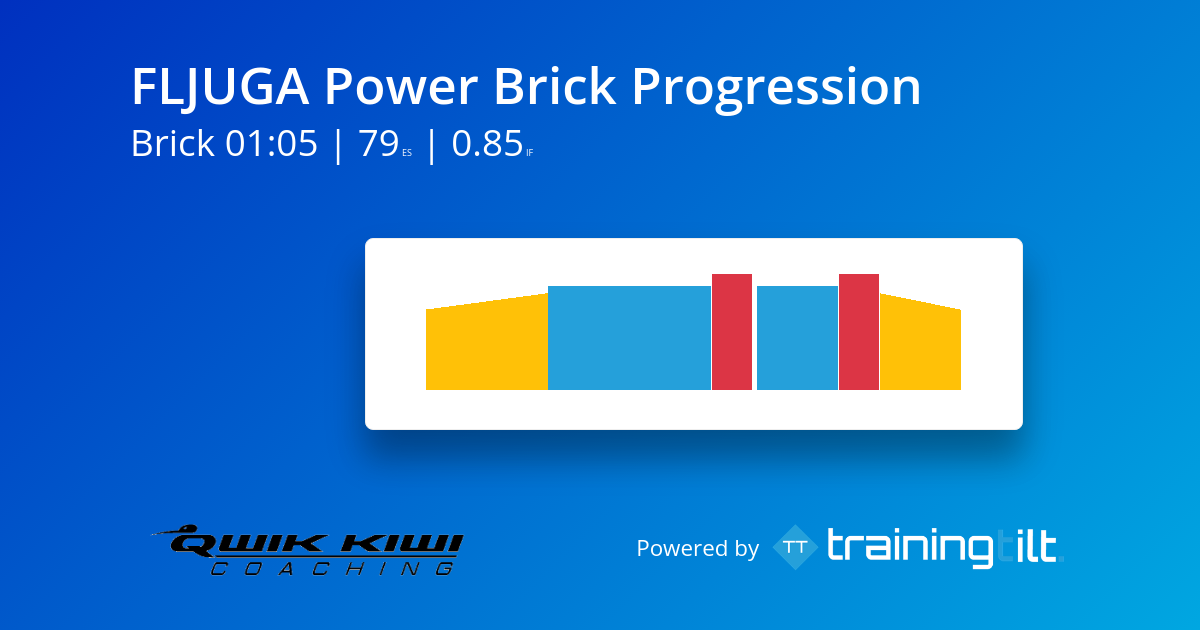
🚴 Bike — 40min
Warm-Up
15min Level II
Progression
20min Level III
5min Level IV
➡️ Transition
Move directly from the bike onto the run.
🏃 Run — 25min
10min Level III
5min Level IV
Cool-Down
10min Level II
Recovery
10min Stretching
How This Session Should Feel
The workout should feel progressively harder rather than hard from the beginning.
The Level II warm-up should feel comfortable. Level III introduces a sustained, purposeful effort. Level IV raises the demand considerably, but you should remain in control.
When you start running, expect your legs to take a little time to adapt. The Level III run should allow you to establish your rhythm before you increase the intensity again.
The final Level IV effort should be challenging. You are producing it after 50 minutes of continuous cycling and running, which is precisely what makes it valuable.
By the time you reach your Level II cool-down, you should feel that you have worked hard—but that you managed the progression rather than simply surviving it.
Want to Get More From Your Brick Sessions?
Brick workouts are much more than simply adding a run after your bike.
Knowing when to use them, how hard to make them and what you’re trying to achieve can help you get considerably more value from your triathlon training.
Get my FREE Brick Session Blueprint for practical guidance on:
- structuring smarter brick sessions;
- improving your bike-to-run pacing;
- developing stronger running off the bike; and
- using bricks appropriately from Sprint through to Ironman-distance training.
Get the FREE Brick Session Blueprint and start making every brick session count.