Swim drills only become valuable when the movement you’re practising carries across into your normal freestyle.
That’s the challenge in this week’s Saturday Swim Session. Rather than completing a block of drills and then moving on, you’ll continually alternate between drill and normal swimming. This gives you an immediate opportunity to feel what the drill changes and then transfer that movement into your freestyle.
The original workout recommends several traditional drills. I’ve included those below, but I’ll also explain why I prefer a different selection of drills from the Swim Smooth system for most swimmers.
Each Saturday I post a Swim Session, and most weeks I provide three options so you can choose a distance appropriate for your current training:
- Option A: 1,000–2,000m
- Option B: 2,000–3,000m
- Option C: 3,000m or more
You can also read my guide to Swim Intensity if you’re unsure how I prescribe swimming effort.
Today’s Goal
The goal is to use drills to improve a specific aspect of your freestyle and then immediately transfer that improvement into normal swimming.
For Options A and B, you’ll alternate every 25m between Drill and Swim.
For Option C, you’ll alternate every 50m.
That regular transition is important. Don’t think of the swimming lengths as recovery between drills. They’re where you incorporate the particular focus of the drill into your swim stroke.
Why You’re Doing This Session
It’s easy to become good at performing a drill without becoming a better swimmer.
You can concentrate on perfecting a movement during a drill, reach the wall, return to normal freestyle and immediately revert to your usual stroke.
Alternating Drill and Swim reduces that disconnect.
As you transition back into freestyle, try to retain the specific sensation or movement you were working on. Depending on the drill, that might be better rotation, improved timing, a cleaner recovery or better coordination.
The question throughout the session is simple:
What changed when I returned to normal swimming?
Session Inspiration
This workout comes from the Guide to Triathlon Swimming, a supplement published with Triathlon Plus, Issue 46 in October 2012.
Option A is the original workout from the supplement: a 200m Warm Up, followed by 3 × 200m alternating 25m Drill and 25m Swim, before finishing with a 200m Cool Down for a total of 1,000m.
I’ve used that original session as the foundation for two higher-volume versions.
Option B extends the main set to 6 × 200m for a 2,000m workout, while Option C uses 5 × 400m, alternating 50m Drill and 50m Swim, for a total of 3,000m.
Today’s Workout
Option A – 1,000m
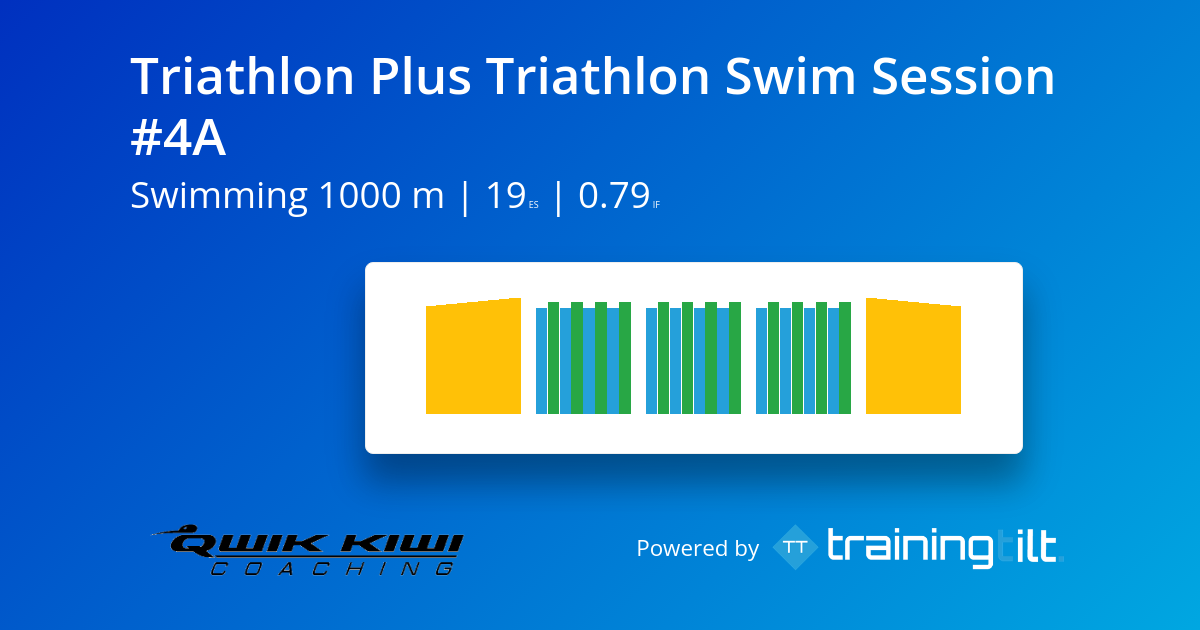
- 200m WU
- 3 × 200m alternating 25m Drill / 25m Swim
- 200m CD
Option B – 2,000m
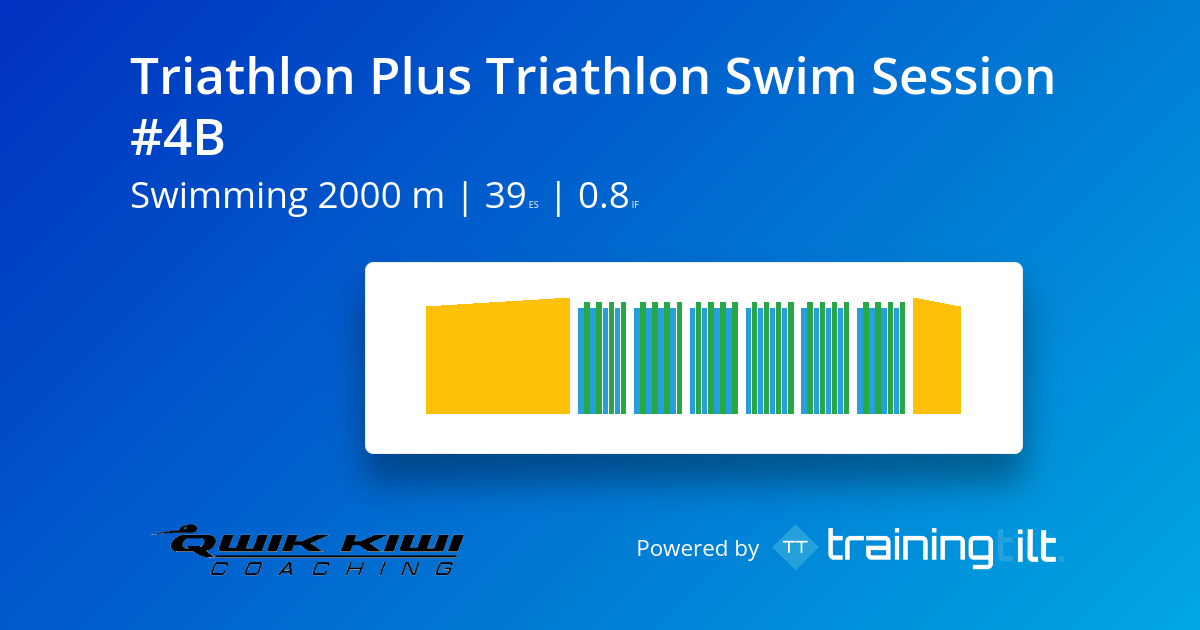
- 600m WU
- 6 × 200m alternating 25m Drill / 25m Swim
- 200m CD
Option C – 3,000m
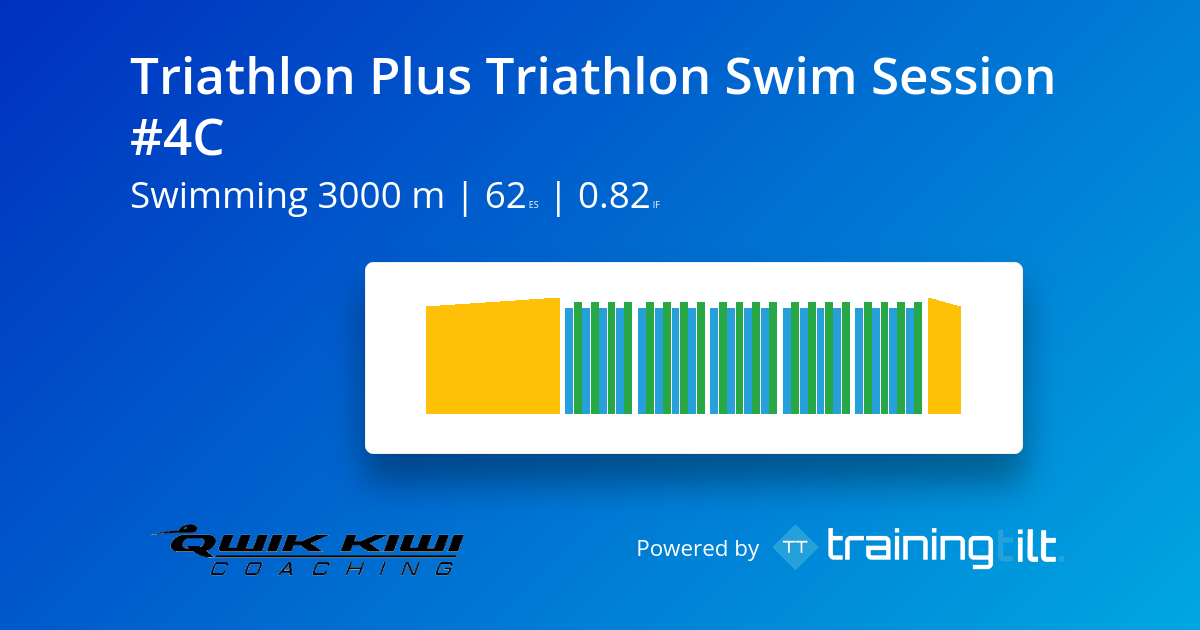
- 800m WU
- 5 × 400m alternating 50m Drill / 50m Swim
- 200m CD
Choosing Your Drills
The original Triathlon Plus workout recommends:
- Body Rotation Drill
- Finger Drag Drill
- Fist Drill
- Single Arm Catch Up
I don’t necessarily endorse all of these drills for every swimmer.
In particular, I’m cautious about Catch Up Drill. By deliberately waiting for one hand to “catch up” with the other, it can interrupt the natural rhythm of freestyle, kill momentum and introduce dead spots into the stroke.
I generally prefer drills from the Swim Smooth system that develop rotation, rhythm and coordination while retaining a more natural connection to freestyle.
My preferred options include:
Kick On Side (KOS)
Develops body position, balance and rotation while helping you become comfortable swimming on your side.
6/1/6 Drill
Six kicks on one side, one stroke to rotate, then six kicks on the opposite side. This develops balance, rotation and controlled timing.
6/3/6 Drill
Similar to 6/1/6, but uses three freestyle strokes between each six-kick position. This begins bringing the drill closer to normal freestyle.
Popov Drill
Useful for developing body rotation, recovery mechanics and awareness of how the upper body moves through the stroke.
Broken Arrow Drill
Encourages good rotation and a relaxed, controlled recovery while maintaining rhythm.
You don’t need to use every drill during the workout. Choosing one or two drills that address something relevant to your stroke can be more useful than continually changing drills without a clear purpose.
What You Should Focus On
The most important part of this workout is the transition from Drill to Swim.
During each drill length, identify the particular movement or sensation you’re trying to develop.
Then, as soon as you return to normal freestyle, try to preserve it.
For example, if you’ve just completed KOS, can you maintain that improved awareness of body rotation during your freestyle?
After 6/1/6 or 6/3/6, can you retain the rhythm and rotation without pausing?
After Popov or Broken Arrow, does your recovery feel smoother and more connected to your body rotation?
The normal swimming should feel like an extension of the drill rather than an entirely different exercise.
Common Mistakes To Avoid
Doing the drill without knowing why: Every drill should have a purpose. Know what movement or sensation you’re trying to improve.
Treating the Swim as recovery: The freestyle section is where you apply what you’ve just practised.
Trying to perfect the drill instead of your freestyle: The drill itself isn’t the end goal. Better swimming is.
Changing drills too frequently: If you switch every length, you may never spend enough time developing one movement to recognise whether it’s helping.
Rushing the drill: Most technique drills require concentration. Moving faster doesn’t necessarily make the drill more effective.
Over-gliding during freestyle: Be careful that drills involving pauses or extended positions don’t introduce dead spots into your normal stroke.
Tips For Completing The Workout Successfully
Before starting each repetition, decide which aspect of your stroke you’re working on.
Keep the drill deliberate and technically controlled. You don’t need to race it.
When you transition into normal swimming, concentrate on one cue from the drill rather than trying to change everything at once.
You can also use different repetitions to work on different drills. For example, one repetition might focus on KOS, the next on 6/1/6 and another on Broken Arrow.
Alternatively, if there’s one particular weakness you’re trying to address, repeat the same drill several times and give yourself more opportunities to transfer that movement into your freestyle.
Workout Breakdown
Warm Up
Start with:
- Option A: 200m
- Option B: 600m
- Option C: 800m
Use mixed swimming and include a range of strokes.
The Warm Up doesn’t need to be continuous. Feel free to stop and stretch as required before beginning the main set.
Main Set – Drill / Swim
Option A:
3 × 200m alternating 25m Drill / 25m Swim
Each 200m contains four Drill/Swim combinations.
Option B:
6 × 200m alternating 25m Drill / 25m Swim
Each 200m again contains four Drill/Swim combinations.
Option C:
5 × 400m alternating 50m Drill / 50m Swim
Each 400m contains four Drill/Swim combinations.
The normal swimming portions should be freestyle.
There is no Rest Interval specified in the original workout. Take enough recovery between repetitions to reset, think about the next drill and maintain the technical quality of the session, rather than turning the workout into an endurance challenge.
Cool Down
Finish all three options with a 200m Cool Down.
Your Cool Down can include any stroke you wish. It doesn’t need to be continuous, and you can stop to rest or stretch after any length.
After Your Swim
Once you’ve finished, ask yourself:
- Could I identify what each drill was trying to improve?
- Did I notice a difference when I returned to freestyle?
- Which drill transferred most naturally into my normal stroke?
- Did any drill actually make my freestyle feel worse?
- Could I maintain the improvement beyond the first few strokes?
- Did my normal freestyle become smoother as the session progressed?
- Is there one drill that would be worth including regularly in future sessions?
A drill doesn’t deserve a place in your training simply because it’s a recognised swimming drill.
It needs to change something useful.
The success of this workout isn’t determined by how well you perform KOS, 6/1/6, Popov or any other drill. It’s determined by whether the movement you practise helps you swim better when you return to freestyle.
Want 8 Weeks of Swim Sessions Like This?
If you enjoyed today’s workout, why stop at just one?
Download my FREE Swim Engine Builder Workout Pack and receive 24 structured swim sessions spread across three training options:
🏊 Foundation – Under 2,000m per session
🏊 Performance – 2,000–3,000m per session
🏊 Endurance – 3,000m+ per session
Whether you’re swimming for fitness, preparing for your next triathlon or simply looking for more variety in the pool, you’ll have eight weeks of purposeful workouts ready to go.
👉 Download your FREE Swim Engine Builder Workout Pack today and start building a stronger swim engine!
