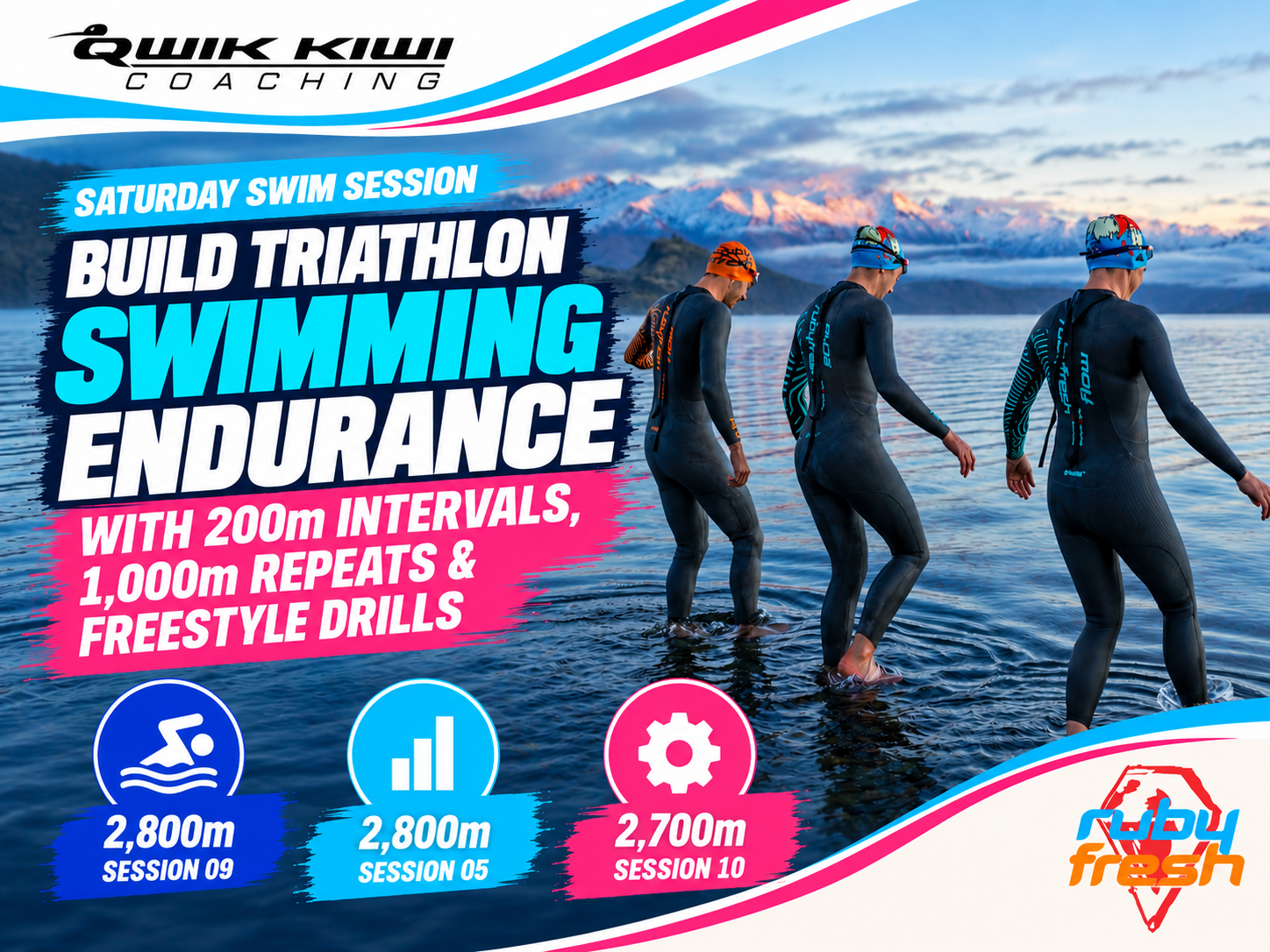
Swimming faster in a triathlon isn’t simply about covering more metres in the pool. It’s about developing the endurance to sustain your pace, the discipline to pace longer efforts correctly, and the technique to remain efficient when fatigue starts to build.
This week’s three sessions from my Triathlon Swim Performance Plan – 16 Weeks bring those elements together.
We start with eight controlled 200m repetitions, progress to two sustained 1,000m efforts, and finish with an extended technique session featuring a variety of drill distances.
Together, these workouts provide 8,300m of purposeful swimming to help you become a more confident, efficient and consistent triathlon swimmer.
Workout 1: Qwik Kiwi Performance Swim Session 09 — 200m Intervals
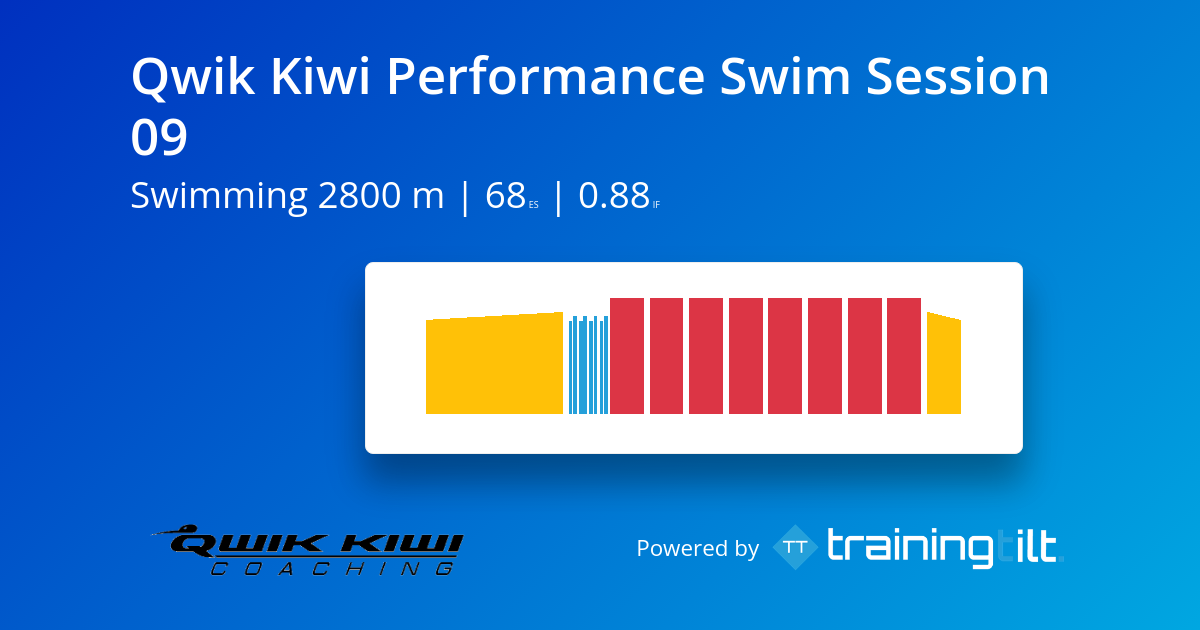
Our first workout focuses on developing the ability to hold a strong, sustainable pace across repeated 200m efforts.
The workout
| Component | Distance |
|---|---|
| Warm Up | 800m |
| Drill/Swim | 4x 50m |
| Main Set | 8x 200m, 30sec RI |
| Cool Down | 200m |
| Total | 2,800m |
Why this workout works
The 800m warm-up gives you plenty of opportunity to settle into your swimming rhythm before moving into the more demanding work.
The four 50m Drill/Swim repetitions help reinforce good freestyle mechanics before the main set.
The real focus is the 8x 200m with 30 seconds of recovery between repetitions.
Two hundred metres is long enough to challenge your ability to maintain an efficient stroke, but short enough to provide regular opportunities to assess your pacing and reset your technique.
Rather than attacking the first few repetitions, aim to establish a pace you can reproduce consistently across all eight.
If you’re swimming the opening 200m significantly faster than the final few repetitions, you’ve probably started too aggressively.
Coach Ray’s coaching tips
- Establish your pace during the first two repetitions rather than treating them as a race.
- Use the 30-second recovery to regain control of your breathing and prepare for the next effort.
- Monitor whether your stroke becomes shorter or more hurried as fatigue accumulates.
- Aim to finish the eighth repetition with similar technique and pacing to the first.
Best for: Triathletes wanting to improve sustained swimming pace, pacing discipline and aerobic endurance.
Workout 2: Qwik Kiwi Performance Swim Session 05 — Sustained 1,000m Efforts
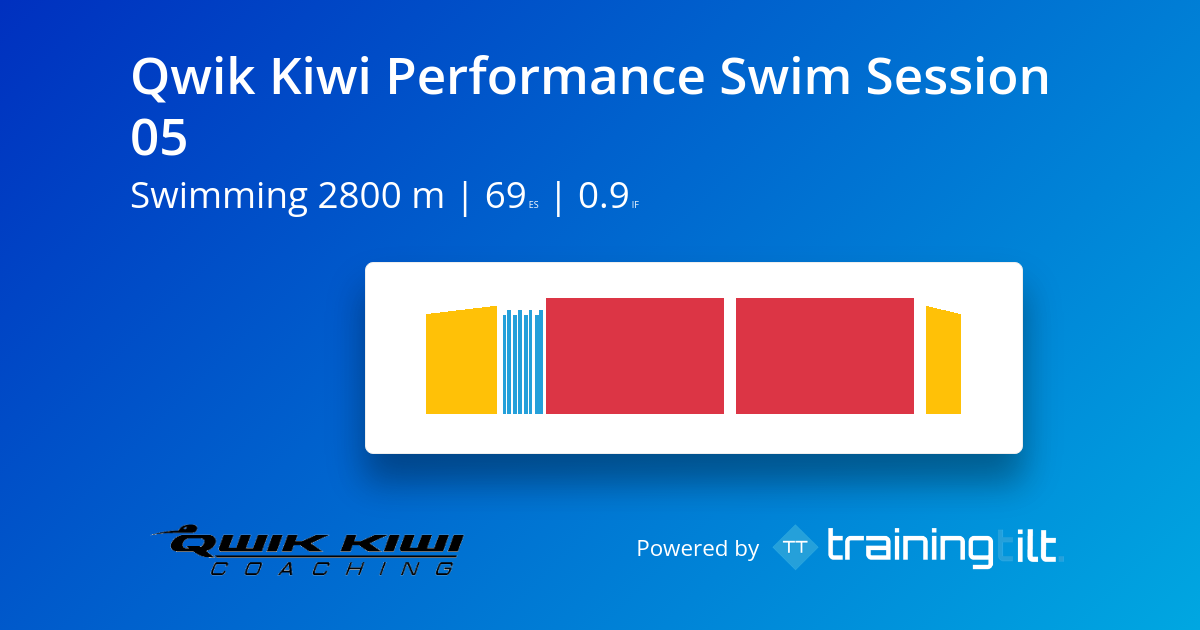
Our second session moves from repeated 200m intervals to longer continuous efforts.
The objective is straightforward: swim two 1,000m repetitions at the fastest pace you can consistently maintain while preserving efficient technique.
The workout
| Component | Distance |
|---|---|
| Warm Up | 400m |
| Drill/Swim | 4x 50m |
| Main Set | 2x 1,000m, 60sec RI |
| Cool Down | 200m |
| Total | 2,800m |
Why this workout works
Longer repetitions create a different challenge from shorter intervals.
During a 200m repetition, you know a recovery is never too far away. During a 1,000m effort, you must settle into a sustainable rhythm and maintain it for a much longer period.
This makes the session particularly relevant to triathlon, where the ability to swim efficiently without frequent interruptions is essential.
The first 1,000m should establish a controlled, repeatable pace. The second tests whether you can reproduce that performance after a relatively short recovery.
Your goal isn’t to swim the first repetition as fast as possible and simply survive the second.
Instead, aim for two evenly paced efforts, maintaining your stroke mechanics and avoiding unnecessary increases in effort.
Coach Ray’s coaching tips
- Start the first 1,000m conservatively enough to settle into a sustainable rhythm.
- Focus on relaxed breathing, consistent rotation and effective body position.
- Use the 60-second recovery to prepare mentally and physically for the second repetition.
- Compare the two 1,000m times. A large slowdown can indicate that your initial pacing was too ambitious.
- If you feel yourself rushing your stroke, concentrate on restoring a controlled rhythm rather than simply trying to increase your stroke rate.
Best for: Olympic-distance, Ironman 70.3 and T100 triathletes developing sustained swimming endurance and pacing confidence.
Workout 3: Qwik Kiwi Performance Swim Session 10 — Extended Freestyle Technique
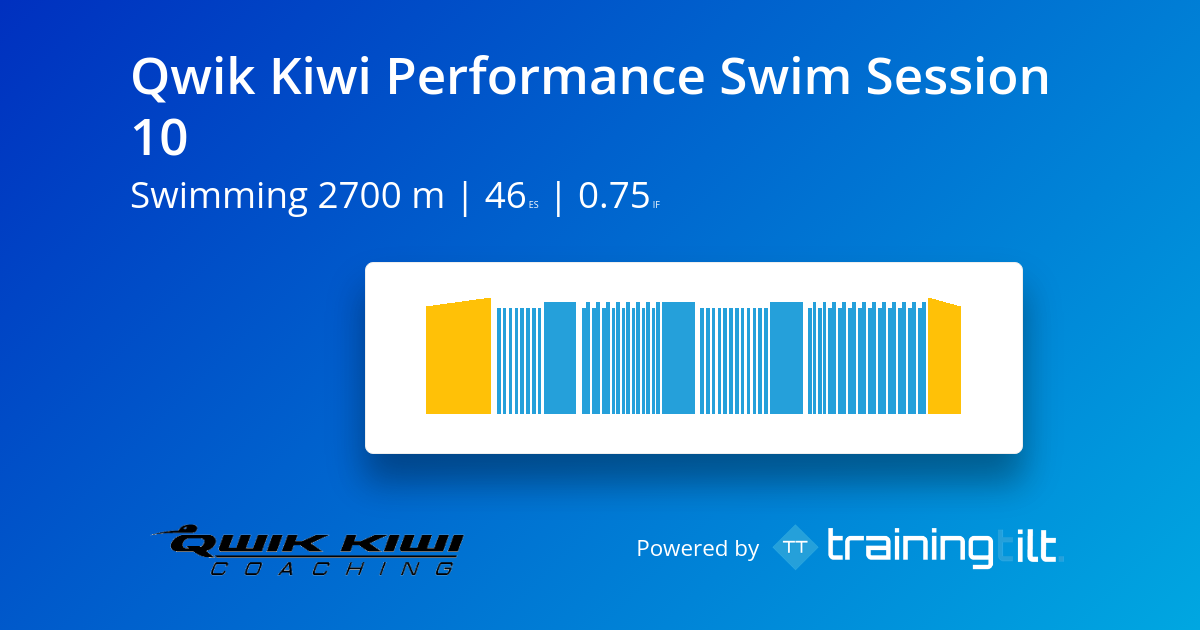
After two endurance-focused sessions, our third workout returns the emphasis to swimming technique.
This is not simply an easy swim. It is an opportunity to deliberately improve the mechanics that allow you to swim efficiently during longer efforts.
The workout
| Component | Distance |
|---|---|
| Warm Up | 400m |
| Drills | 8x 25m |
| Easy Swimming | 200m |
| Drill/Swim | 8x 50m |
| Easy Swimming | 200m |
| Drills | 12x 25m |
| Easy Swimming | 200m |
| Drill/Swim | 12x 50m |
| Cool Down | 200m |
| Total | 2,700m |
Why this workout works
This session uses several shorter drill sets, separated by easy swimming, to help you practise technical skills repeatedly throughout the workout.
The 25m drill repetitions allow you to concentrate on one specific movement or aspect of your stroke without having to sustain it over a long distance.
The 50m Drill/Swim repetitions provide an opportunity to transfer that skill into normal freestyle swimming. Each 50m combines 25m of drill work followed by 25m of freestyle.
That second 25m is important.
There’s little benefit in performing a drill correctly if the improved movement disappears as soon as you return to normal swimming.
The aim is to take the technical lesson from the drill and apply it to your freestyle stroke.
As the session progresses, the repeated sets also provide opportunities to assess whether your technique remains consistent.
Which swimming drills should you use?
Select drills that address a specific area of your freestyle technique rather than choosing them randomly.
Some useful options include:
- Kick on Side: Develop body alignment, balance and rotation.
- 6/1/6 Drill: Practise maintaining balance while introducing a controlled arm stroke.
- 6/3/6 Drill: Develop coordination between rotation, kicking and arm movements.
- Popov Drill: Practise controlled stroke mechanics and body rotation.
- Broken Arrow Drill: Focus on recovery mechanics and shoulder mobility.
You don’t need to perform every drill during the same workout. Choose the ones that address your current technical priorities.
Coach Ray’s coaching tips
- Prioritise precision over speed during the 25m drills.
- Choose one technical focus at a time.
- During the freestyle portion of each Drill/Swim repetition, consciously apply what you’ve just practised.
- Use the easy 200m swims to consolidate your technique rather than abandoning it.
- Compare your stroke quality during the final drill set with the opening set.
Best for: Triathletes wanting to improve freestyle efficiency, body position, coordination and technique consistency.
How These Three Workouts Fit Together
Each workout has a distinct purpose, but the benefits overlap.
| Session 09 | 2,800m | Repeatable 200m speed and pacing |
| Session 05 | 2,800m | Sustained 1,000m endurance |
| Session 10 | 2,700m | Freestyle technique and efficiency |
Total weekly swimming
8,300m
Session 09 develops your ability to reproduce a strong swimming pace across repeated efforts.
Session 05 extends that challenge by asking you to maintain a consistent pace over 1,000m at a time.
Session 10 provides dedicated time to refine the technical skills that make sustained swimming more efficient.
The important lesson is that every swimming session should have a purpose.
You don’t need to swim every workout at maximum intensity to improve. You need to understand what each session is developing and execute it accordingly.
What Should You Record After Each Swim?
Training becomes more valuable when you review your performance rather than simply recording the distance completed.
After Session 09, look at your eight 200m times. Were they consistent? Did you finish strongly, or did your pace gradually deteriorate?
After Session 05, compare your two 1,000m efforts. Ideally, your second repetition should be close to your first, or slightly faster if you’ve paced the workout well.
After Session 10, think about your technique. Which drills were most useful? Could you maintain the technical improvements when returning to normal freestyle? Did your stroke change during the later sets?
These observations can help you identify whether your biggest opportunity for improvement lies in pacing, endurance or technique.
Who Are These Workouts For?
These sessions are particularly suitable for swimmers who are already comfortable completing approximately 2,500–3,000m per session.
They’re especially relevant to athletes preparing for Olympic-distance triathlons, Ironman 70.3 and T100 events.
If you’re currently swimming shorter distances, you may need to build your training volume progressively before attempting all three sessions.
The objective isn’t simply to complete 8,300m in a week. It’s to complete the appropriate training volume while maintaining the quality and purpose of each workout.
Take Your Triathlon Swimming Further
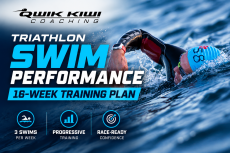
These three workouts are part of my Triathlon Swim Performance Plan – 16 Weeks, which provides a structured progression of three swimming sessions each week.
Rather than guessing what to swim when you arrive at the pool, you’ll have a clear plan designed to develop your technique, endurance and sustainable swimming speed.
Whether you’re preparing for an Olympic-distance triathlon, Ironman 70.3 or T100 event, the programme gives you a structured approach to improving your swimming.
Get the complete 16-week Triathlon Swim Performance Plan for NZ$59:
Final Thoughts From Coach Ray
Swimming performance improves when you combine consistent training with purposeful execution.
This week’s 200m intervals teach you to maintain repeatable speed. The 1,000m efforts challenge you to sustain that speed over longer distances. The extended technique session helps you develop the stroke mechanics that make both possible.
Remember, the goal isn’t just to swim more metres.
It’s to swim those metres more effectively.
Train smart, swim consistently, and make every session count.