Week 7 | Swim Sessions 15, 16 & 17 | 7,900m Total
Are you swimming plenty of metres but struggling to turn that training into faster, more efficient swimming?
Sometimes the answer isn’t to swim further. It’s to make sure each session develops a specific quality that contributes to your overall performance.
This week’s Saturday Swim Session brings together three workouts designed to develop different aspects of your freestyle swimming.
Session 15 uses a pull buoy and paddles to develop swimming-specific strength and improve your catch and pull.
Session 16 combines technique drills with short sprint efforts, challenging you to swim faster without sacrificing your stroke mechanics.
Session 17 focuses on consistent pacing across fifteen 100m intervals, helping you maintain your swimming speed and efficiency as fatigue accumulates.
Together, these three sessions provide 7,900m of purposeful training.
Whether you’re preparing for your first triathlon, working towards an Ironman 70.3 or T100, or simply trying to improve your freestyle swimming, each workout gives you a different opportunity to become a stronger, more effective swimmer.
This Week’s Goals
Across these three sessions, we’re targeting:
- Swimming strength: Developing a stronger, more effective catch and pull.
- Sprint speed: Improving your ability to swim quickly while maintaining good technique.
- Consistent pacing: Holding a repeatable pace across multiple efforts without allowing fatigue to compromise your stroke.
The important thing is to approach each workout with its intended purpose in mind.
🏊 Session 15: 8 × 200m Pull Buoy & Paddles — Build Swimming Strength
Today’s Goal
Develop swimming-specific strength and improve the effectiveness of your freestyle catch and pull while maintaining a controlled, efficient stroke.
Why You’re Doing This Session
Hand paddles increase the surface area of your hands, creating additional resistance as you pull through the water.
This can help develop the muscles involved in freestyle swimming and improve your awareness of how your hands and forearms interact with the water.
A pull buoy supports your legs, allowing you to concentrate more on your upper-body movements.
Combining the two provides an opportunity to focus on developing a strong, controlled pull without needing to devote as much attention to kicking.
However, there’s an important distinction between swimming strongly and simply forcing your way through the water.
The aim is to apply pressure effectively while maintaining good technique, rather than using the largest paddles available and pulling as hard as possible.
Today’s Workout
| Set | Distance |
|---|---|
| Warm-up | 1,000m |
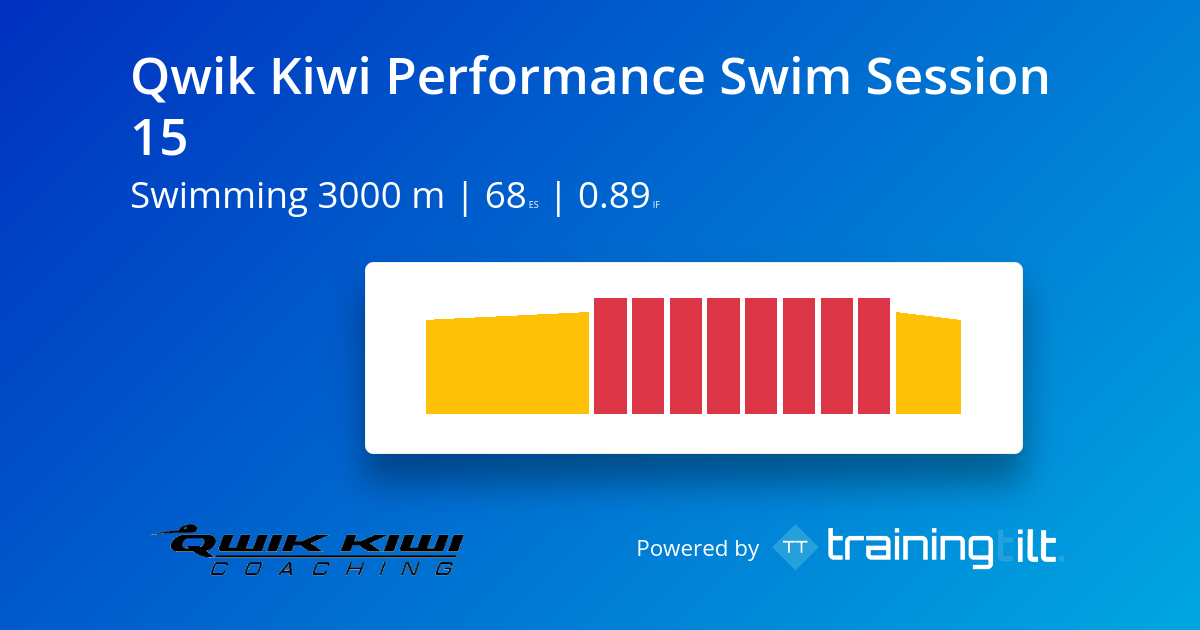
| 8 × 200m Pull Buoy + Paddles, 30sec RI | 1,600m |
| Cool-down | 400m |
| Total | 3,000m |
How to Complete This Workout
1,000m Warm-Up
Begin with 1,000m of comfortable swimming.
This is a substantial warm-up, so use the distance to gradually prepare your shoulders, back and swimming muscles for the paddle work ahead.
Start gently and progressively settle into a smooth freestyle rhythm.
You can change strokes, pause between lengths and incorporate some gentle stretching as required.
As you progress through the warm-up, concentrate on maintaining a relaxed recovery over the water, good body position and an effective catch.
Towards the end of the warm-up, you should feel comfortable and ready for the main set without already being fatigued.
8 × 200m Pull Buoy & Paddles — 30sec RI
Place a pull buoy between your thighs and put on your hand paddles.
Complete eight repetitions of 200m freestyle, taking 30 seconds of rest between each repetition.
The objective is to maintain a strong, controlled swimming effort throughout the set.
Avoid sprinting the opening repetitions. Instead, select a sustainable pace that allows you to maintain good technique across all eight efforts.
Repetitions 1–2: Establish Your Stroke
Use the first two repetitions to settle into the equipment and establish a comfortable rhythm.
Concentrate on:
- Entering your hands smoothly into the water.
- Establishing an effective catch.
- Applying pressure through the water with your hands and forearms.
- Maintaining a long, balanced body position.
The paddles should help you feel the water and maintain an effective pull.
Avoid forcing your stroke or placing unnecessary strain on your shoulders.
Repetitions 3–5: Build and Maintain Strength
As you move into the middle of the set, maintain a strong, controlled effort.
Focus on keeping your stroke consistent.
Avoid allowing your hands to slip through the water or shortening your pull as your shoulders become tired.
Try to maintain similar times across these repetitions without increasing your effort unnecessarily.
Repetitions 6–8: Maintain Technique Under Fatigue
The final three repetitions challenge your ability to maintain an effective catch and pull as fatigue develops.
Concentrate on maintaining the same stroke quality you established at the beginning.
If you’re feeling strong, you can gradually increase your effort, provided your technique remains controlled.
Your final 200m should be at least as technically sound as your first.
Choosing Your Equipment
Use a pull buoy that allows you to maintain a comfortable, balanced position in the water.
Choose paddles appropriate for your swimming ability and shoulder strength.
Larger paddles create greater resistance, but they also increase the load placed on your shoulders.
If you’re relatively new to paddle swimming, smaller paddles are generally a more sensible starting point.
If you experience shoulder discomfort, remove the paddles and complete the remaining swimming without them.
400m Cool-Down
Remove your pull buoy and paddles.
Complete 400m of easy swimming, allowing your shoulders to relax and your breathing to settle.
Pay attention to how your normal freestyle stroke feels after removing the equipment.
Common Mistakes
- Using paddles that are too large.
- Trying to swim every 200m as fast as possible.
- Allowing the pull buoy to compensate for poor body alignment.
- Shortening your stroke as fatigue develops.
- Continuing to use paddles when experiencing shoulder discomfort.
Tips for Success
Record your 200m times if possible.
Look for consistency across the set rather than concentrating only on your fastest repetition.
Try to maintain a smooth, controlled catch and effective pull throughout.
Coach Ray’s Tip: The goal isn’t simply to make your arms tired. It’s to develop the ability to apply force effectively through the water while maintaining an efficient freestyle stroke.
⚡ Session 16: Drill/Swim & 50m Sprints — Develop Swimming Speed
Today’s Goal
Improve your ability to swim at higher speeds while maintaining good freestyle technique, body position and stroke coordination.
Why You’re Doing This Session
Swimming faster requires more than simply moving your arms more quickly.
As your stroke rate increases, it’s easy to lose your catch, shorten your stroke or allow your body position to deteriorate.
Session 16 uses technique drills before and after a series of 50m sprints.
The first drill set prepares you to swim efficiently at higher speeds.
The sprint set challenges you to maintain those technical skills while swimming quickly.
The final drill set reinforces your technique after the harder swimming, helping you practise good movements even when you’re becoming fatigued.
Today’s Workout
| Set | Distance |
|---|---|
| Warm-up | 400m |
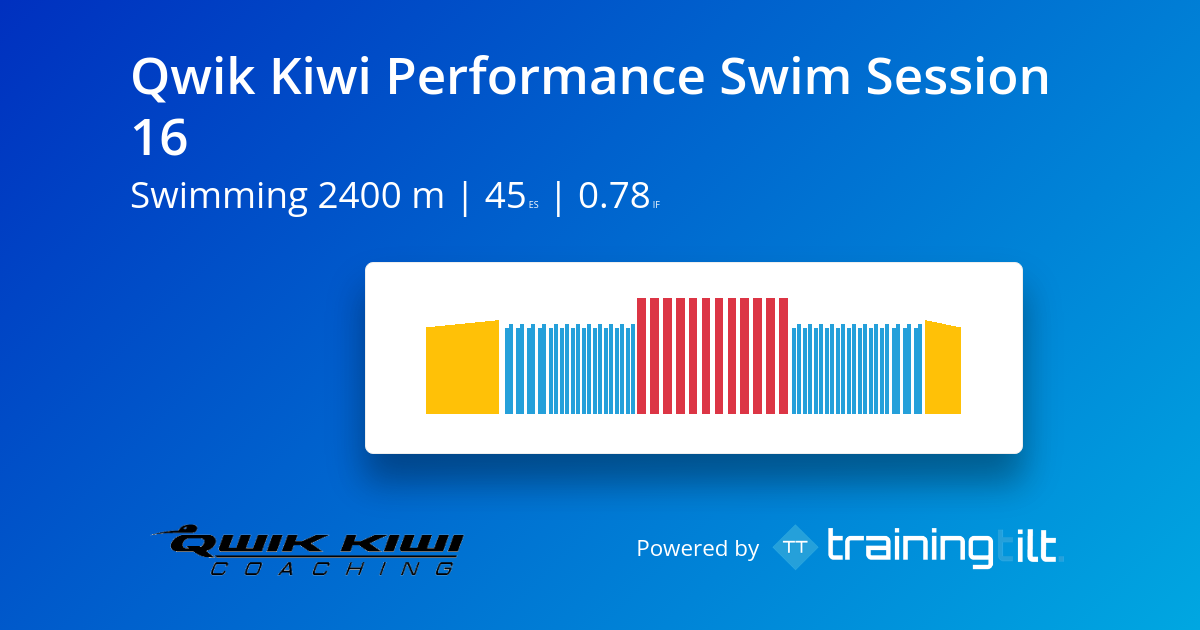
| 12 × 50m Drill/Swim | 600m |
| 12 × 50m Sprints, 20sec RI | 600m |
| 12 × 50m Drill/Swim | 600m |
| Cool-down | 200m |
| Total | 2,400m |
How to Complete This Workout
400m Warm-Up
Begin with 400m of comfortable swimming.
Gradually increase your heart rate and settle into a smooth freestyle rhythm.
You can include different strokes, pause between lengths and stretch as required.
Towards the end of the warm-up, concentrate on maintaining a relaxed recovery, effective catch and good body position.
First Drill Set: 12 × 50m Drill/Swim
Complete twelve repetitions of 50m.
Each repetition consists of:
- 25m of a swimming drill.
- 25m normal freestyle, concentrating on applying the technique practised during the drill.
The following four-drill sequence is a suggested option. Complete it three times.
Repetitions 1, 5 and 9: Kick on Side — Left
Extend your left arm in front of you, with your right arm alongside your body.
Rotate onto your left side and maintain a relaxed flutter kick.
Keep your body long and balanced in the water.
After 25m, swim 25m normal freestyle, concentrating on maintaining that same body position.
Repetitions 2, 6 and 10: Kick on Side — Right
Repeat the drill on your right side.
Extend your right arm forward, keeping your left arm alongside your body.
Focus on balance, alignment and a relaxed kick.
Follow with 25m normal freestyle.
Repetitions 3, 7 and 11: 6/1/6 Drill
Complete six kicks on one side.
Take one freestyle arm stroke to rotate onto the opposite side.
Complete another six kicks before taking the next stroke.
Continue this pattern for 25m, then swim 25m normal freestyle.
Concentrate on smooth rotation and maintaining your balance.
Repetitions 4, 8 and 12: 6/3/6 Drill
Complete six kicks on one side.
Take three freestyle strokes to rotate through to the opposite side.
Complete another six kicks and repeat.
After 25m, finish with 25m normal freestyle.
Focus on coordinating your body rotation with your arm movements.
Why These Drills Matter
The drills reinforce body position, rotation, balance and stroke coordination.
These are the same qualities you want to maintain when swimming quickly during the sprint set.
Fins may be used during the drill section if they help you maintain good body position and concentrate on the movement.
Take enough rest between repetitions to ensure you can complete each drill correctly.
Remove your fins before beginning the sprint set.
Main Set: 12 × 50m Sprints — 20sec RI
Complete twelve repetitions of 50m freestyle.
Take 20 seconds of rest between repetitions.
Swim each repetition as fast as possible while continuing to swim with good technique and staying consistent with pace. Your last repetition should be as fast as your first.
The aim is not to swim one exceptionally fast 50m and then progressively slow down.
You want to maintain a high swimming speed across all twelve efforts.
Repetitions 1–4: Establish Your Sprint Pace
Begin strongly, but don’t sacrifice technique in an attempt to produce an exceptionally fast opening repetition.
Concentrate on:
- A strong, effective catch.
- Maintaining good body position.
- Increasing your stroke rate without losing control.
- Maintaining coordinated breathing and body rotation.
Record your times if possible.
Repetitions 5–8: Maintain Your Speed
By the middle of the set, fatigue will begin to accumulate.
Continue aiming for consistent 50m times.
Avoid simply spinning your arms faster if you’re beginning to slow down.
Instead, concentrate on maintaining an effective catch and applying pressure through the water.
Repetitions 9–12: Finish Strong
The final four repetitions challenge your ability to maintain speed and technique under fatigue.
Continue swimming strongly.
Your objective is to complete the final repetition at least as fast as the first, while maintaining good swimming technique.
If your times are slowing significantly, consider whether you started too quickly.
Second Drill Set: 12 × 50m Drill/Swim
After completing the sprint set, return to twelve repetitions of 50m Drill/Swim.
Use the same four-drill sequence as the first set, completing it three times.
Each repetition consists of 25m drill followed by 25m normal freestyle.
The purpose of this set is different from the first.
You’ve now completed 600m of hard swimming, so your muscles will be more fatigued.
Concentrate on restoring your body position, maintaining smooth rotation and reinforcing an effective freestyle stroke.
Avoid rushing through the drills simply because the hardest part of the workout is over.
This is an opportunity to practise swimming well when you’re tired.
200m Cool-Down
Finish with 200m of easy swimming.
Use any comfortable stroke and allow your breathing and heart rate to settle.
Common Mistakes
- Sprinting the opening repetitions so quickly that your pace deteriorates.
- Increasing stroke rate without maintaining an effective catch.
- Allowing your technique to deteriorate as fatigue builds.
- Treating the second drill set as unnecessary.
- Rushing through drills without concentrating on their purpose.
Tips for Success
Record your 50m times and compare your opening repetitions with your closing repetitions.
A consistent set of fast 50m efforts is more valuable than one exceptional sprint followed by a series of progressively slower swims.
Coach Ray’s Tip: Speed is only useful when you can reproduce it. Concentrate on swimming quickly with good technique, and aim to make your final 50m just as strong as your first.
🎯 Session 17: 15 × 100m — Master Consistent Pacing
Today’s Goal
Improve your ability to maintain a strong, consistent swimming pace across repeated 100m efforts while preserving good freestyle technique.
Why You’re Doing This Session
Consistent pacing is an important skill for triathletes.
Whether you’re swimming 750m, 1,500m or a longer open-water distance, starting too quickly can leave you struggling to maintain your speed later in the swim.
This workout challenges you to select an appropriate pace and reproduce it across fifteen 100m intervals.
The short rest intervals allow some recovery between efforts while still creating a substantial endurance challenge.
The aim is to maintain a strong, sustainable pace rather than producing a handful of fast repetitions followed by a gradual decline.
Today’s Workout
| Set | Distance |
|---|---|
| Warm-up | 400m |
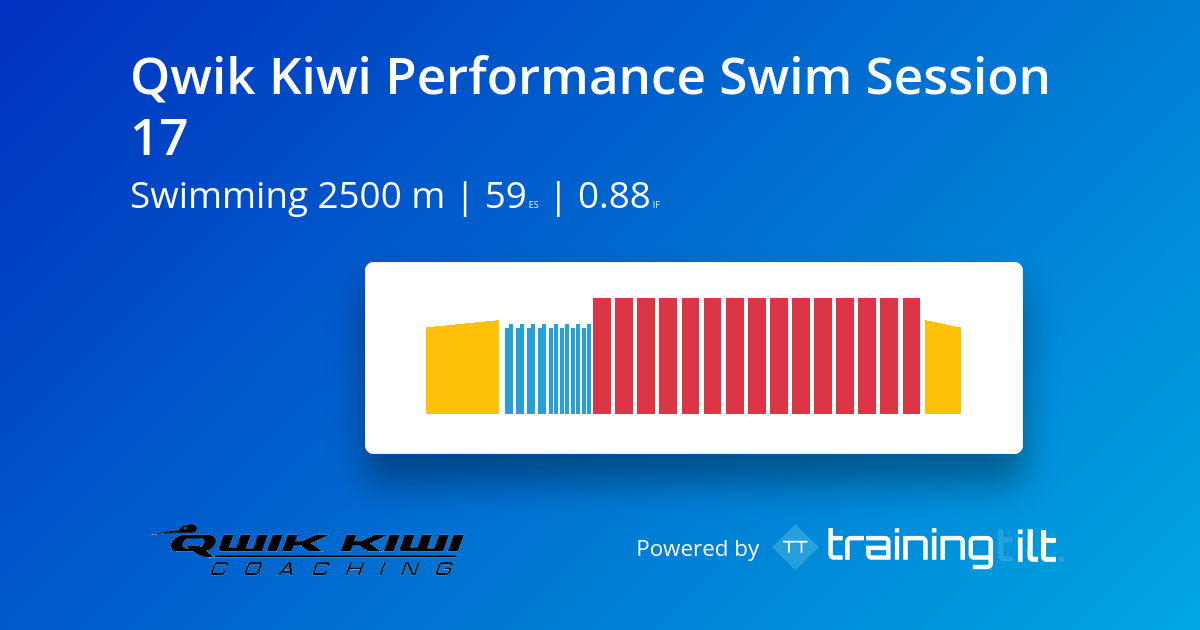
| 8 × 50m Drill/Swim | 400m |
| 15 × 100m, 20sec RI | 1,500m |
| Cool-down | 200m |
| Total | 2,500m |
How to Complete This Workout
400m Warm-Up
Begin with 400m of comfortable swimming.
Gradually increase your heart rate and settle into a smooth freestyle rhythm.
Concentrate on maintaining good body position, controlled breathing and an effective catch.
You can change strokes or pause between lengths as required.
8 × 50m Drill/Swim
Complete eight repetitions of 50m.
Each repetition consists of 25m drill followed by 25m normal freestyle.
Use the following four-drill sequence twice:
- Kick on Side — Left.
- Kick on Side — Right.
- 6/1/6 Drill.
- 6/3/6 Drill.
During the drill portion, concentrate on balance, body rotation and stroke coordination.
During the freestyle portion, apply the same technical focus to your normal swimming.
You may use fins if required to maintain good body position.
Take enough rest to complete the drills correctly, and remove your fins before the main set.
The purpose of this preparation is to reinforce the technical skills you’ll need to maintain as fatigue accumulates during the fifteen 100m repetitions.
Main Set: 15 × 100m — 20sec RI
Complete fifteen repetitions of 100m freestyle.
Take 20 seconds of rest between repetitions.
Your objective is to maintain a strong, sustainable pace across the entire set.
The shorter rest interval makes this session more demanding than a similar workout with longer recovery periods.
Avoid sprinting the opening repetitions.
Instead, choose a pace that challenges you while allowing you to maintain consistent times and good technique.
Repetitions 1–5: Establish Your Pace
Use the first five repetitions to settle into a controlled swimming rhythm.
Concentrate on:
- Maintaining relaxed, consistent breathing.
- Holding a good body position.
- Establishing an effective catch.
- Keeping your stroke smooth and efficient.
Record your times if possible.
The pace you establish here should be sustainable across the remaining repetitions.
Repetitions 6–10: Maintain Your Rhythm
As fatigue develops, concentrate on maintaining your swimming efficiency.
Avoid allowing your stroke to become rushed or shortened.
If your times begin to slow, consider whether you’re losing technique rather than simply needing to work harder.
Continue aiming for consistent 100m times.
Repetitions 11–15: Finish Strong
The final five repetitions are where your pacing discipline becomes particularly important.
Continue maintaining a strong, controlled effort.
If you’ve paced the workout correctly, you should still be able to swim consistently.
Your final repetition can be your fastest, provided you’re maintaining good technique.
The objective is to demonstrate that you can sustain your swimming performance throughout the entire set.
How to Measure Your Performance
Record your time for each 100m repetition.
For example, if you establish a pace of 1min 50sec per 100m, aim to keep the remaining repetitions close to that time.
Large variations between repetitions may indicate that you’re starting too quickly or struggling to maintain your swimming efficiency.
Look at your average time and how consistently you maintained it.
When you repeat this workout, compare your results to see whether your swimming speed and pacing have improved.
200m Cool-Down
Finish with 200m of relaxed swimming.
Use any comfortable stroke and allow your breathing and heart rate to settle.
Common Mistakes
- Starting the first few repetitions too quickly.
- Ignoring the prescribed 20-second rest interval.
- Allowing body position and stroke efficiency to deteriorate.
- Focusing on your fastest repetition rather than consistency across the set.
- Increasing effort unnecessarily when better technique may help maintain your pace.
Tips for Success
Choose a pace that you can sustain throughout all fifteen repetitions.
Concentrate on maintaining an effective catch, good body position and controlled breathing.
Record your times and review how consistent your swimming was.
Coach Ray’s Tip: The most valuable result isn’t necessarily your fastest 100m. It’s your ability to maintain a strong, repeatable pace across all fifteen repetitions without allowing your technique to deteriorate.
How the Three Sessions Work Together
Each workout develops a different quality that contributes to better triathlon swimming.
| Session | Distance | Primary Focus |
|---|---|---|
| Session 15 | 3,000m | Swimming-specific strength |
| Session 16 | 2,400m | Sprint speed and technique |
| Session 17 | 2,500m | Consistent pacing and endurance |
| Week 7 Total | 7,900m |
Session 15 develops the strength required to maintain an effective freestyle catch and pull.
Session 16 challenges you to increase your swimming speed while preserving good technique.
Session 17 develops your ability to sustain a consistent pace across repeated efforts.
Together, they provide a balanced week of training that develops strength, speed and endurance.
What Should You Record?
Tracking a few simple details can help you evaluate your progress.
Session 15: Record your 200m times and note how your catch, shoulders and body position felt throughout the paddle set.
Session 16: Record your 50m sprint times. Compare the opening repetitions with the final repetitions to assess your ability to maintain speed.
Session 17: Record your 100m interval times. Look at your average pace and how consistently you maintained it.
These observations can help identify strengths, weaknesses and opportunities for improvement.
Who Are These Workouts Suitable For?
These workouts are particularly useful for recreational and developing triathletes who want to improve their freestyle swimming.
Session 15 is best suited to swimmers who are comfortable using a pull buoy and paddles without shoulder discomfort.
Session 16 can be adapted for a range of abilities, although the sprint set requires good technique and the ability to maintain control while swimming quickly.
Session 17 is suitable for swimmers who can complete repeated 100m efforts while maintaining consistent pacing and managing short rest intervals.
If you’re newer to swimming, reduce the number of repetitions where necessary while maintaining the purpose of each session.
🏊 Structured Triathlon Swim Training Plans
Want more structure and progression in your swimming?
My 16-Week Triathlon Swim Performance Plan provides three purposeful swimming sessions each week, progressively developing your technique, strength, endurance and confidence.
The plan is suitable for triathletes preparing for events such as Olympic-distance triathlons, Ironman 70.3 and T100 races.
Find out more about the 16-Week Triathlon Swim Performance Plan:
Final Thoughts
Becoming a faster swimmer isn’t simply about swimming more metres.
It’s about developing the strength to move effectively through the water, the technique to maintain efficiency at higher speeds, and the pacing discipline to sustain your performance as fatigue develops.
This week’s three sessions give you an opportunity to work on all three qualities.
Approach each workout with its intended purpose in mind, concentrate on maintaining good technique and record your results so you can monitor your progress.
Train smarter, swim stronger!
Coach Ray
Qwik Kiwi Coaching
www.CoachRay.nz